September 20, 2026
May 8, 2026
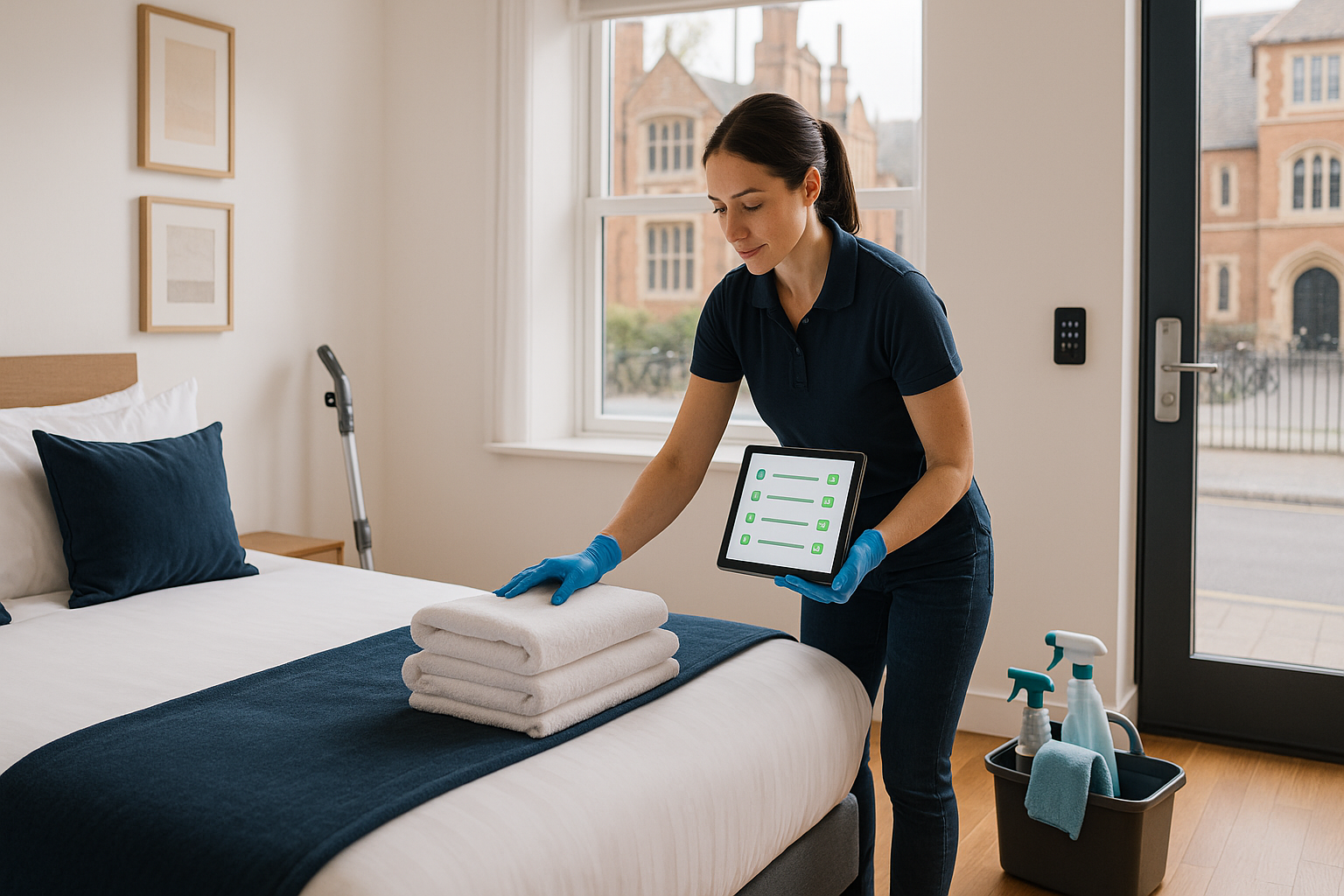
You have about three hours to erase two days of living. Wet towels, coffee rings, a faint smell of takeout, a trail of breadcrumb confetti in the toaster. In a busy city like Cambridge, where guests are professors one week and punters on the Cam the next, that window between check-out and keys-on-the-table check-in is where your ratings are won or lost.
This guide gives you a complete, field-tested process for check out cleaning Cambridge Airbnb homes. It blends a room-by-room checklist with Cambridge-specific tips on bin rules, hard water limescale, bike storage, and the quirks of older terraces and flats. Whether you handle turnovers yourself or coordinate a cleaner, you will find a clear path to spotless, guest-ready results every time.
Demand is steady year-round, shaped by university terms, conferences, hospital visits, and summer tourists. That consistency brings higher expectations. Guests benchmark your flat against very clean college rooms and boutique hotels around Regent Street or the station. They expect immaculate kitchens, quiet bedrooms that smell neutral, and bathrooms free of limescale haze.
On top of that, many Cambridge homes are compact and older. Dust gathers on sash window rails. Pipes can leave mineral deposits on taps and shower screens. Cyclists bring in fine grit. Little things that might pass in a newer city build stand out here. A consistent cleaning routine reduces surprise messages, prevents poor reviews, and keeps your calendar full.
A great check-out clean follows four principles. First, sequence your work so that no step undoes another. Second, set standards that you can explain and repeat. Third, use the right tools for Cambridge water and older finishes. Fourth, leave visible proof of cleanliness through staging and a quick photo log.
Walk the space once with a bin bag and a laundry basket, gather all rubbish and used linens, open windows to air for five minutes, and start laundry immediately. Then clean top to bottom, dry to wet, least dirty to most dirty. End with floors and a reset of the space.
Start with the heart of the home. Sanitised worktops and a crumb-free floor do more for guest confidence than any scented candle.
Clear all surfaces and run the extractor on a low setting while you work. Wipe upper surfaces first, including the top of the fridge and high cupboards where fluff clings. Cambridge’s hard water can leave spots on stainless steel, so use a microfibre cloth with a diluted white vinegar solution to cut mineral film, then buff dry to avoid streaks.
Check the fridge and freezer. Remove all guest food, wipe shelves and seals, and leave a small bottle of long-life milk if that is part of your welcome. The oven and hob should be degreased and free of burnt-on rings. A paste of bicarbonate of soda with a splash of water loosens residue without harsh fumes.
Empty the toaster crumb tray, wipe the kettle base, and descale the kettle if cloudiness has returned. A simple white vinegar boil followed by two clear boils does the job. Pull appliances slightly forward to catch crumbs and dust gathered behind.
Wash up any stray glasses or utensils and return to their places. Check cupboards for chipped items and top up basics. If you leave oil, salt, tea, or coffee, ensure clearly labelled, clean jars. Finish with the sink and tap. Limescale around the base of taps is common in Cambridge, so apply descaler or vinegar, allow dwell time, then scrub with a non-scratch pad. Polish the tap until it reflects light.
Bathrooms lose stars quickest. They also benefit most from the right sequence. Dust and vacuum first, including extractor fan covers and the tops of frames. Turn on the fan if fitted.
Apply limescale remover to the shower screen, showerhead, taps, and tiles. Let it sit while you tackle the loo. Use toilet cleaner under the rim, scrub with a brush, then wipe the seat and outside with a separate cloth. Replace the brush if it has seen better days.
Return to the shower. Scrub glass and tiles, paying attention to edging where body oils turn grey. Rinse thoroughly, then squeegee glass to avoid drip lines. Wipe seals and edges dry. Soak the showerhead in descaler periodically to keep spray patterns even.
Clean the sink and counter, then mirrors with a glass-safe product, wiped and buffed fully dry. Replace toiletries neatly. In Cambridge, many hosts lean eco, so refill dispensers where possible rather than single-use minis. Place fresh bath mats and two clean towels per guest, folded uniformly.
Finish with the floor. Mop corners thoroughly, since older bathrooms sometimes have uneven tiles where grime hides. Close the room with a neutral, fresh scent. Avoid heavy perfumes, which can trigger complaints.
Strip beds before anything else and start laundry. Inspect mattress protectors and pillow protectors. Replace or launder between every booking. Vacuum the mattress with a clean upholstery tool and check for stray hairs on the headboard.
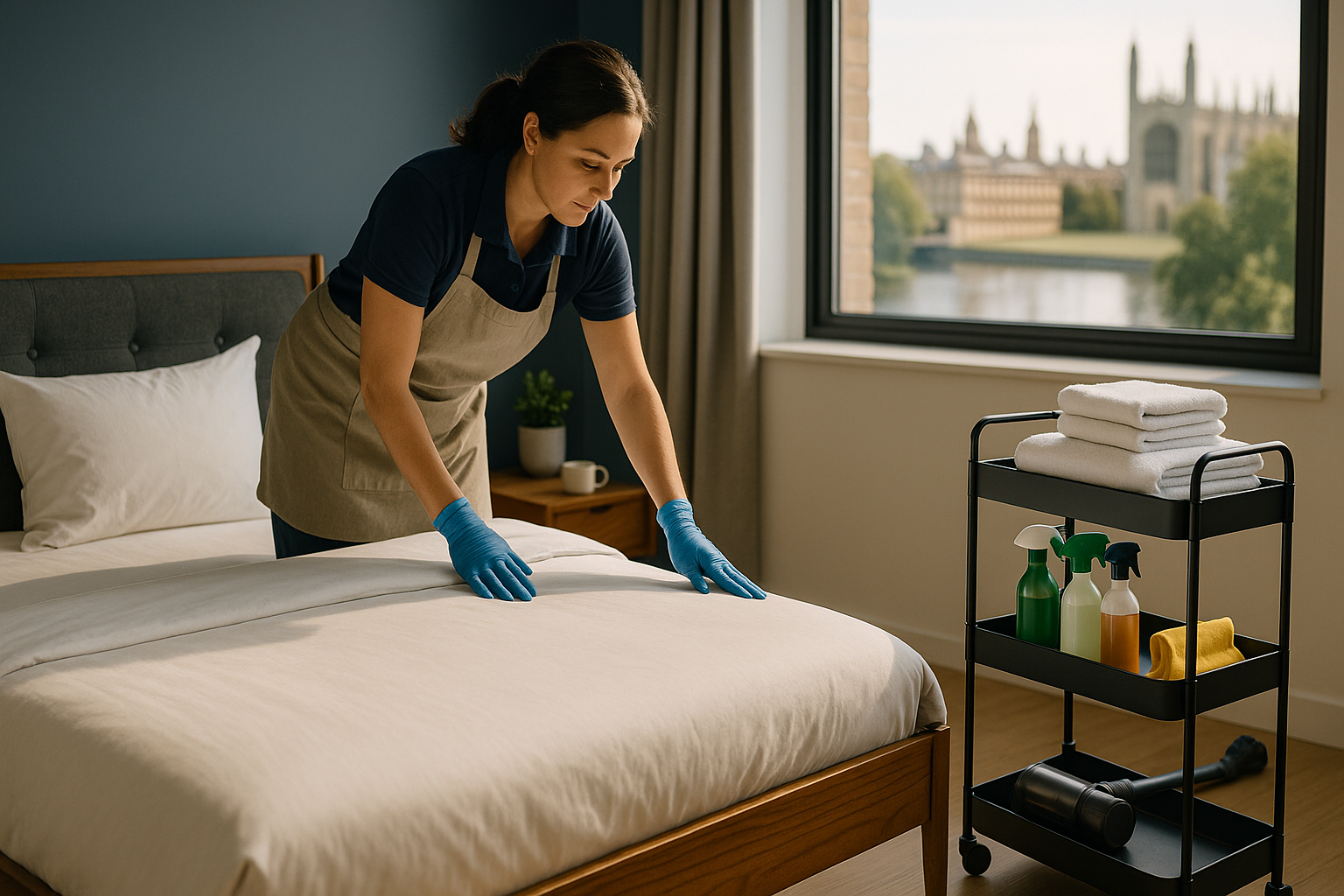
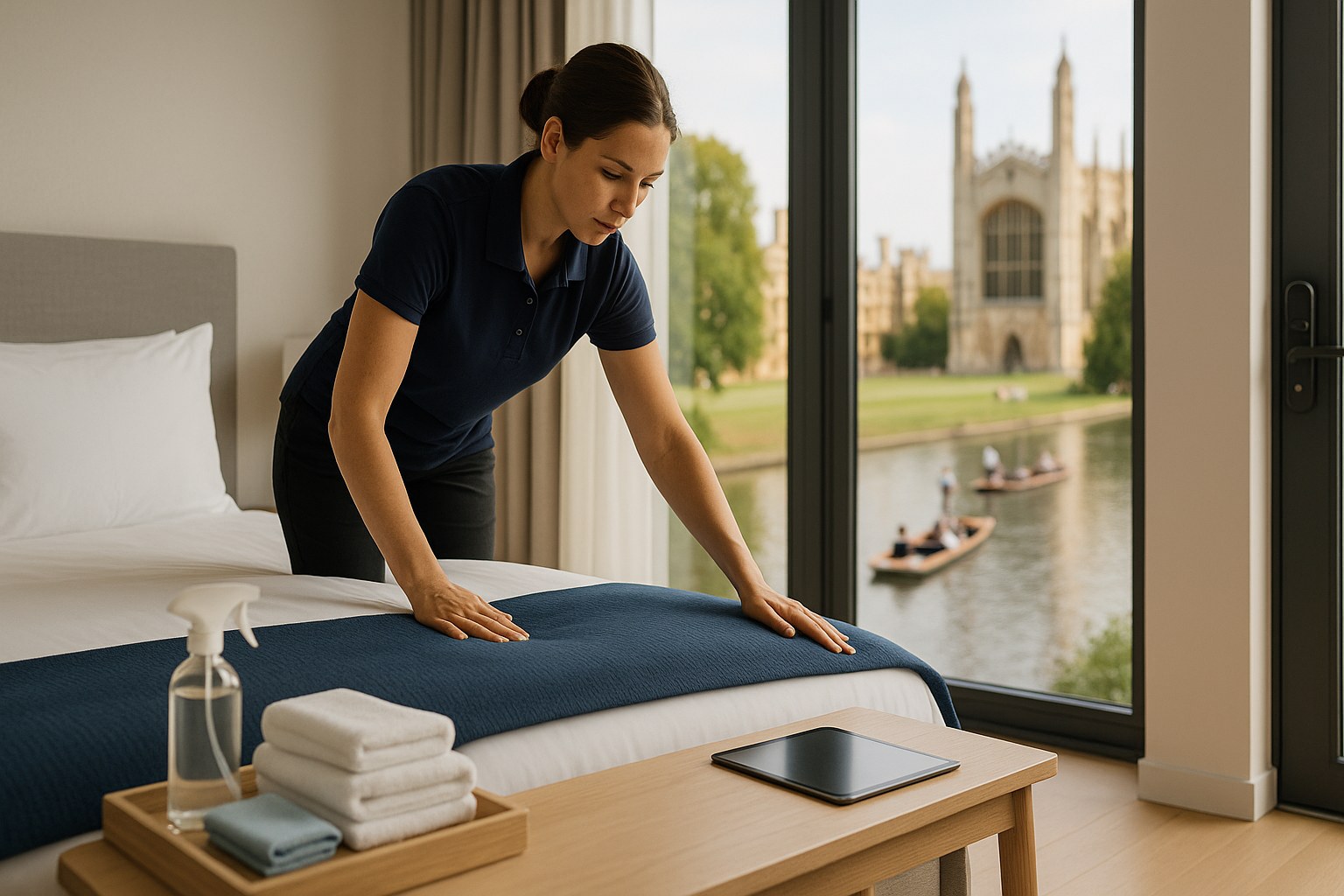
Make beds with crisp corners and aligned pillow edges. Cambridge visitors often arrive late from the station, so a perfectly made bed is your silent welcome. Check the inside of bedside drawers for crumbs or tissues. Wipe lamps, switches, and the top edge of skirting boards. If windows are sash, clean rails and catches where dust gathers.
Vacuum thoroughly, including under the bed and behind furniture. In older terraces, radiators collect fine dust that goes airborne at the first heat cycle. Brush or vacuum radiator fins and tops.
Return all furniture to a natural layout. Wipe remote controls, door handles, and high-touch areas with disinfectant. Fluff cushions and shake throws outside to remove lint. If you allow dining in the living room, check under sofa cushions for crumbs and receipts.
Dust shelves and mantels from top to bottom. Polish glass surfaces and TV screens gently, leaving no streaks. Inspect rugs for edges turned up or marks. Treat small spots promptly and let dry fully before guests arrive.
First impressions start at the street. Sweep steps and check for leaves or litter near the door. Wipe the bell, smart lock, or key safe keypad. Fingerprint smudges on a lockbox contradict a spotless interior. If you provide bike storage, ensure it is tidy and free of mud heaps.
Inside, clean skirting boards and corners where shoe scuffs occur. A clean welcome mat, aligned straight, quietly tells guests they are stepping into a cared-for space.
Turnovers stall when laundry bottlenecks. Avoid that with a simple rotation system. Keep at least three complete sets of linens per bed. One on the bed, one at the laundry, one ready to install. If you manage high-volume stays, add a fourth set for insurance.
Wash at 60 degrees for towels and white cotton linens when care labels allow. This helps with hygiene and stain removal. Treat makeup stains with an oxygen-based pre-soak rather than bleach, since bleach can yellow cotton over time. Dry fully before storage to avoid musty odours, then fold neatly and store in a closed cupboard to keep dust off.
If you do not have a dryer, factor in the extra time or use a local launderette. Several Cambridge launderettes offer next-day service, which can save a double turnover weekend.
Bins vary by neighbourhood. If your Airbnb is in Cambridge city centre or the historic core, space can be tight and bin day can feel like a puzzle. Guests will often mishandle recycling unless you make it foolproof.
Use clearly labelled bins inside the kitchen. One for general waste, one for mixed recycling, and one for food waste if your building uses caddies. Provide a short note with icons that match the council’s guidance. Empty all interior bins every turnover, wipe bin lids and rims, and replace liners. Check the calendar for collection days. Wheel bins out the night before if rules permit. If you manage a flat, confirm the shared bin area is orderly and not spilling over.
Glass recycling rules may differ by ward or building. If glass requires separate handling, set a small crate under the sink with a clear label. Nothing ruins a clean kitchen faster than a stray wine bottle on top of the counter because a guest could not find the right bin.
Fast does not mean rushed. It means prepared, sequenced, and free of backtracking. Work in a loop. Start laundry, tackle kitchen counters while products dwell elsewhere, run to bathrooms while the kettle descaling sits, then return to finish. Batch similar tasks across rooms, such as dusting high surfaces, then work down to horizontal touch points, then floors.
Keep a caddy with labelled cloths for each zone. Colour-coded cloths prevent cross-contamination. Microfibre handles Cambridge dust well and leaves fewer streaks on glass. A cordless vacuum with a crevice tool speeds up radiators and skirting boards. Finish with a quick spot-check at guest height. Sit on the sofa and look around. Then stand at the sink. This change of perspective reveals missed smudges or a crooked frame.
When a guest requests late check-out and the next arrival is early, simplify. Prioritise hygiene zones first. Strip beds, start laundry, clean bathrooms and kitchen thoroughly. Stage living areas and entry, then return for detail work if time allows. If you cannot meet the timeline to your standards, communicate early and offer a slightly later check-in with a small gesture, such as free parking for the first hour or a coffee voucher if you keep a local partnership.
Guests notice what you have not forgotten. Keep an airtight box labelled Turnover Top-ups stocked with these essentials: two spare loo rolls per bathroom, mini sewing kit, tealights or batteries for remote controls, dishwasher tablets, washing-up liquid, new sponges, bin liners, kitchen roll, salt, pepper, tea, and coffee. For Cambridge’s tea lovers, include both builder’s tea and herbal options.
Check and replace shower gel, shampoo, and hand soap. Refill, do not dribble. Wipe sticky rings under bottles and remove any hair from drains. Replace flowers or a small plant in high season if that is part of your brand. A simple fresh basil plant in the kitchen earns comments without much effort.
Use turnovers to catch small issues before they escalate. Test smoke and carbon monoxide alarms monthly and log the test in a simple spreadsheet. Check fire blankets or extinguishers if you provide them, confirm clear access to exits, and ensure keys for window locks are in their visible spots.
Scan for maintenance. Re-seat wobbly chairs, tighten door handles, and replace light bulbs. In older properties, keep a small tube of silicone for minor sealant touch-ups around sinks. Photograph and date any wear you cannot fix that day and schedule a repair.
If your property uses gas, keep the current certificate handy and note renewal in your calendar. For electrical items, look for frayed kettle cords or split plugs, then replace promptly. These invisible touches matter for guest safety and peace of mind.
Staging is not fluff. It is clarity. Align towels in the bathroom, put the TV remote parallel to the edge of the table, centre cushions, and open curtains evenly. Crack a window for a few minutes, then close before you leave. Neutral air that does not smell of product is best.
Before you lock up, take five standard photos every time. Kitchen wide, bathroom wide, main bedroom from the door, living room wide, and the entry. If anything is unusual, such as a scratch you have noted, add close-ups. This running log protects you in disputes and helps you compare your own standards week to week.
There will be weeks when bookings stack, your schedule clashes with bin day, or a festival brings four same-day changeovers. A local cleaning team that knows short stays will probably pay for itself in saved hours and fewer complaints.
If you outsource, provide a written brief. Include a checklist aligned with your standards, laundry instructions for your specific linens, and a staging guide with sample photos. Walk the property once with the team so they understand oddities like stiff sash windows, quirky extractor timers, or key safe placement. Clarify what they restock versus what you supply. Agree on a reporting method for damage and low inventory. A good team becomes your eyes and hands.
Cambridge guests often travel light and on foot. Provide a simple map to nearby grocers, an umbrella stand, and a bike lock reminder near the door. If your tap water runs hard, leave a brief note that limescale marks are cosmetic and the water is safe, while still keeping fixtures polished. During term changeovers and graduation weeks, expect longer stays. Offer extra hangers and a small lint roller, useful after gown fittings.
If your place is near the station or Mill Road, double check noise buffers such as door seals and curtains. In the historic core, check that windows close properly and leave a gentle note on how to operate sashes without forcing them.
A smooth turnover is not about scrubbing harder. It is about a steady rhythm, the right products for Cambridge’s water and homes, and a checklist that you trust. Use the sequence here, adapt it to your space, and repeat it until it feels effortless. Your guests will walk into a flat that is crisp, calm, and ready. Your reviews will reflect the care they cannot see but can certainly feel.