September 20, 2026
May 7, 2026
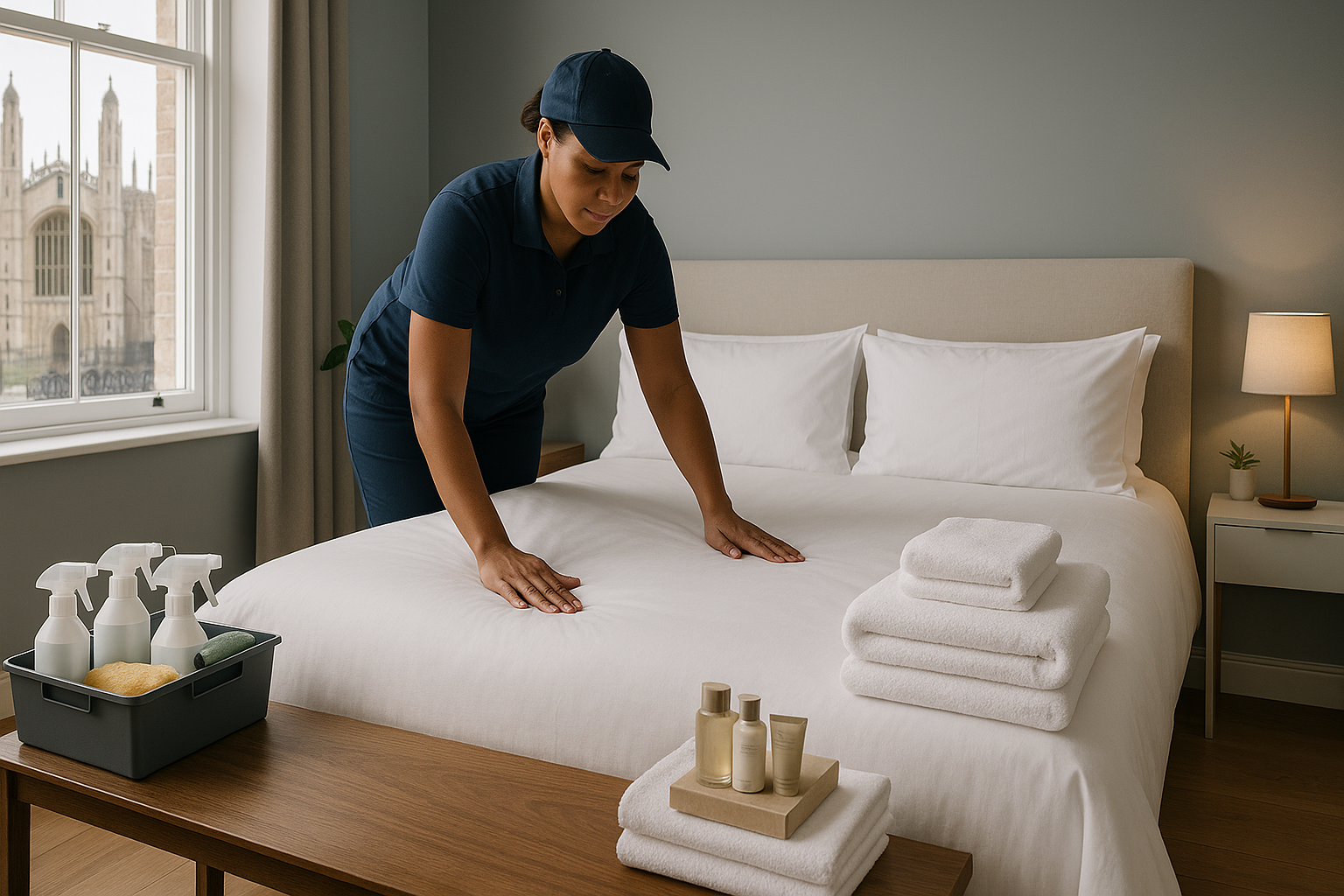
Guest arrivals do not wait for dust to settle. If the last guest checks out late, the next is messaging from Cambridge Station asking for early check-in, and the sheets are still in the dryer, your five-star rating is already at risk. Reliable turnovers live or die in those few hours between bookings, and the difference often comes down to a disciplined, well-run changeover.
This guide shows how to set up guest changeover cleaning Cambridge hosts can count on, whether you handle the work yourself or bring in a professional team. Cambridge has its own rhythm, from term-time surges to graduation weekends, and guests expect hotel standards with homely touches. With the right checklist, timing, and coordination, you can hand over a spotless, stocked, and stress-free property every time.
Airbnb stays in Cambridge swing from quick business trips near the Biomedical Campus to family weekends around punting and museum visits. Many bookings are short, the gaps are tight, and guests arrive with high expectations shaped by top-rated listings across the city. This is why the quality and reliability of your changeover has a direct line to your reviews.
A late or sloppy turnover does more than create a one-off complaint. It shortens your buffer for the next clean, adds stress to each handover, and invites a cycle of rushed work and missed details. On the other hand, a stable process turns busy periods like May Bumps or graduation into routine days. Cleaners know where everything lives, linens are rotated without drama, and you can accept back-to-back bookings confidently. Consistency is what turns a good listing into a dependable revenue stream.
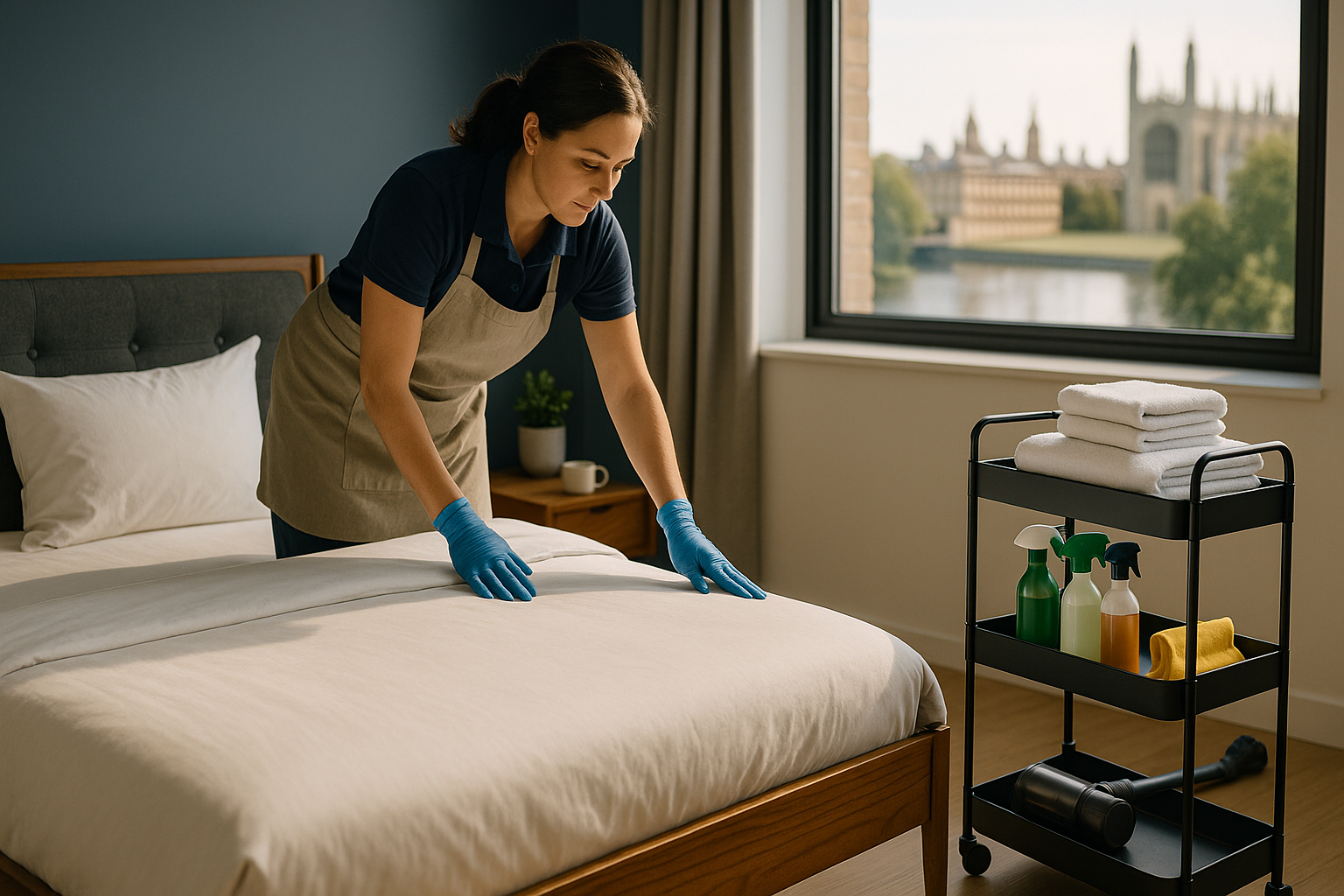
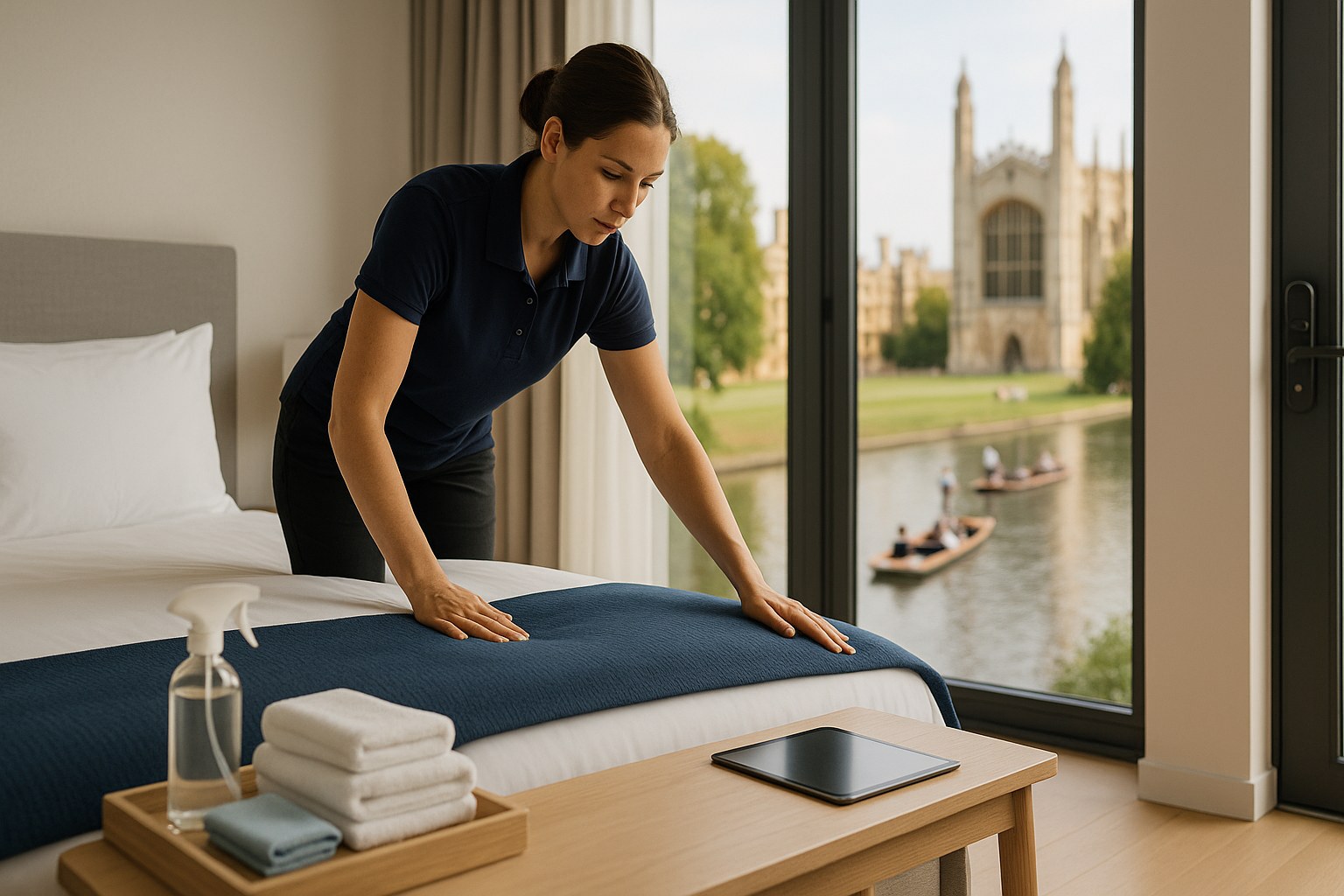
A proper changeover is not a light tidy. It is a reset to a hotel-level standard, combined with thoughtful staging so the home feels ready to live in the moment a guest steps through the door. In practice, that includes:
Kitchen. Worktops degreased and sanitised, appliances wiped inside and out, sink polished, taps dried, bins emptied and relined, crockery and cutlery counted and re-shelved. The fridge checked for leftovers, spills cleaned, and any long-life basics restocked. If you provide a coffee machine, clean the reservoir and descale on a regular schedule.
Bathrooms. Limescale tackled, grout and glass scrubbed, toilets sanitised, drains checked for flow, mirrors polished to a streak-free finish. Towels replaced and folded consistently, toiletries topped up, bathmats laundered frequently to stop musty smells.
Bedrooms. Beds stripped, mattresses spot-checked, fresh linen fitted tight, pillows fluffed, under-bed sweep completed, wardrobes checked for hangers and space. Lost property documented and stored. Spare bedding aired to avoid damp odours.
Living areas. Sofas vacuumed including under cushions, side tables wiped, lamps dusted, remotes sanitised and returned to a home position. Floors vacuumed and mopped, skirting boards dusted on a rotating schedule. Windows spot-cleaned on guest-facing sides.
Outdoor spaces. Patios swept, furniture wiped, ash and debris removed from any permitted barbecue areas, door thresholds cleaned so the first step inside feels crisp even after a rainy day.
Finishing touches. Thermostat reset to a comfortable default, blinds opened to let in light or closed during heatwaves, welcome folder set out with Wi-Fi details, and a final walk-through for rogue hairs, fingerprints, and bins.
Documentation. Time-stamped photos after every clean, notes on consumable levels, damage reports sent immediately with photos, and meter readings if required by the property owner.
Local quirks shape how you clean and prep:
Most listings run a 10 am checkout and 3 pm check-in. That window shrinks quickly if a guest leaves late or you need to launder linens on-site. Plan for the worst, not the best, then build in slack.
For a one-bedroom flat, a single experienced cleaner usually needs around two hours for a full reset when laundry is off-site or already rotated. Add 30 to 60 minutes if you are washing and drying in-house. A two-bedroom home typically needs a two-person team for two to three hours, which creates redundancy if someone is delayed.
An example schedule for a standard two-bedroom apartment:
If a back-to-back booking shortens the window, scale your team rather than cutting corners. Split tasks by zone and assign one person to quality control who does a final sweep and takes photos. That last check catches most of the little issues that drive complaints.
During peak events like graduation week or the Cambridge Half Marathon, assume requests for early check-in will increase. Set clear expectations in your pre-arrival messages, but keep one emergency cleaning slot available each day. Flexibility is valuable when you can provide it.
Linens derail more turnovers than any other component. Decide early whether you will manage laundry in-house or use a service. Each option has trade-offs.
In-house laundry keeps costs down for small portfolios, but you need enough stock to rotate without waiting on a dryer. Keep at least three full sets per bed in circulation: one on the bed, one clean and ready, one being washed. Label sets by size and room, then store each full set in a breathable bag or lidded crate to keep dust away.
Professional linen hire removes the bottleneck. Many Cambridge services collect used sets, deliver pressed linens, and include towels and bathmats. There is usually a per-bed or per-set fee. The benefit is predictability during peak weeks when drying times stretch and machines fail at the worst moment.
Regardless of method, adopt a simple rule. If linen is not pristine, it does not go on a bed. Even small stains look worse in guest photos than they do in your laundry room. Retire worn items early.
The best turnovers do more than clean. They make the next arrival easy. A smart stock strategy stops last-minute dashes to the shop and makes your property feel cared for.
Store a compact supply bin on-site with labelled sections for spares. Small, consistent touches score well in reviews. For example, a folded map of cycle routes, two umbrellas in the hall during wet months, and a short note on how to reach the nearest park-and-ride. If you include a local treat, choose something shelf stable that can be replaced quickly, such as a small packet of biscuits from a known bakery.
Basic consumables to keep topped up:
Staging matters too. Position the welcome folder on the main table, leave the TV remote parallel to the edge, and angle a lamp to warm a darker corner. These details photograph well and signal that you pay attention.
Cleanliness means little if the property fails a basic safety check. Test smoke and carbon monoxide alarms frequently. Replace batteries and log the test dates. If you provide small appliances, consider periodic PAT testing through a qualified provider, especially in furnished flats with frequent use.
Keep instruction manuals or a one-page guide for complex items like induction hobs, boilers, and combination washer-dryers. Fewer guest mistakes means fewer emergency visits.
Cambridge properties vary widely, from new-build apartments to older terrace houses. Damp can creep in older buildings. Air rooms during and after cleaning, and use a dehumidifier if needed to prevent musty smells. For waste, follow the local recycling scheme for general, mixed recycling, and food waste. Put bins out on the correct days to avoid build-up and neighbour complaints.
Finally, think about access. A secure, well-placed key safe or smart lock reduces lockouts and supports truly contactless changeovers. Share codes only through your booking platform and rotate them routinely.
Some hosts enjoy the control of doing their own changeovers. You know every corner and can respond instantly. If you live nearby and manage one property, this can work well. The risk appears when bookings bunch together, or you leave town.
Professional cleaners who specialise in short stays can absorb those spikes. They bring speed, checklists, supplies, and usually a system for photos and reporting. The cost is higher than a standard domestic clean because turnover work is more detailed and often time-bound.
Typical pricing in Cambridge varies with size, complexity, and linen handling. As a rough guide, a studio or small one-bed might sit in the region of £60 to £90 per turnover, a larger one-bed to two-bed in the region of £90 to £150, and a three-bed upwards from there. Linen hire or on-site laundry adds to the total. Get quotes based on your exact layout, parking, and access. Clarify what is included so there are no surprises during busy weeks.
Not all cleaners are set up for short-term rental work. When you search for guest changeover cleaning Cambridge providers, look for signs they understand the pace and standards of Airbnb turnovers.
Ask how they schedule around check-in and check-out times, and what happens if a guest departs late. A strong provider has a plan, not an apology. Review their checklist and request a sample set of after-clean photos. It should include bed corners, taps, under sofas, and a final door lock shot to show the property was secured.
Communication matters. Many successful teams use shared calendars that sync with your Airbnb via iCal, plus a WhatsApp group or preferred channel for quick updates. Confirm who buys and stores consumables, whether they can manage linen rotation or hire, and how they record and report damage.
Insurance and references are essential. Ask for proof of public liability and a reference from another local host. Then run a trial clean between shorter bookings before you commit to a long run of back-to-backs.
Even good cleaners struggle without clear information. Build a simple operations layer around your property.
When an issue arises, respond quickly with specifics. If a guest broke a glass, say which cupboard holds the duplicates. Clear direction today prevents repeated questions tomorrow.
Imagine a two-bed flat off Hills Road with back-to-back bookings during graduation. Checkout is 10 am. The next guest arrives from Stansted and asks for early check-in at 1 pm.
At 9:50 am, your cleaner messages to say the current guest is still packing. You reply with a script that is already saved in your notes, then ask the guest for an accurate departure time. They leave at 10:20. Your two-person team starts immediately. One strips beds, loads towels into the washer, and opens windows to clear the air. The other tackles the kitchen and bathrooms first so a deep-cleaned shine sets the tone.
By 11:10, the first wash is in the dryer. Fresh linen goes on the beds by 11:30. The dishwasher finishes a hot cycle and items are restocked. At 11:45, floors are mopped, and a final check catches a fingerprint on the oven door and a stray hair in the shower. Photos are taken. At noon, you text the incoming guest. The flat is ready at 12:30 if they wish to drop bags and wander to lunch on Mill Road. They appreciate the flexibility, leave a strong review, and you have a repeatable plan for the next tight day.
Missing under-bed dust bunnies. Use a low-profile vacuum head and make it part of the standard flow. Guests notice dust more than you think, especially near beds.
Late linen. Keep that third set and review your dryer capacity. If towels take too long, switch to a more absorbent weave or reduce load sizes.
Overflowing bins. Add bin checks to both the start and end of the clean. If collection day is after checkout, store bags neatly and out of sight until you can move them.
Lost property. Have a small labelled box and a spreadsheet. Photograph items in place, bag them, and set a clear retention policy. Quick communication prevents disputes.
Scent overload. Strong air fresheners can trigger headaches. Aim for neutral cleanliness. Fresh air and a mild, consistent product work better than heavy sprays.
Hosts and cleaners work best when expectations match. If you require deep cleaning tasks every stay, such as oven racks or descaling showerheads, build them into a rotating schedule and agree on rates. If a guest leaves the property in poor condition, have a pre-arranged policy for additional time and how that is billed. Clarity avoids awkward conversations.
Likewise, review your rates to support reliable work. Squeezing the budget rarely pays off once re-cleans, lost bookings, and bad reviews are counted. A steady, fair partnership is almost always cheaper than churn.
The magic of a smooth turnover is not luck. It is the sum of small systems that run the same way every time. Once your checklist, laundry rotation, and communication flow are in place, the stress melts away. You can accept back-to-backs near King’s Parade without worrying about parking. You can say yes to early check-ins when trains run on time. Most importantly, you can protect your rating with the confidence that each guest will step into a home that feels fresh, organised, and ready.
Reliable guest changeover cleaning in Cambridge is achievable for any host. Invest in a clear process, partner with people who know short stays, and treat those tight hours between bookings as a craft worth mastering. Your guests will notice. Your calendar will stay full. And you will spend more time welcoming visitors to the city, and much less time racing your dryer.