October 2, 2026
October 3, 2026
Hook: A single guest photo of a dirty bathroom can wipe out a week of five-star reviews and cost you future bookings. For Cambridge hosts, where visitors range from prospective students to conference attendees, cleanliness is not optional. It is the most reliable factor in securing repeat stays and strong ratings.
Introduction If you manage one or more short-term lets in Cambridge, hiring a professional cleaning team is one of the smartest investments you can make. This article explains what a reputable airbnb cleaning service cambridge hosts rely on will do, how to choose the right partner, what to expect during turnovers, and practical steps you can take to protect your property and reputation. Whether you need reliable weekday turnovers for city-centre flats or seasonal deep cleans for college-term spikes, the guidance below will help you make informed decisions and avoid common pitfalls.
Why an Airbnb cleaning service cambridge hosts trust matters Cambridge draws short-term guests year round, but demand concentrates around term dates, open days, graduations, conferences, and summer tourism. That flow puts pressure on turnover schedules and raises the stakes for consistent cleaning. Local guests expect pristine, well-presented properties that reflect the city’s standards. A professional cleaning team brings predictability, cleaning expertise, and systems that independent cleaners sometimes lack. That predictability translates directly to better reviews, higher occupancy, and fewer emergency calls at awkward hours.
What a trusted professional team delivers A trustworthy cleaning service does more than tidy up. They operate with clear procedures, trained staff, and quality control that you can audit. For short-term lets, a professional team typically offers:
Why local knowledge matters in Cambridge Cambridge has a mix of medieval terraces, modern apartments, and listed buildings. Effective cleaning in these spaces requires awareness of restrictions, such as textile care for antique furnishings, or approved cleaning methods for older windows and stonework. A local team knows the quickest routes across the city, traffic hotspots around college events, and typical peak times for short-term letting. That knowledge makes scheduling realistic and reduces the risk of last-minute no-shows during high-demand periods.
How to choose the right cleaning team Choosing the right provider comes down to five practical dimensions: reliability, quality assurance, insurance and vetting, communication, and fit with your operational model.
Start with references and reviews, but go deeper. Ask for a client list and request to speak with at least two current hosts whose properties match your size and style. Request proof of public liability insurance and written confirmation that staff have undergone background checks where relevant. Ask about training: how are cleaners taught to treat Airbnb properties differently from standard domestic cleans? Reliable teams will describe procedures for turnovers, handling lost items, and using a checklist backed by photographic checks.
Make sure the team’s capacity matches your calendar. A single cleaner might be adequate for a one-bedroom flat with 24 hours between guests. If you manage multiple properties or frequently face same-day turnovers, choose a team that offers rotation of staff, spare capacity, and coverage for sickness or holidays. Confirm whether the company supplies cleaning materials and linens, or whether you must keep a stock. Both arrangements are common; each has trade-offs for cost, control, and storage.
What a typical turnover clean includes A useful way to evaluate services is to know what tasks belong in a standard turnover versus a deep clean. A standard turnover clean prepared for guest arrival usually covers:
Deep cleans, scheduled monthly or seasonally, expand on this list. They include oven and extractor fan cleaning, descaling kettles and shower heads, laundering curtains and mattress protectors, polishing furniture, and treating grout and stains. For fabrics and antiques, the team should recommend specialist treatment rather than attempting aggressive cleaning.
Pricing and scheduling: what to expect Pricing for cleaning services varies depending on property size, condition, and required turnaround time. Simple one-bedroom turnovers in Cambridge often fall at the lower end of the scale, while larger houses or properties that need laundry handling will be costlier. Same-day turnovers and short notice cleans attract premium rates. Deep cleans are typically quoted as separate jobs.
Be clear about what is included. Some companies quote a base rate with optional add-ons for linen service, consumables, or heavy duty stain removal. Others offer all-inclusive packages that roll everything into one monthly invoice. Choose what matches your priorities: a la carte pricing gives more control, while bundled services remove small management tasks from your plate.
When scheduling, build realistic buffers between bookings. Even with an efficient team, allow time for unexpected items such as maintenance fixes, lost keys, or guests who delay checkout. For high turnover properties consider midday checkout and late afternoon check-in windows for the next guest to give cleaners adequate time. If your calendar shows back-to-back bookings frequently, discuss standby or priority slots with your cleaning provider at a negotiated rate.
Practical steps to improve outcomes and reduce costs A cleaning team’s effectiveness improves when hosts prepare properties for turnover. Simple host-side actions reduce time cleaners spend on avoidable tasks and lower your per-turnover costs. For example, supply a clear checklist on the property for guests to follow at checkout. Encourage them to dispose of major food waste, place dirty dishes in the dishwasher, and pile used towels in a designated basket. Clear guest instructions cut down on mid-clean surprises.
Standardise supplies and storage. If you expect cleaners to launder and restock linens, provide a dedicated storage closet with labelled items and a simple inventory sheet. That reduces time spent hunting for replacements and ensures consistent presentation. Keep a small maintenance fund for fast small repairs such as replacing burnt-out bulbs or tightening loose fittings, so these do not delay turnover acceptance.
Use photographic proof and short reports. A brief set of standard photos taken by cleaners after each turnover becomes a record for guest disputes, damage claims, and quality control. Require a short form of report that notes any issues needing attention or replacement.
Handling guest damage, late checkouts and disputes Even the best systems encounter occasional damage or late departures. A professional cleaning service will report damage immediately, providing photos and a timestamp. Ensure your provider understands your policy on guest damage and reporting thresholds. For late checkouts, agree on a standard escalation process, such as a 30-minute grace window followed by an extra fee request to the guest. If a late checkout prevents a same-day incoming guest, document the cause and keep all communication with the guest for dispute resolution.
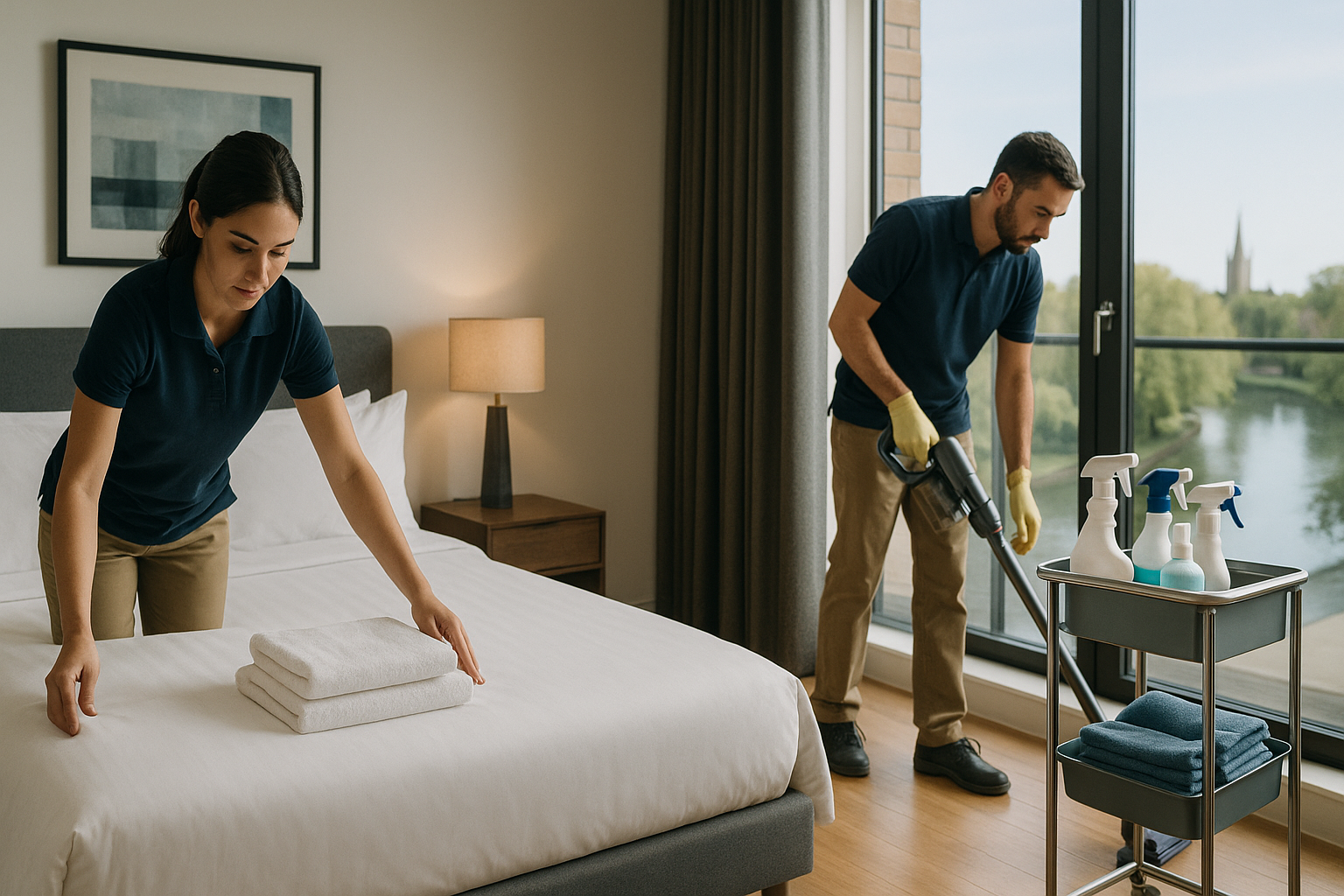
Sample scenario: a 24-hour turnaround for a two-bedroom flat Picture a two-bedroom flat with a 10:00 AM checkout and a 4:00 PM check-in. The cleaning company schedules a team to arrive at 10:30 AM, allowing a short grace period. The team begins with linen removal and starts a load in the on-site washer while one cleaner focuses on bathrooms and another vacuums and dusts. By noon the laundry is in the dryer and the kitchen has been cleaned. Around 1:00 PM the team begins ironing or replacing linens and restocking essentials. At 2:30 PM a final inspection takes place with photos of each room uploaded to the host’s dashboard. Any maintenance needs, such as a leaking tap found during cleaning, are reported with photos. With a 4:00 PM check-in time, the team leaves a comfortable buffer for the host or property manager to do a final spot-check or to resolve the few lingering issues.
Questions to ask before you sign a contract Before you commit, ask these practical questions: What does a standard turnover include, and what counts as an extra? How are cleaners vetted and trained? Are cleaners employed directly or contracted? Do you provide insurance certificates and DBS checks? How do you handle linen, and are they picked up and dropped off? What is your response time for emergency cleans? Can I require photographic proof after each job? How are prices adjusted for peak times or same-day turnovers? A professional provider will answer these plainly and provide written terms.
Working with a cleaning service as a partnership Treat a cleaning company as a partner rather than a vendor. Share your occupancy calendar in advance, give feedback promptly when standards slip, and recognise good performance with steady work. A long-term relationship reduces mistakes, ensures staff familiarity with your property, and often delivers better pricing and priority during busy periods.
Conclusion A reliable airbnb cleaning service cambridge hosts depend on does more than remove dirt. It protects your ratings, reduces stress during peak periods, and frees you to focus on marketing and guest experience. Choose a team that offers clear procedures, proof of quality, flexible scheduling, and responsive communication. With the right partner and a few simple host-side practices, you will keep guests satisfied, properties well maintained, and your bookings consistently strong.