September 20, 2026
September 16, 2026

Hook
A single bad cleaning can turn a five-star listing into a one-star nightmare within hours. For Cambridge hosts juggling mornings of check-outs, laundry runs, and arrivals for guests, consistent, reliable cleaning is the difference between steady bookings and reputational damage.
Introduction
If you manage one or multiple short-term rentals around the city, an airbnb cleaning service cambridge can restore your time and protect your rating. Professional turnover cleaners do more than tidy rooms. They follow repeatable systems that keep linens fresh, hazards cleared, and guest expectations met. This article explains what a dependable Cambridge turnover cleaning service looks like, what they should deliver, and how you can choose the right team for your property type and schedule.
Why professional turnover cleaning matters
Cambridge is unique. Short visits by academics, families, and tourists lead to high turnover, seasonal spikes, and distinct expectations for cleanliness and presentation. Guests notice small details, from spotless kettle interiors to dust-free window sills. A professional cleaning service raises consistency, reduces last-minute stress, and cuts the risk of lost income from cancelled bookings.
Beyond aesthetics, turnover cleaning protects your property. Cleaners trained for short-stay rentals spot maintenance issues early, such as a leaking kettle or a faulty light, and report them before they escalate. They also help avoid health and safety complaints by ensuring smoke alarms are unobstructed, floors are safe, and kitchens are sanitized.
What an Airbnb cleaning service Cambridge should provide
A strong turnover cleaner does more than wipe surfaces. Expect the following as standard components of their offering.
Reliable scheduling and rapid response. They should be able to commit to set times for check-in and check-out turnovers and offer same-day or emergency cleans when guests depart unexpectedly.
A clear scope of work tailored to short-stay rentals. That includes stripping and remaking beds with fresh linen, laundering towels and tea towels, cleaning and disinfecting bathrooms and kitchens, vacuuming and mopping floors, dusting, washing windows where accessible, restocking essentials such as toilet paper and soap, and checking inventory for perishables.
Laundry management. Many hosts prefer cleaners who collect, wash, dry, and return linens as part of the turnover. Professional handling prevents mix-ups and reduces the risk of stains or shrinkage.
Supply management and restocking. Trusted cleaners will notify you when supplies run low and can often restock basic items for a fee or under an agreed budget.
Inspection and reporting. A short report after each clean that lists tasks completed, photos of key rooms, and anything that needs attention helps you maintain standards remotely.
Key handover and access solutions. Whether you use smart locks, key safes, or physical key exchange, the cleaning service should handle access reliably and document each visit.
Insurance and background checks. Insured cleaners and DBS-checked staff offer extra protection for hosts and guests.
Turnover cleaning checklist, explained
Instead of presenting a long list, here is what a thorough checklist means in practice for common rental areas.
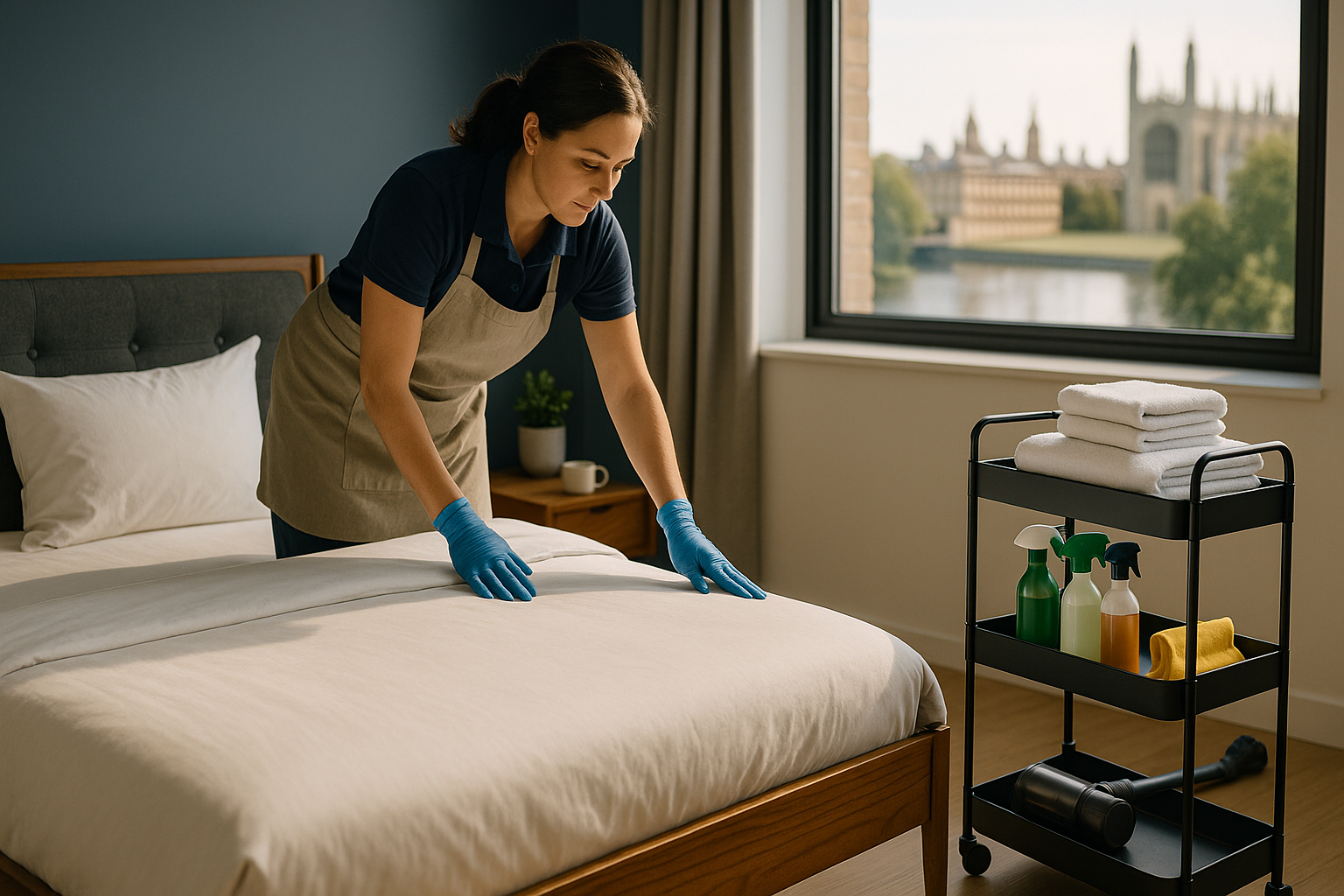
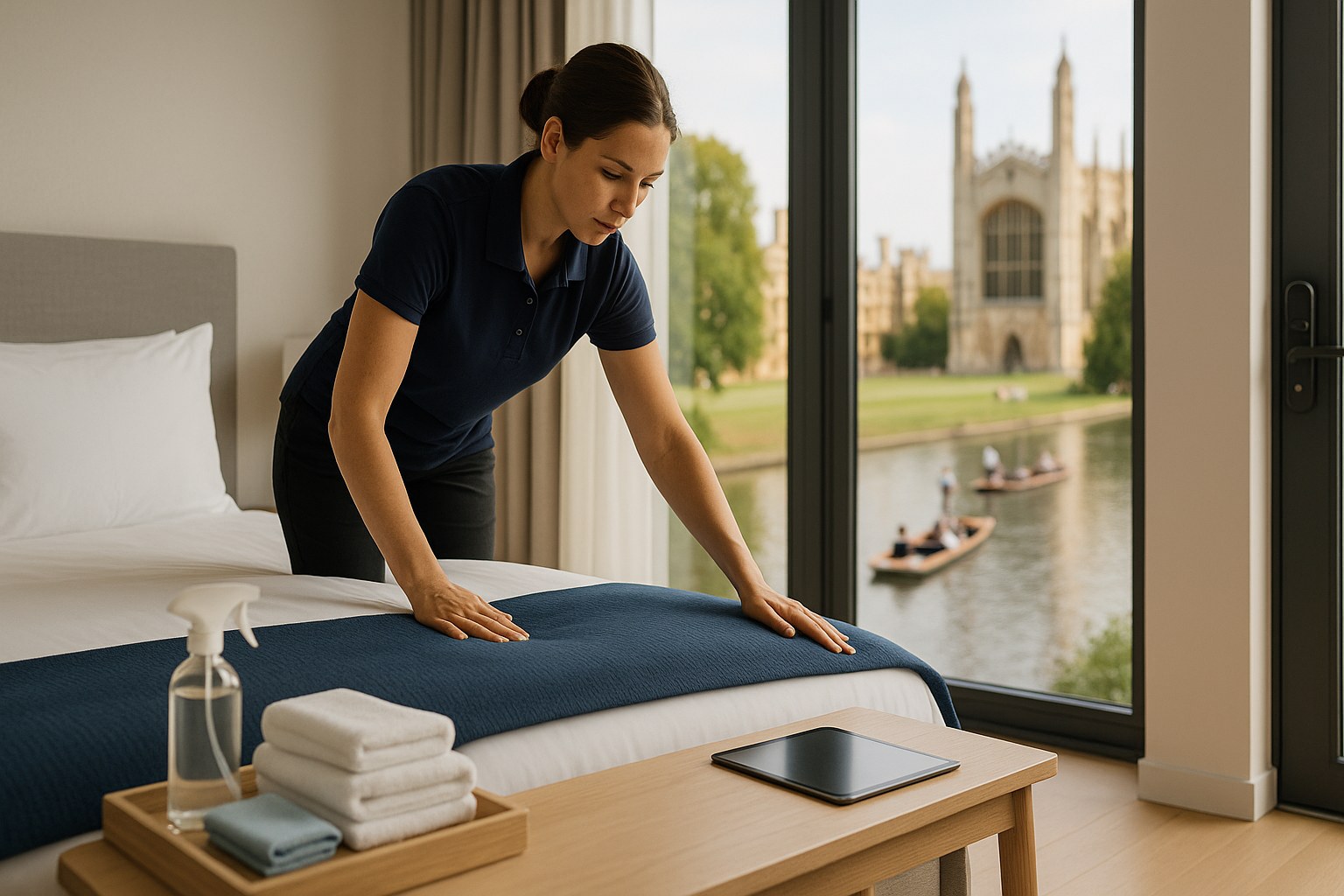
Bedrooms: Cleaners should remove used bedding, inspect mattresses for stains, vacuum mattress surfaces, and remake the bed with fresh linens. They will check wardrobes and drawers for left items, wipe surfaces, and ensure lighting and heating controls operate.
Bathrooms: Deep cleaning of toilets, sinks, showers, and bathtubs is essential. Grout and glass should be attended to, and mirrors polished. Cleaners should also replace toiletries and dispose of sanitary waste appropriately.
Kitchen: Cleaners should sanitize countertops, clean the inside and outside of the microwave, check the fridge for perishable leftovers, wash dishes or load the dishwasher, and empty bins. They should confirm that kettles and coffee makers are clean and functioning.
Living areas: Upholstery should be vacuumed or spot cleaned. Decorative cushions should be fluffed, and any clutter removed. Electronics should be dusted and remotes sanitized.
Floors and entrance: A sweep or vacuum followed by mopping leaves the property welcoming. The entrance and hallway require attention, because first impressions matter.
Final inspection: Before leaving, the cleaner should perform a walkthrough to confirm linens are squarely tucked, lights are turned off where required, heating is set, and keys or lock codes are secured.
Pricing and scheduling: what to expect in Cambridge
Pricing for an airbnb cleaning service cambridge depends on property size, number of bedrooms, frequency of turnovers, and additional tasks like laundry or deep cleans. Urban central properties may cost more because of travel time and peak demand.
Expect base pricing for standard turnovers, with surcharges for same-day cleans, weekend service, heavy stain removal, or extra laundry loads. Many services offer packages for hosts with multiple listings, which can lower per-turnover costs and improve scheduling flexibility.
When setting expectations, agree on the definition of a "standard clean." Some providers use a checklist that specifies what counts as included work, and what triggers extra charges. A clear written agreement protects both parties.
How to choose the right turnover cleaner for your property
Start with references and real guest feedback when possible. Ask for client case studies or contact details of hosts who can confirm reliability and thoroughness. A cleaning service that already works with properties similar to yours, such as student lets near colleges or luxury apartments near the city centre, will understand your guests and standards.
Ask to see sample photos of completed turnovers. Photos reveal attention to detail that claims about "deep cleaning" do not. Ask about training, staff retention, and supervision. A company that invests in training tends to produce more consistent results.
Test the service with a paid trial clean. Use one turnover to evaluate speed, quality, and the reporting they provide. If possible, arrange for a property inspection immediately after the trial clean so you can address any gaps and set expectations for future work.
Communication is key. Choose a provider that uses messaging or an app to confirm bookings, arrival times, and completion with photos. Clear, timestamped communication helps avoid disputes about turnovers and provides evidence should guest problems arise.
Handling special situations and common challenges
Late check-outs, pet messes, and accidental damage happen. A capable cleaner will provide options rather than panic. For late check-outs, the cleaner might offer a compressed clean for a reasonable fee. For pet messes or excessive dirt, agree on a fixed surcharge structure so you are not surprised by costs.
During busy times, such as college graduation weekends or the Cambridge Folk Festival, demand surges. Plan ahead and book extra crews if you expect higher turnover. Many cleaning companies offer priority scheduling for hosts who pre-book blocks of service.
If a cleaner finds damage, they should document it with photos and a written note. Quick reporting prevents disputes with guests and helps you decide on repairs or compensation without delay.
Preparing your property for smooth turnovers
Hosts can reduce cleaner time and costs by making small changes that add up. Leave clear instructions for rubbish disposal routines and recycling, and label bins if your building has specific rules. Provide a designated place for used linens and towels to make collection straightforward.
Store spare linens and cleaning supplies in an accessible, secured location to avoid wasted time searching. If you offer check-in instructions in a guest manual, include a simple firing order for the washing machine and dryer to avoid misuse.
Standardize bed sizes and linen types across properties whenever possible. That simplifies laundry operations and reduces the chance of mix-ups.
Eco-friendly and safety practices that matter to guests
Eco-friendly cleaning practices appeal to many guests, particularly younger travelers and academics. Ask whether your cleaning service uses non-toxic disinfectants, concentrates for refillable bottles, and washable microfiber cloths rather than single-use wipes. Some services offer a certified green cleaning option, which can be a selling point on your listing.
Safety matters too. Cleaners should use appropriate PPE when needed and follow safe chemical handling procedures. If your property accommodates families, ensure cleaners follow child-safe protocols for products and storage.
Legal, insurance, and compliance considerations
Make sure your cleaning provider carries public liability insurance and, if they handle keys and access, that they have policies for secure key management. DBS checks may be necessary or desirable for cleaners who work unsupervised in high-value properties.
If you operate multiple properties, consider contract terms that define response times, cancellation policies, and liability for lost or damaged items. Keep records of all cleaning reports and invoices, especially for tax deductions and potential disputes.
Examples and scenarios
Scenario 1: City centre one-bedroom with morning check-ins. A London-bound professional checks out at 10:00. The cleaner arrives at 11:00, strips bedding, cleans and sanitizes, and completes a walkthrough with photos by 13:00. This tight turnaround requires an experienced cleaner who can prioritize tasks without cutting corners.
Scenario 2: Five-bedroom house during graduation weekend. Multiple back-to-back bookings require a team approach. The host arranges for a crew to rotate across rooms, one member handling linen changes, another doing bathrooms, and a supervisor performing final inspections. Advance planning and a written schedule avoid missed turnovers.
Scenario 3: Last-minute cancellation with heavy soiling. The cleaner offers an emergency deep clean for a premium, documenting stains and recommending repairs. The host decides whether to invest in stain treatment or replace linens, balancing cost against the timing of the next booking.
Questions to ask before hiring
Ask whether cleaners provide photos and timestamps after each turnover. Request sample invoices that show transparency for extras. Confirm how they handle lost and found items. Ask about staff turnover and what measures they take to ensure consistent standards when temporary or agency staff are used.
Wrapping up
Reliable turnover cleaning is one of the most effective investments a Cambridge host can make. It protects your rating, saves time, and reduces stress. By choosing a cleaning team that understands short-stay requirements, communicates clearly, and documents each clean, you create a predictable system that supports steady bookings and happy guests.
If you manage rentals in Cambridge, start with a trial clean, set clear expectations in writing, and build a relationship with a provider that treats your property as closely as you do.