September 20, 2026
May 1, 2026
You get a 4-hour window, a red wine spill on the sofa, and a guest messaging that the coffee pods have run out. One bad changeover can turn a five-star stay into a public complaint. In a city as compact and busy as Cambridge, a smooth, reliable handover between bookings decides how your listing ranks, how your calendar fills, and how often your phone stays blissfully quiet.
Hosts searching for airbnb changeover cleaning cambridge are not browsing for theory. You want a dependable local team that can handle tight checkouts, Cambridge traffic and parking quirks, and the level of detail guests now expect. This guide shows how a professional changeover should work in Cambridge, what it costs, how to plan around peak demand, and how to choose a service you can trust with your keys and your reputation.
A changeover is more than a clean. It is a reset of the space and the guest experience. Airbnb weights cleanliness heavily in reviews, and many hosts rely on back-to-back bookings to keep income steady. In Cambridge, checkouts at 11 am and check-ins at 3 pm are common, but the city’s rhythm adds complexity. Parking is restricted around the historic centre, some flats have concierge check-in windows, and summer brings heavy visitor traffic. A team that knows the city can move faster and solve small problems before they become poor reviews.
A reliable changeover puts the property back to baseline, not just tidy. That means fresh linen, inventory checks, restocked supplies, a quick safety review, and any evidence of damage documented with photos. The best teams also think like hosts, so they notice the subtle touches guests mention in reviews, such as folded throws, spotless mirrors, and a welcome note that is actually legible.
Local knowledge trims minutes everywhere, which matters when you only have a few hours between guests. Cambridge has strict residents’ parking zones, inconsistent lift access in older blocks, and bins collected on specific days that vary by street. A local team knows which entrances are quicker, which roads gridlock during school runs, and which courtyards are locked after 5 pm. They will anticipate graduation weeks, May Balls, and punting season surges. They will also know that Cambridge water is hard, so descaling taps and shower screens needs extra attention to prevent limescale haze that makes bathrooms look uncared for.
Local relationships matter too. A service rooted in Cambridge will often have backup drivers, bike couriers for keys or supplies, and partnerships with linen hire or laundry providers in the CB postcodes. When a guest checks out late without warning, that network can be the difference between a rushed wipe-down and a proper reset.
Every service has its own checklist, but the essentials are consistent. Here is what a thorough Cambridge changeover looks like when done well.
The kitchen is where guests judge hygiene fastest. Worktops should be scrubbed and sanitised, sinks descaled and polished, and hob rings and splashbacks cleaned to remove oil mist. Inside the microwave gets wiped, the oven is checked for spills, and the fridge is cleared of old food with shelves cleaned if there were leaks. Glassware should be spotless, cutlery trays crumb-free, and bins emptied with new liners fitted. Dishwasher filters should be kept clean to prevent odours. Supplies such as washing-up liquid, dishwasher tablets, tea towels, and kitchen roll get replenished to the agreed par levels.
Cambridge’s hard water can leave marks fast. Good cleaners use limescale removers to keep taps, shower heads, screens, and tiles clear. Toilets are scrubbed inside and out, including behind the hinges and the base where dust gathers. Sinks, mirrors, and chrome are polished to a streak-free finish. Complimentary toiletries are refilled or replaced. Fresh bath mats and neatly folded towels signal that the space has been fully reset.
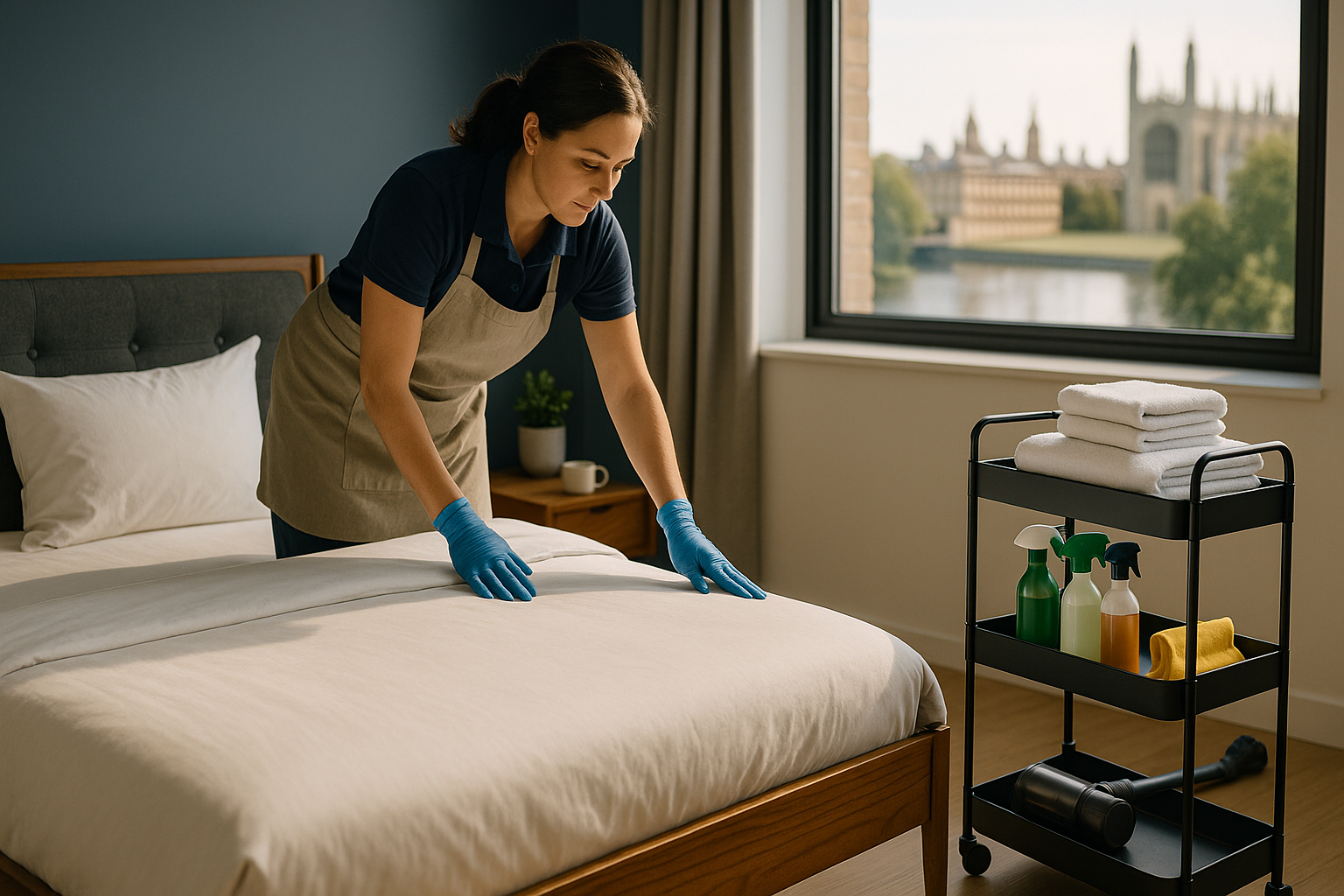
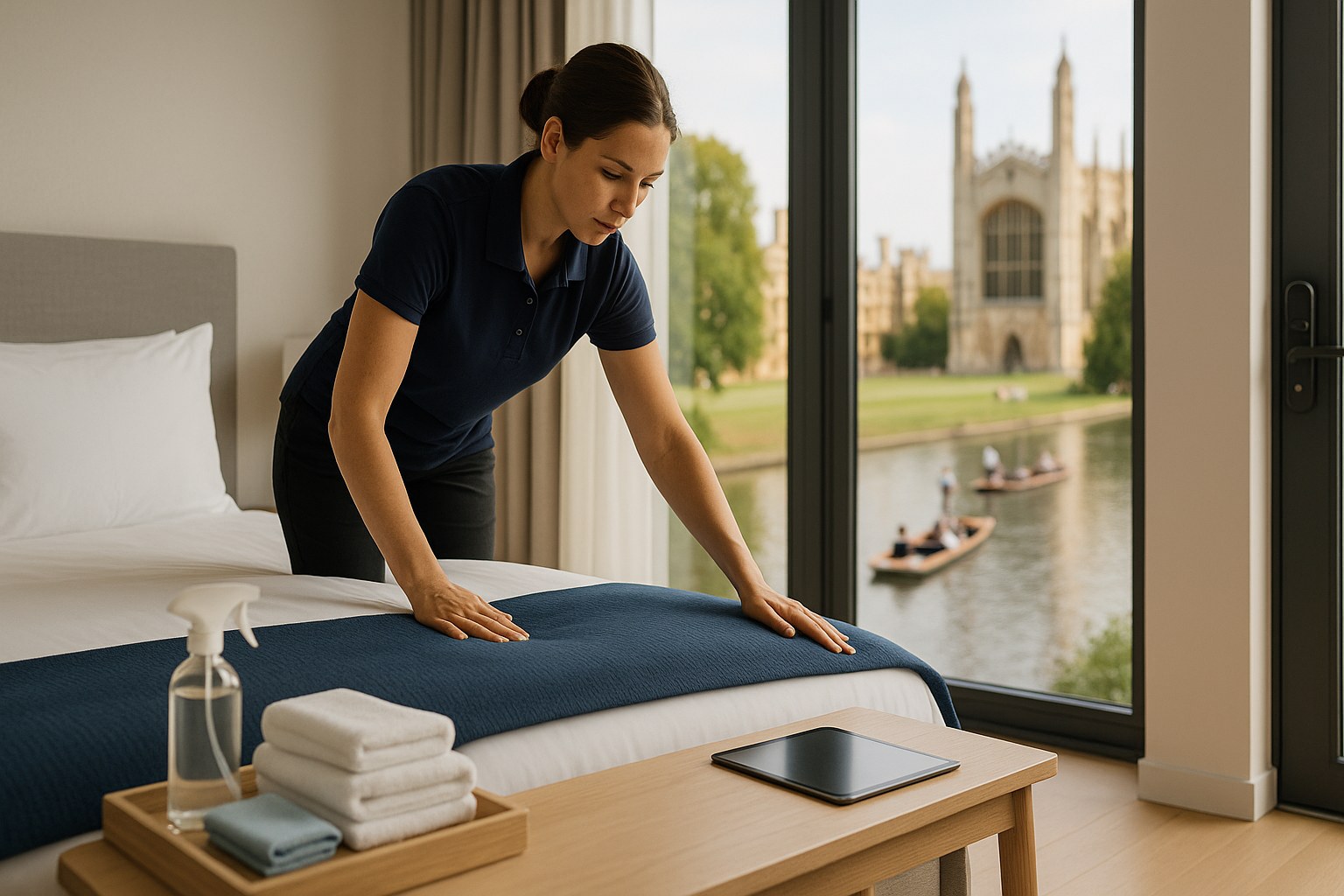
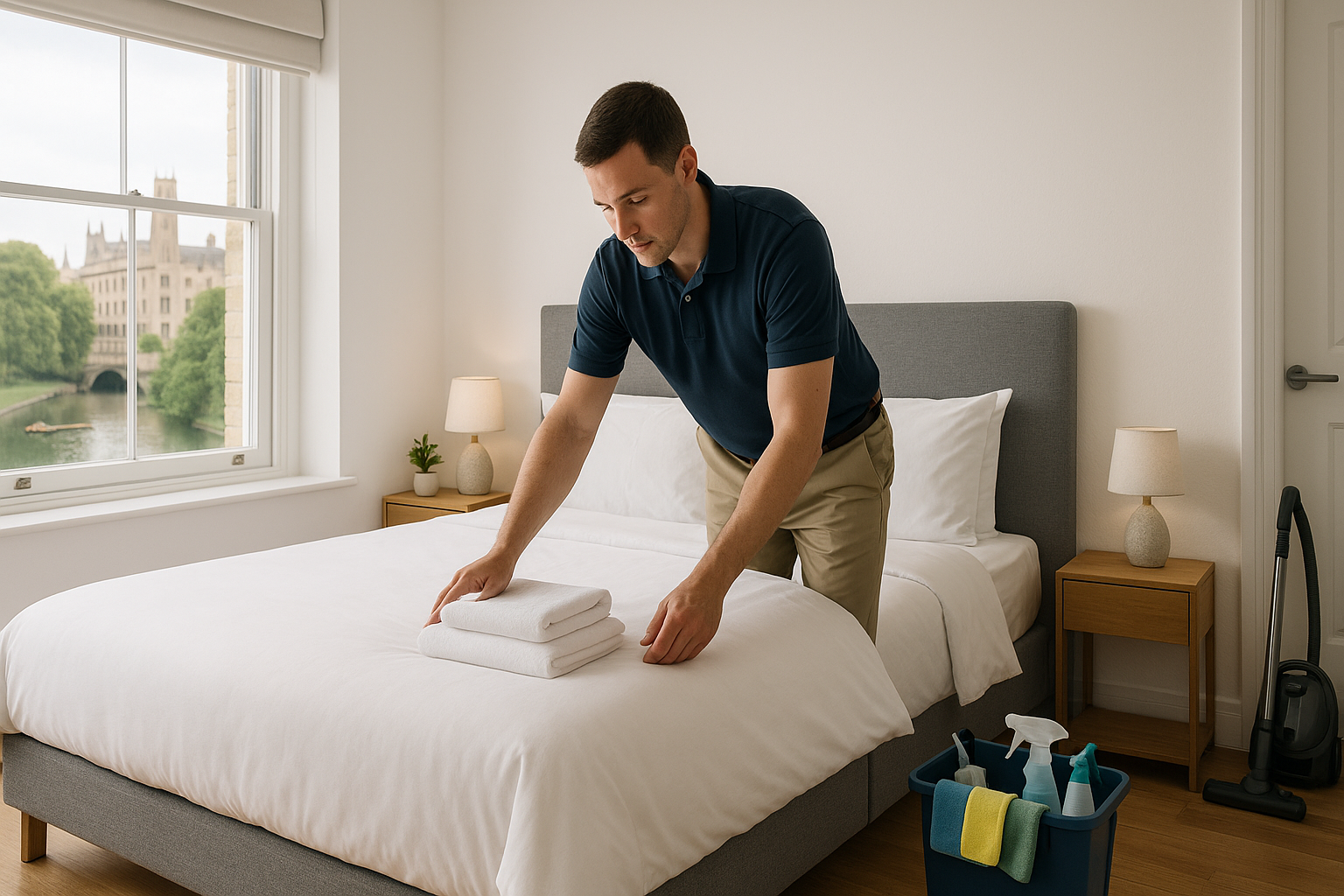
Beds are the centrepiece of any listing. Linens should be professionally laundered and pressed, with crisp duvet alignment and pillow presentation that feels inviting. Mattress protectors and pillow protectors are checked and replaced as needed. Under-bed areas are vacuumed, side tables wiped, lamps dusted, and wardrobes cleared of previous guest hangers or forgotten clothing. If you use zip-and-link beds, the team should be comfortable reconfiguring to the correct layout for the next booking.
Sofas and armchairs are vacuumed, cushions plumped, and throws folded consistently. Dusting should reach skirting boards, picture frames, and high surfaces. Windows are spot-checked for fingerprints, especially patio doors. Floors are vacuumed and mopped with the right product for the surface. Outdoor spaces like small terraces or shared balconies need a quick sweep, chair wipe-down, and a check for cigarette ends or empty bottles.
Smoke and carbon monoxide alarms get a test press. There is a scan for frayed appliance cables, blown bulbs, and low battery remotes. The team should leave a brief photo report, including any scuffs, broken glasses, or faulty items. Minor consumables like light bulbs or batteries can be replaced on the spot if agreed in advance, which keeps your property guest-ready without extra trips.
Laundry can unravel a schedule faster than anything else. You have options.
Some hosts keep two or three full sets of linen per bed, washed on-site between stays. This can work for smaller flats with reliable machines and tumble dryers. In practice, Cambridge humidity and time pressures make drying unpredictable, and on-site laundry can create bottlenecks.
Off-site laundry or linen hire simplifies changeovers. A driver collects soiled bags and drops fresh, pressed sets, all counted to your bed configuration. Costs are higher per stay, but the time saved often pays for itself in extra bookings or fewer late check-ins. Linen hire is ideal if you host back-to-back through summer or run multiple units around CB1, CB2, Chesterton, or near Addenbrooke’s.
Whichever route you choose, set clear par levels. A two-bedroom flat typically needs three full sets per bed to cover spillages and emergency swaps. Do not forget extra bath mats, tea towels, and a spare duvet and pillow set in case of last-minute sofa bed requests.
Imagine a two-bed terrace off Mill Road. Checkout is 11 am. Next guests arrive at 3 pm.
11:00 to 11:15. The cleaner arrives, gathers laundry, opens windows for ventilation, and starts a quick walkthrough to spot any damage or extra tasks. Photos are taken for your records.
11:15 to 12:00. Bathrooms are tackled first to let limescale remover do its job, then the kitchen is degreased and the dishwasher set to run with remaining dishes. Bins are emptied and rubbish is bagged for the correct collection days.
12:00 to 12:45. Bedrooms are stripped, beds remade with fresh sets, and vacuuming done methodically room by room. Any marks on walls are spot-cleaned if safe for the paint finish.
12:45 to 13:30. Living room dusting and floor mopping, sofa vacuum and cushion reset, throws folded, remote batteries checked. Outdoor space gets a quick sweep.
13:30 to 14:00. Consumables restocked, welcome note placed, and a final polish of taps and mirrors. The house is closed up, heating or cooling set as appropriate, and lights checked.
14:00 to 14:30. A final walk-through and photo report is sent to you. If keys are held by concierge, the team returns them before the cut-off.
With practice and the right supplies at hand, that timeline is realistic for a well-maintained property. Heavier cleans after large groups or longer stays need more time, and a good service will flag that in advance.
Costs vary by size, condition, linen plan, and location. Central properties near King’s Parade or the station can require paid parking, which some teams charge back. Houses with gardens add outdoor time. If you want the fridge cleaned every departure rather than as needed, expect a slightly higher rate.
As a broad guide, studios and compact one-bed flats often sit at the lower end, with two-bed flats mid-range, and larger townhouses higher. Linen hire or off-site laundry is typically charged per bed or per item, and can look pricier on paper, but it stabilises turnaround times in busy months. Extra fees can apply for late-night checkouts, bank holidays, or emergency same-day callouts.
Rather than chase the cheapest quote, look at what is included. Some services bundle restocking, minor maintenance, and reporting. Others price only for cleaning time and charge add-ons for everything else. Consistent quality saves money by preventing refunds and re-cleans.
Cambridge has a clear rhythm. Spring picks up as the river warms and college tour traffic increases. May Week events and graduations spike demand. July and August bring families and international travellers. Conference season adds midweek turnover near the science parks and central hotels. December sees Christmas markets and carol services at King’s College Chapel.
If you host back-to-back in those months, book your changeovers well in advance and share your calendar with your cleaner. Hold a small buffer between checkout and check-in where possible. Even 30 minutes gives a team room to absorb traffic delays or a surprise deep fridge clean. If you accept same-day bookings, make sure your cleaner consents to those rules and has capacity, otherwise last-minute reservations become stressful rather than lucrative.
The right partner treats your listing like a business asset, not just a flat to tidy. When you shortlist local services, ask clear questions and listen for practical answers.
A professional service will have documented checklists, a simple way to communicate on short notice, and a realistic view of Cambridge travel times. If they cannot speak to local specifics like residents’ parking zones or lift access in station-side blocks, keep looking.
A great cleaner still needs the right setup. Create a short property manual with appliance quirks and where to find spares. Label shelves in a lockable owner’s cupboard for consumables, spares, and emergency items. Keep a dedicated box for lost-and-found so nothing gets tossed by accident. Stock colour-coded microfibre cloths, the right floor cleaner for your surfaces, and descaler for bathrooms. Provide zipped laundry bags to make linen collection faster, and choose mattress and pillow protectors that wash and dry quickly.
Clarity pays off. If the sofa bed is only for bookings of three or more, say so in the cleaner’s notes. If the dishwasher tablet brand matters because of hard water, write it down. If the outdoor cushions need to be stored inside after each stay, include a reminder. Details remove guesswork and reduce errors.
Treat changeovers like a small production. Confirm access, guest checkout time, and any special notes the morning of the clean. If you allow luggage drop-offs or early check-ins, let your cleaner know so they are not surprised by people arriving while they work.
Photo reports are your safety net. Ask for a dozen quick shots, including the made beds, bathroom sparkle points, kitchen surfaces, and any damage or missing items. This record helps you handle guest queries and proves that the space met your standards at handover. If your cleaner notices drips under the sink or a flickering light, they should highlight it and, if authorised, fix minor issues before the next arrival. That closed loop is the core of a trusted partnership.
Every city has its idiosyncrasies. In Cambridge, bike traffic means many cleaners travel by cycle or cargo bike. This can be faster than cars in the centre, but bulky laundry needs planning. If your property is on a narrow street near the river, agree a practical loading spot for linen drop-offs.
Some historic buildings have delicate finishes. Avoid abrasive products on old wood floors and use neutral pH cleaners to protect stone tiles. If your listing is in a listed building, discuss which marks can be safely removed and where to leave wall scuffs for a decorator.
Waste collection days vary by ward. A local team will know when blue, green, and black bins go out, and will help guests put the right bin on the kerb when a stay overlaps with collection. This small act prevents overflow that can put off arriving guests.
For longer bookings, a light mid-stay refresh can reduce end-of-stay workload and keep standards high. A one-hour visit to swap towels, top up supplies, empty bins, and give the bathroom a once-over is usually enough. Work this into your calendar for corporate guests, visiting researchers near the Biomedical Campus, or family stays that span more than a week. Guests appreciate the touch, and you avoid a deep-clean shock at checkout.
Cleanliness is not just a hygiene factor. It is a differentiator. Many Cambridge listings compete on location, but reviews often mention how spotless or comfortable a place felt. A methodical changeover puts you in control of those mentions. Think of it as an investment in repeat bookings. Guests who return to Cambridge for college reunions or conferences remember a well-kept flat more than a trendy throw pillow.
Match your standards to your promise. If your listing says hotel-quality linen, arrange hotel-quality pressing. If you boast of a well-equipped kitchen, keep knives sharp and pans unwarped. Your cleaner can help maintain that baseline if you give them authority to flag and replace items within an agreed budget.
Reliable changeovers turn hosting from a scramble into a steady routine. In Cambridge, that means working with a local team that understands the city’s pace, has a robust checklist, and communicates clearly on the days that matter. Set up good linen logistics, plan ahead for peak weeks, and give your cleaner the tools and notes they need to reset your space without fuss. The result is simple. Guests arrive to a place that feels like no one has ever stayed there before, your reviews stay strong, and your calendar keeps filling on its own.