September 20, 2026
April 30, 2026
If your mattress could talk, it would probably ask for a wash. Sweat, skin cells, dust mites, and the occasional spill settle in quietly, then turn into stains and stubborn odors. Spritzing fabric freshener only masks the problem. A proper deep clean resets the bed you spend a third of your life on, and it is easier than most people think.
This guide shows how to clean mattress materials safely and thoroughly without soaking the core or voiding a warranty. You will learn a practical routine that deodorizes, removes stains, and helps your mattress last longer. The process works for memory foam, hybrid, innerspring, and latex, with notes where methods differ.
You need only a few supplies, and most are already in your cleaning kit.
Pick a dry day if you can. Good airflow helps the mattress dry fully, which is the most important part of cleaning. Plan for a few hours from start to finish, including drying time.
Remove sheets, pillowcases, and the mattress protector. Wash bedding in the warmest water the care label allows. Add an oxygen booster if you see yellowing from sweat. If you use a protector, launder it now and keep it ready, since putting a clean mattress back under a barrier keeps it fresh much longer.
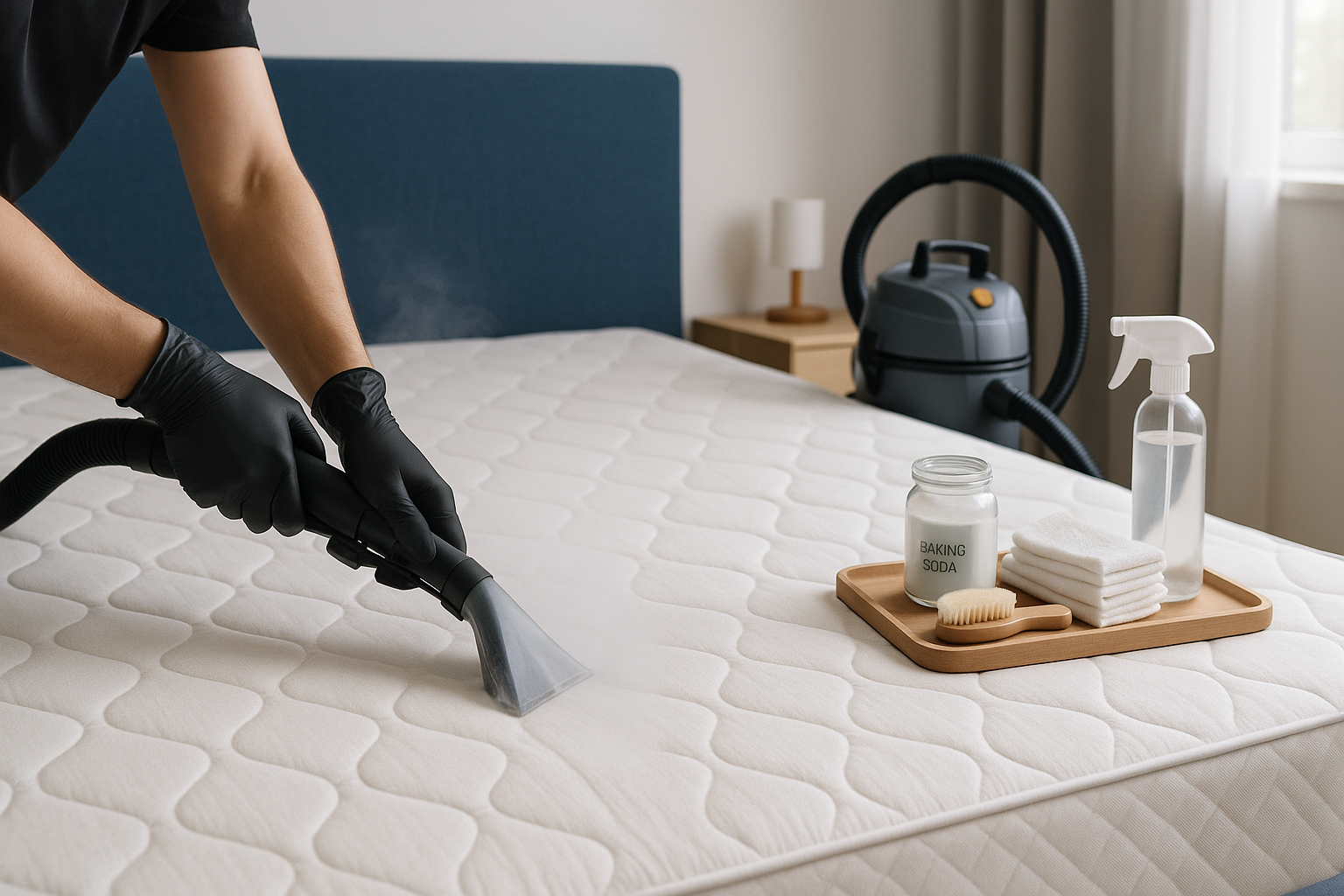
Vacuuming removes grit, dust mites, lint, and hair that hold odors and feed bacteria. Use the upholstery tool for the surface, then switch to the crevice tool to trace every seam and tuft. Do not forget the sides. Spend time here. The more you remove dry, the less you need to wet clean.
Most mattress issues come down to stains, not overall grime. Treat spots before you deodorize. Always test a small, hidden area first.
Start by blotting with a barely damp cloth and a drop of mild dish soap. Work from the outside of the stain toward the center to prevent spreading. Avoid scrubbing, which can push moisture deep into the foam or batting. If plain soap and water are not enough, move to the method that fits your specific stain.
Protein stains from sweat, urine, or blood respond well to enzyme cleaners. Look for products labeled safe for upholstery and follow the directions. Lightly mist the stain, wait the recommended dwell time, then blot with a clean cloth. Repeat if needed. Enzymes break down odor-causing molecules without heavy fragrances.
For urine and lingering odor, mix equal parts white vinegar and water in a spray bottle. Lightly mist the area and blot. Vinegar neutralizes ammonia, which is what your nose detects. Use a fan to help the spot dry quickly. If the odor lingers, repeat, then finish with baking soda in the next step.
For sweat and yellowing, combine a cup of cold water with a teaspoon of dish soap. Dab and blot. If the mattress cover is white and colorfast, you can try a small amount of 3 percent hydrogen peroxide. Peroxide can lighten fabrics, so do a patch test and use it sparingly. Drip a little on the stain, let it fizz for a minute, then blot with a dry cloth. Do not mix peroxide with vinegar or ammonia.
For blood, use cold water only. Warm water can set protein stains. Dab with a cloth dipped in cold soapy water, then blot dry. Stubborn spots often lift with a small amount of hydrogen peroxide, applied and blotted in short cycles.
For vomit and food spills, scrape up solids gently with a spoon. Mix a cup of water with a tablespoon of vinegar and a few drops of dish soap. Lightly apply and blot. If an odor remains, follow with an enzyme cleaner once the surface is mostly dry.
Throughout spot treatment, keep liquids on the surface. The goal is to dampen the fabric, not soak the padding beneath. If a spill penetrated deeply, absorb as much as possible with pressure and dry time. A wet or dry vacuum on low suction can help extract moisture from the top layer on innerspring or hybrid models, but avoid strong suction on delicate foam.
Once stains are treated and the surface is only slightly damp or fully dry, sprinkle a thin, even layer of baking soda over the entire mattress. Baking soda absorbs odors and residual moisture. If you have time, leave it for a few hours. For deeper deodorizing, especially after a spill, leave it on all day.
If you like a light scent, you can mix a teaspoon of baking soda with a drop of essential oil in a small bowl, stir, then sprinkle that blend. This is purely optional and not recommended for people with fragrance sensitivities.
Drying is where many attempts go wrong. Trapped moisture can cause mildew. Open a window and aim a fan across the bed. If you have a dehumidifier, run it in the room. Flip the mattress only if the manufacturer allows it, and keep airflow moving until everything feels bone dry. Foam can feel dry on the surface before it is dry inside, so give it more time than you think you need.
If the cover is removable and machine washable, check the tag and follow the instructions. Many zip-off covers on memory foam or hybrid mattresses are spot clean only. If yours is washable, air-dry it completely before reassembly.
After the baking soda has done its work, vacuum it up slowly. Pay attention to seams and tufts where powder settles. Put on a clean, dry mattress protector, then fresh sheets. Your bed should smell neutral and feel crisp.
Some messes need targeted attention. Here are the most effective strategies by type, with a focus on safety for both the fabric and the foam.
Urine is acidic at first, then becomes alkaline as it dries, which is why old stains smell worse. Treat it as soon as possible. Blot up liquid with a thick stack of paper towels, applying firm pressure. Mist the area with a 1 to 1 mix of white vinegar and water. Let it sit for 10 to 15 minutes, then blot again. Follow with an enzyme cleaner to break down uric acid crystals. Finish with baking soda to absorb remaining odor, then vacuum when dry. Repeat the enzyme and baking soda step for stubborn smells rather than oversaturating in one pass.
Sweat can oxidize and turn yellow. Mix cool water with a few drops of dish soap and lightly dab. If the mattress is light colored and tested safe, apply a small amount of 3 percent hydrogen peroxide to lift the yellowing. Rinse by blotting with a damp cloth, then dry the area with a fan. Prevent future build-up by laundering your protector regularly and letting the mattress air for a few minutes before making the bed.
Cold water is essential. Dab with cold, soapy water. For fresh stains, salt paste can help. Stir a spoonful of table salt with a little cold water, spread a thin layer on the stain, wait 10 minutes, then wipe and blot. For older stains, use a small amount of peroxide with caution.
Start by removing solids. Use the vinegar and soap solution to clean and deodorize, then follow with baking soda. Tannins in coffee and wine can set quickly. If a light stain remains on a white cover, a tiny amount of peroxide might help, but spot test carefully.
A musty smell usually means moisture sat too long. Move the mattress where you can increase airflow. Use a fan and dehumidifier for several hours. Lightly mist the surface with a 1 to 1 vinegar and water mix, then blot. Do not soak. If you see active mold growth or black spotting that spreads, contact a professional. Foam can harbor growth below the surface, and replacement may be safer.
Not all mattresses handle moisture the same way. The overall approach to how to clean mattress materials stays similar, but your drying strategy and what to avoid will change by type.
Memory foam absorbs water easily and dries slowly. Keep liquids to a minimum. Skip steam entirely. Use light misting and prompt blotting. Enzyme cleaners and vinegar solutions should be applied sparingly. Dry with strong airflow for an extended period. Some memory foam covers are not designed to be removed, and many are spot clean only. Check the manufacturer’s instructions before unzipping.
Natural and synthetic latex are less absorbent than memory foam but still vulnerable to heat and prolonged moisture. Avoid steam, avoid harsh solvents, and keep direct sunlight off the latex core, since UV can degrade it. Use mild soap solutions and quick drying.
These models have more airflow inside, which helps them dry faster. You can use a wet or dry vacuum on low suction to pull surface moisture from a spill. Be careful with steam, especially if the pillowtop includes foam. Always test cleaners on the outer fabric first.
A few common mistakes cause more harm than good.
Do not soak a mattress. Liquids that penetrate the core are hard to remove and can cause odors or mildew.
Do not use bleach on upholstery fabrics. It can weaken fibers and cause uneven discoloration. Oxygen-based cleaners are gentler for most coverings.
Do not mix chemicals. Mixing vinegar and peroxide creates peracetic acid, which is irritating. Stick to one chemistry at a time and rinse or blot between products.
Do not rely on heavy fragrance to cover odors. Odor control is about removing or neutralizing the source, not masking it.
Do not steam clean memory foam or latex. Heat and moisture can damage the structure and trap water inside.
Do not ignore slow drying. If a spot still feels cool or slightly damp hours later, keep the fan on. Moisture you cannot feel can still breed odor.
Deep cleaning helps, but small habits keep a mattress in good shape year-round.
Use a waterproof, breathable protector. An encasement that zips around the entire mattress blocks spills, dust mites, and allergens. It is easier to wash a protector than to spot clean the mattress itself. Wash it monthly or whenever spills occur.
Rotate your mattress regularly. Most modern mattresses are one sided, so rotate head to foot every three months. This evens out wear and keeps channels open for airflow. If yours is double sided and designed to flip, turn it over on the same schedule.
Vacuum monthly. A quick pass with the upholstery tool removes dust and dander before they settle into the fibers.
Handle spills immediately. The faster you blot and treat, the less likely stains and smells will set.
Keep humidity in check. Bedrooms with high humidity often have lingering odor problems. Aim for indoor humidity below 50 percent. A small dehumidifier can make a big difference.
Let the bed breathe occasionally. When you change sheets, leave the mattress uncovered for ten minutes to release moisture.
Watch for signs of pests. Tiny black dots along seams can signal bed bugs. Cleaning alone will not solve an infestation. If you suspect pests, call a licensed professional and encase the mattress after treatment.
When you do not have time for a full routine, a mini reset makes a big difference. Strip the bed, vacuum for two minutes, and sprinkle a light layer of baking soda while you shower or run errands. Vacuum it up when you return, then make the bed. For a mild odor boost, stand a fan by the bed with the window cracked for an hour.
If you cannot remove a strong odor after multiple tries, if a large spill soaked deep into the mattress, or if you see mold growth, call a professional cleaning service that handles upholstery. They can extract moisture with equipment designed for deep layers, though foam limitations still apply.
There is also a point when cleaning cannot fix structural issues. If your mattress sags, if coils creak, or if you wake with pain or allergies that ease away from home, replacement may be due. Most mattresses last seven to ten years, depending on materials, body weight, and care. A protector and steady maintenance can stretch the useful life, but comfort and hygiene are the final guide.
A clean mattress is not about perfection. It is about a neutral smell, a fresh surface, and the peace of mind that comes from knowing what you sleep on is actually clean. With a vacuum, a few pantry staples, and patient drying, you can handle stains, banish odors, and reset your bed without harsh chemicals or guesswork. Once you know how to clean mattress materials safely, the hardest part is simply making time for it twice a year. Your sleep will thank you.