September 20, 2026
April 29, 2026
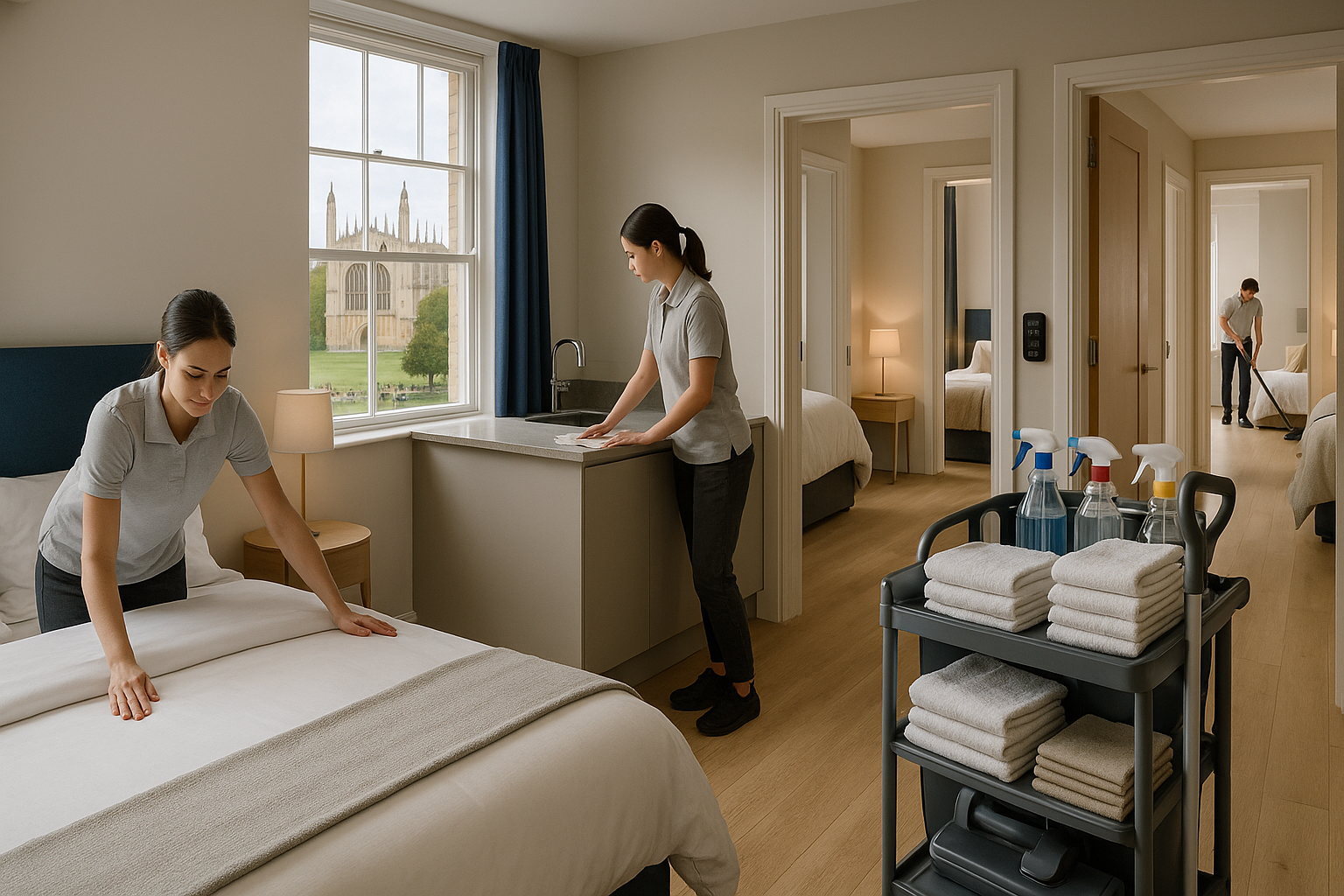
Five-star reviews are fragile. One stray hair on a pillow or a missed bin can turn a smooth turnover into a guest complaint, then a rating that drags down your entire operation. If you run several short lets around the city, you already know the pressure. Coordinating keys, laundry, timing, parking, and standards across different homes is where many hosts stumble. A focused cleaning service for multiple Airbnbs in Cambridge is not a luxury, it is the backbone of a scalable, stress-free setup.
Cambridge brings unique challenges for hosts who manage more than one property. Turnovers often stack up between 10 a.m. and 3 p.m., roads clog around the station and city centre, and many homes are compact terraces or flats with limited storage for supplies and linen. Guest expectations are high, especially with the steady stream of parents visiting the colleges, tech travellers in Silicon Fen, and summer tourists. This article lays out how to build a reliable, repeatable cleaning operation in Cambridge, what a specialist partner should deliver, and how to keep standards consistent without spending every afternoon racing from one key safe to the next.
The city’s rhythm shapes your schedule. There is a pronounced peak from late spring to early autumn, fuelled by graduations, May Balls, punting seasons, and conferences. Weekends fill quickly, and midweek corporate stays create same-day turnovers with narrow windows.
Properties vary more than in many cities. You might have a Victorian terrace off Mill Road with stairs and delicate timber floors, a modern CB1 apartment with secure entry and building rules, and a family home in Chesterton with a garden that sheds leaves onto every path. Each needs a tailored approach, yet your guests expect the same spotless arrival.
There are also local logistics to respect. Parking is limited, permit-controlled streets are common, and many central homes rely on communal bins. Cleaners who understand Cambridge’s layout can switch to bikes or compact vehicles, move quickly through no-car zones, and manage rubbish without annoying neighbours or missing collection days.
A true cleaning service for multiple Airbnbs in Cambridge does far more than vacuum and wipe surfaces. They build a small hotel operation within your portfolio, with systems that stand up to last-minute changes.
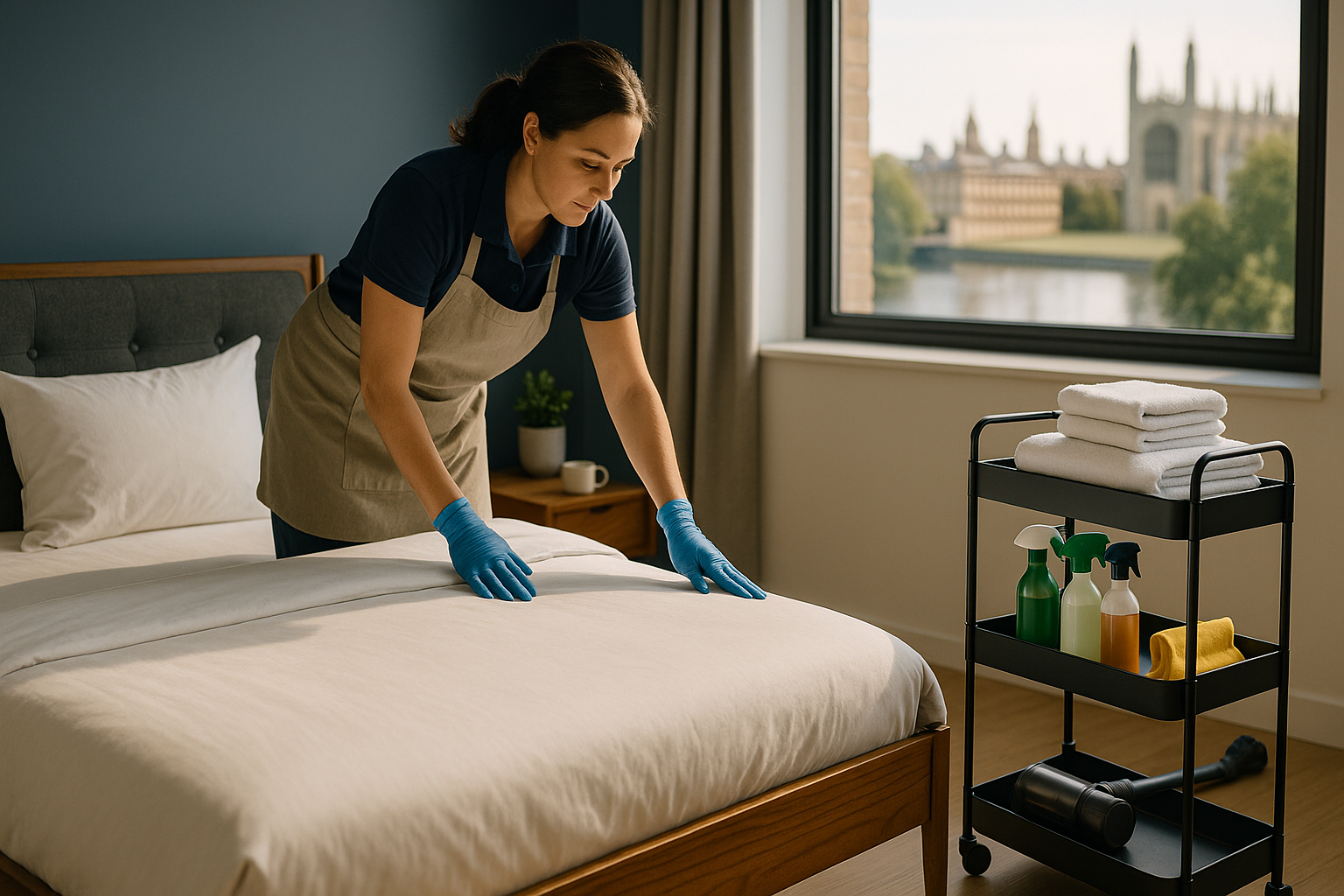
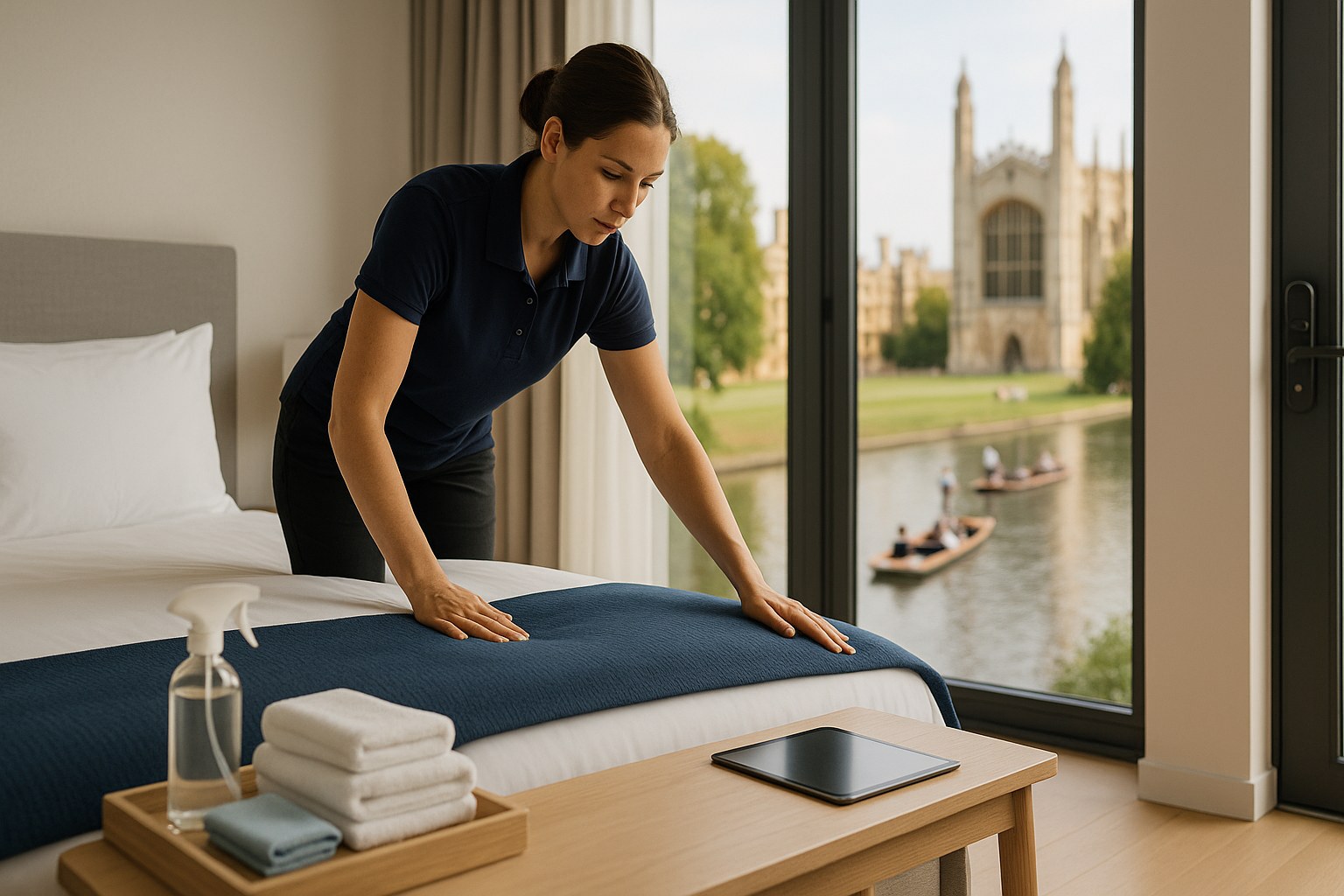
Turnover cleaning is the core. Beds are stripped and remade with hotel-standard linen, bathrooms sanitised, kitchens degreased, floors cleaned, and surfaces dusted. The best teams stage spaces for photos, checking sightlines to match your listing images. They remove food remnants, check appliance settings, and leave the property at a consistent temperature.
Laundry and linen often make or break the day. A scalable system includes three complete sets per bed in rotation, on-site linen storage where possible, and off-site laundering that returns sets pressed, shrink-wrapped, and ready to deploy. If space is tight, your provider can keep linen at their depot and deliver it per turnover.
Restocking is part of the brief. Toiletries, tea and coffee, dishwasher tablets, bin bags, and paper goods are counted and replenished to predefined par levels. A good partner sends photos or digital checklists after each turnover so you can monitor standards without visiting.
Maintenance spotting and reporting protect your ratings. Housekeepers should test lights, report drips or slow drains, flag wobbly chairs, and document damage with time-stamped photos. Small fixes, like replacing batteries and bulbs, can be approved and handled within the same visit.
Deep cleans and seasonal tasks keep wear and tear at bay. Plan quarterly or biannual sessions for oven detailing, descaling, grout work, skirting boards, window interiors, and under-sofa vacuums. In heritage homes, gentle products and techniques avoid damaging historic finishes.
With several Airbnbs, the calendar becomes your control centre. The partner you choose should integrate with the tools you already use, pulling bookings directly from Airbnb calendars or your property management system. Reliable providers sync through iCal or a cleaning platform, create tasks automatically after each reservation, and update you in real time when a clean starts and finishes.
Narrow windows are where expertise shows. Cambridge turnover windows often open at 10 or 11 a.m., and check-in begins at 3 or 4 p.m. To make that work across multiple addresses, teams need route planning that accounts for traffic around Hills Road, restricted access in the centre, and popular roadworks hotspots. Some firms use cyclists for central cleans and cars for outlying areas. That mix matters more than it might in other cities.
Key and access management should be foolproof. Exterior lockboxes with unique codes, smart locks where building rules allow, and backup plans for fob-controlled entrances are non-negotiable. Your cleaner should know how to reach concierge desks, navigate coded gates, and work within building quiet hours.
Communication ties it together. Confirmations the day before, a precise arrival window on the day, and an immediate update if a guest checks out late let you adjust instructions or offer a later check-in with confidence.
Linen is the biggest operational lift for a growing portfolio. If each one-bed needs three complete sets in circulation and you manage five homes, you are moving a dozen duvet covers and piles of towels after every busy weekend. Outsourcing this properly keeps your car boot clear and your headspace calmer.
Start with durable, hotel-grade textiles that wash at 60 degrees and survive frequent cycles. Pure white sheets make stains obvious and reassure guests, plus they are easy to match and replace. Label sets by size and property to reduce sorting errors. Keep one emergency set at each property in a locked owner’s cupboard, with the rest stored centrally.
Work with a laundry that offers pickup and delivery on a predictable schedule, plus a rush option for peak weekends. If your homes lack storage, your provider can deliver linen per turnover, then collect used sets after the clean. That one-touch model is ideal for compact flats near the station where every cupboard counts.
Towel and linen par levels help you avoid midweek shortages. For most homes, three sets per bed and two towel sets per guest capacity cover peak fluctuations. When you add a new unit, invest in the full rotation at once so you are never scrambling between addresses.
Consistency is what earns five-star reviews. Your cleaning partner should use photo checklists that match each room’s staging, plus itemised tasks that reflect your brand. A supervisor or lead cleaner should audit a sample of cleans weekly, then coach the team on any drift from standards.
Documentation matters when you cannot be on site. Expect a digital report with before and after photos for high-risk areas like fridges, bathrooms, and hob tops. Ask for notes on consumables, maintenance flags, and any guest belongings found, with a simple lost-and-found process you can reference in guest messages.
Little touches lift the experience. Crisp hospital corners on beds, folded towels arranged consistently, bins lined the same way each time, and a final scent that is clean but not overpowering all add up. In Cambridge, guests appreciate visible recycling instructions and neatly arranged bin caddies, especially in flats with shared waste areas.
Rates vary with property size, service scope, and frequency. As a rough guide in Cambridge:
Add-ons like exterior glass, oven details, carpet shampooing, high dusting, and garden sweep-ups are usually priced separately. Many providers offer portfolio discounts if you book regular weekly volume across several homes. Make sure you understand what is bundled, for example whether laundry is included or billed per kilo, and how last-minute bookings affect the fee.
Transparent invoicing helps with cash flow. Ask for per-property itemisation, receipts for consumables, and a simple way to reconcile costs against your monthly payouts.
Cambridge experience is not optional. The right partner knows how to navigate limited parking, bike when needed, and handle building-specific rules. They have insurance, health and safety training, and vetted teams who can work in homes unsupervised.
Look for providers willing to tailor a playbook for each listing. That includes room-by-room checklists, linen SKUs, access instructions, appliance quirks, and staging notes tied to your photography. If you manage a mix of properties, a one-size sheet will not fit everything.
Technology should be visible but not confusing. Calendar syncing with Airbnb or your PMS, automated task creation after a booking, and instant notifications are table stakes. Some teams use platforms such as Turno, Breezeway, or Properly to streamline checklists and photo proof, which can save you hours.
Ask focused questions before you sign:
The answers reveal whether a provider is set up for single homes or ready to run your portfolio like a mini hotel.
Picture a June weekend. Three properties are checking out at 10 a.m. A two-bed near Parker’s Piece, a one-bed in CB1, and a terrace house off Mill Road. You have new guests arriving from midday onwards, with the two-bed expecting an early bag drop.
At 9 a.m., your cleaning team confirms routing. One pair cycles to the CB1 flat with linen in panniers, avoiding the station traffic. Another team drives to Mill Road with a compact car and a permit for short loading, bringing garden tools for a quick sweep of the small courtyard. A third cleaner meets the supervisor at the two-bed and stages the living area first so guests can drop bags without seeing supplies.
The CB1 flat finishes by noon. Photos and the turnover report hit your inbox. The Mill Road house needs a new kettle, reported with a photo of the cracked lid, and you approve a same-day replacement. The two-bed’s guests are running late to check out, so the team pivots to bathrooms and kitchen first, then completes the bedrooms after the delay. All three homes are guest-ready by 2:45 p.m., with towels folded the same way, teabags topped up, recycling sorted into the right caddies, and a light citrus scent that clears quickly.
No drama. No dashes across town. Just a process that holds under pressure.
Cambridge cares about sustainability, and short lets are under neighbour scrutiny in dense streets. Your cleaning partner can help you be a good citizen while keeping standards high.
Choose concentrated, eco-certified products, refill bottles to reduce plastic, and switch to microfibre cloths that last. Wash linen at 60 degrees for hygiene, then air dry when possible or group dryer loads to reduce energy use. In older homes, avoid harsh bleach that can damage finishes. Share clear recycling instructions in guest guides, then have your cleaner stage bins correctly. Cambridge City Council’s system relies on blue for mixed recycling, black for general waste, and green for garden and food in houses that have them. Many flats use communal bins, so proper sorting prevents contamination notices and neighbour complaints.
Noise control is part of being a good neighbour. Agree on quiet hours for vacuuming in flats with thin walls, and ask cleaners to avoid blocking shared hallways with trolleys. A provider who respects building etiquette protects your relationships and your listing’s longevity.
The first week with a new cleaning service is where you set expectations. Create a property profile for each home that includes access details, parking notes, preferred staging photos, bed configurations, appliance manuals for any quirks, waste instructions, and contacts for urgent maintenance. Walk one property together so the team can see your standards in action, then compare their first turnover report against your checklist.
Share your calendar volume forecasts so the provider can staff busy periods around graduations, summer festivals, and Christmas markets. Agree on par levels for linen and consumables, where to store items on site, and what a typical emergency call-out looks like. Define a simple approval workflow for small purchases and repairs, along with the threshold where you want a call before action.
Finally, align on metrics. Many hosts track review scores, cleaning-related mentions in feedback, on-time completion rate, and issues per 100 stays. A monthly review, even a short one, keeps both sides tuned.
Once you reach a certain scale, a hybrid model can make sense. Your cleaning partner handles turnovers, deep cleans, and laundry as usual, while a part-time in-house assistant handles mid-stay refreshes, replenishes consumables between back-to-back bookings, and meets vendors. This can be useful if your homes are clustered in one area, for example around the station or off East Road, where small touch-ups between cleans keep the pace smooth.
If you go this route, keep responsibilities crisp. Your partner’s checklists should remain the source of truth. The in-house assistant should never alter staging or stock levels without updating the playbook, otherwise inconsistencies creep in.
A cheap rate without a plan often ends up expensive. If a provider cannot explain how they handle late checkouts, peak Saturdays, or linen storage in small flats, you will feel the gaps at the worst possible time.
Be wary of teams that do not document cleans. Without photos and checklists, disputes about damage or cleanliness turn into he-said-she-said. Insurance and vetting also matter. You are handing over keys to other people’s homes. Insured, background-checked staff are a baseline requirement, not a bonus.
Finally, listen for a Cambridge learning curve. Not knowing bin systems, access quirks, or parking realities is common for out-of-town providers. It is also a headache you do not need.
When cleaning becomes a predictable system, everything else gets easier. You stop worrying about whether the Parker’s Piece flat was dusted properly or if the Mill Road house has enough tea. Your guests arrive to spaces that look exactly like your photos. Reviews mention cleanliness as a strength, not an afterthought. Same-day turnovers feel routine instead of risky.
That consistency translates directly to bookings and pricing power. Five-star averages attract more guests, and reliable operations free you to acquire the next great listing. It is an investment with compounding returns.
A dependable cleaning service for multiple Airbnbs in Cambridge is a logistics engine, a quality-control department, and a guest-experience team rolled into one. Look for local knowledge, strong linen logistics, photo-based checklists, and responsive scheduling that stays calm when the calendar gets tight. Build clear playbooks for each property, then hold to them. With the right partner, your portfolio runs like a small hotel, and your weekends stop revolving around vacuum cords and laundry bags.