November 11, 2026
November 12, 2026
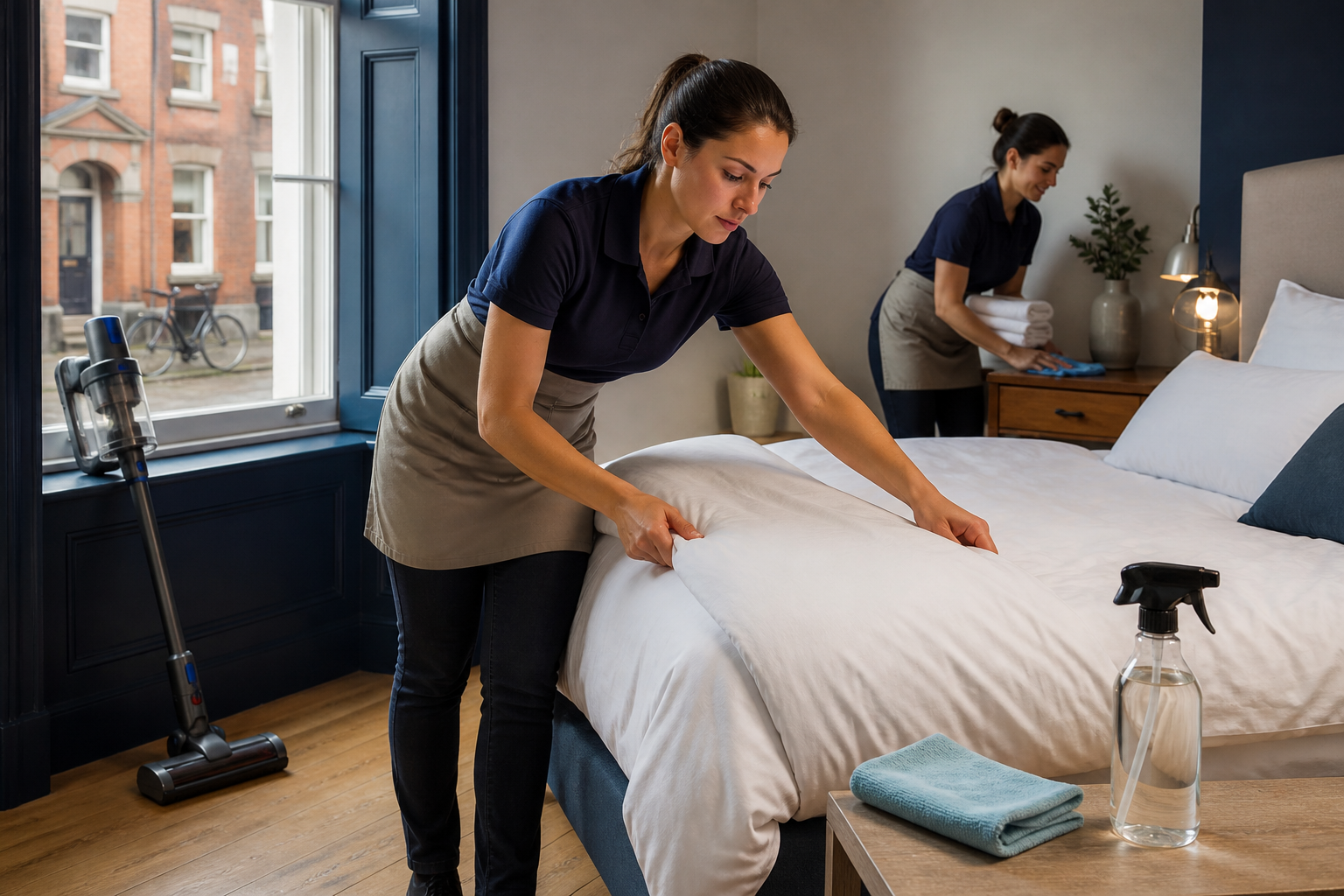
Fast turnovers and spotless reviews depend on more than elbow grease. For a short-term rental in Cambridge, inconsistent cleaning or missed details can cost nights, lower ratings, and create stress at odd hours. Choosing the right Airbnb cleaning service Cambridge hosts trust means building a predictable system that protects bookings and guest satisfaction.
This article explains what reliable turnover cleans look like in Cambridge, how to choose the right provider, what to include in your standard operating procedures, and practical solutions for common problems. Read on for concrete examples, realistic pricing guidance, and the operational steps that keep your property ready for check-in.
Why a specialist turnover clean matters for Cambridge hosts
A turnover clean differs from a routine household tidy. Guests expect hotel-level cleanliness, fresh linens, and functional amenities. An effective turnover clean covers sanitation, presentation, and inspection. In Cambridge, where tourism, university events, and conferences drive rapid changes in demand, a cleaner who understands quick, repeatable processes will protect your calendar and ratings.
Turnover cleans aim to return a property to the advertised condition between guests. That requires speed, consistency, and reliable communication. If a cleaner misses a stain on the sofa or forgets to replace a welcome tray, you may receive a negative review that reduces future bookings. Conversely, a well-run cleaning operation reduces one-star risks and often generates five-star feedback.
What a reliable turnover clean includes
A high-quality turnover clean focuses on both visible presentation and guest safety. Key tasks typically include bathroom sanitation, kitchen cleaning, linen change, vacuuming and mopping, dusting, trash removal, and restocking essentials. Inspection steps are equally important. Cleaners should check for damage, appliance functionality, and any signs of pests or water leaks.
For clarity, successful turnover cleans perform three linked functions: clean, prepare, and inspect. Cleaning removes dirt and bacteria. Preparing means making the space welcoming, with neatly made beds, aligned cushions, and replenished supplies. Inspecting identifies maintenance issues and documents the property’s condition before the next guest arrives. Reliable services provide photo evidence after each turnover to confirm these steps.
How long turnovers take and realistic scheduling
Turnover time depends on property size, guest behavior, and scope of work. Expect a studio or small one-bed to take 30 to 60 minutes for a standard turnover. A two- or three-bedroom property typically requires 60 to 90 minutes. Add time for laundry, multiple bathrooms, or deep-clean tasks that are not part of every turnover.
When scheduling, build buffer time between check-out and the next check-in. A buffer of two to three hours works for most single-property turnovers. For back-to-back bookings, increase buffers and consider a second cleaner or intermediate staging space for linens. For last-minute bookings or early arrivals, maintain an on-call option or partner with a team that offers emergency turnarounds.
Pricing expectations and how to budget
Prices vary by property size, the urgency of service, and local market rates. Typical market ranges for Cambridge might start around modest amounts for studio turnovers and rise for larger homes or extra services. Deep cleans and specialist tasks such as oven descaling, upholstery shampooing, or external window cleaning are charged separately.
When comparing quotes, look at what is included. Some services base pricing only on time spent, which rewards efficiency but can leave you vulnerable if quality slips. Other providers set fixed prices per property type, which simplifies invoicing and supports consistent expectations. Ask for a sample invoice and a clear list of extras, including linen laundering, replacement costs for damaged items, and restocking supplies.
Key contract terms and service standards to require
A short contract or service agreement prevents misunderstandings. Require a clear list of included tasks, expected turnaround times, staffing arrangements for back-up coverage, and response times for emergency calls. Verify that the cleaner carries liability insurance and has public liability cover that protects you if a cleaner is injured on your property or causes accidental damage.
Request that the provider uses a photo checklist after every clean. The checklist should document the main rooms, bathrooms, and kitchen surfaces. Also ask for damage reporting procedures and a timeline for repair or replacement quotes. Confirm whether the cleaner will lock up and report guest-related issues such as lost property or smoking evidence. Finally, ensure there is a cancellation policy that aligns with how you manage last-minute guest changes.
Operational practices that improve reliability
Consistency comes from repeatable processes. Develop a standard operating procedure, or SOP, for every property. An SOP should specify how to make beds, where to place welcome materials, fragrance policies, and how to arrange furniture for photography. Include a documented inventory of consumables and replacements with preferred brands and stock levels.
Integrate your cleaner’s schedule with your booking calendar to avoid conflicts. Many services connect through apps that sync with Airbnb calendars and send job details automatically. Require cleaners to confirm assignments and to upload completion photos within a set time after each turnover. Use clear location notes, parking instructions, and access details so cleaners arrive ready to work.
Linen and laundry logistics that keep turnovers flowing
Laundry often creates the biggest bottleneck. Fast laundering cycles, sufficient inventory and effective drying all matter. If you operate multiple listings, consider increasing linen sets so turnovers can proceed while a previous set is laundered. Some hosts use an external laundry service for same-day turnaround; others maintain a small in-house laundry setup if space permits.
Outline folding and storage expectations in the SOP. Towels and sheets should be folded consistently and stored in a designated closet or sealed bag. Label linen bundles by size and property to avoid mixing items across listings. If you use a third-party laundry, confirm turnaround times for peak seasons and written protocols for lost or damaged linens.
Handling special situations and guest complications
Not every turnover follows the script. Guests sometimes leave late, check out without notice, or cause damage. A reliable cleaning provider remains adaptive. They should offer a rapid response for late check-outs and late-night situations when possible.
Clarify fees and procedures for damage or excessive mess. Many services charge an additional fee for deep cleaning beyond a standard turnover. If a guest smokes inside, leaves significant stains, or floors need deep cleaning for hygiene reasons, agree in advance on rate multipliers and landlord-approved remedial actions. Also establish who will document and remove guest property left behind, and how long it will be stored.
Technology and tools that support a consistent service
Modern cleaning operations use simple tech to save time and reduce mistakes. Calendar syncing eliminates double bookings. Job management apps deliver checklists and require photographic proof of completion. Digital invoices speed payment, and automated supply reordering keeps essentials stocked.
Consider a provider that supplies digital reports showing completed tasks, time on site, and photos of key areas. This transparency helps resolve disputes and supports quality control. Smart locks and coded key safes reduce reliance on physical keys and speed access for cleaners. If you prefer physical keys, require the cleaner to note key handoffs and maintain a log with dates and names.
How to choose between a freelancer and a professional company
Freelancers often offer lower hourly rates, and a single dedicated cleaner can develop a personal understanding of your property. However, a freelance cleaner may be unavailable during illnesses or at high demand weekends. A professional company brings redundancy and standardized training, and often provides insurance and supervisory oversight.
Evaluate both options by requesting references, proof of insurance, and sample photo checklists. Ask about staff turnover for companies and continuity plans for freelancers. Prefer a provider that documents their training, has a clear escalation path for problems, and commits to a trial period so you can assess quality before signing a longer agreement.
Examples of practical SOP items to include
Define bed-making style and pillow arrangement, the exact placement for toiletries, how many tea bags and coffee sachets to supply, and how to fold towels. Specify which cleaning products to use on stone versus laminate surfaces, and how to ventilate the property after cleaning. State where to store guest information packs and how to present them on arrival.
Also include safety checks: test smoke detector function, confirm that fire extinguishers are visible, and run a quick check of plumbing and heating. These small tasks reduce guest complaints and demonstrate proactivity when issues arise.
Common pitfalls and how to prevent them
Underestimating laundry needs leaves you scrambling on busy weekends. Overlooking vendor communication results in misaligned expectations about arrival times and task scope. Relying on a single cleaner without contingency planning creates vulnerability if they are unavailable.
Prevent these pitfalls by building redundancy in linen sets, using scheduling software that syncs with bookings, and having at least two trained cleaners familiar with each property. Conduct regular audits of the cleaning quality and rotate supervisory spot-checks. Keep a small reserve fund for emergency deep cleans or urgent replacements.
Final steps before you finalize a partnership
Ask for a short trial period, perhaps three to five bookings, with a written checklist and photo verification. During the trial evaluate punctuality, attention to detail, communication speed, and how extras are handled. Ask for client references and, if possible, speak directly to another Cambridge host who has worked with the provider.
Confirm paperwork. Obtain a copy of insurance certificates, a clear invoice template, and a written agreement that sets expectations for response times, pricing, and cleanliness standards. Agree on a notice period for contract termination. These steps reduce surprises and create a professional relationship that keeps your listing performance steady.
Short, clear wrap-up
A dependable Airbnb cleaning service Cambridge hosts trust combines punctuality, consistent processes, and clear communication. Define your expectations through a detailed SOP, verify insurance and references, and use technology to synchronize bookings and proofs of completion. With the right partner you reduce vacancy risk, protect reviews, and make hosting a smoother operation for every booking.