November 5, 2026
November 6, 2026

Last-minute bookings that arrive after a late checkout, a guest who leaves the place in a mess, or a single poor cleaning review can turn a profitable week into a scramble. For Cambridge hosts who rely on steady occupancy, a reliable, fast cleaning service is not a luxury, it is essential. Whether you manage one city centre flat or several college-area properties, the right partner keeps calendars full, reviews positive, and your stress levels low.
This article explains what Cambridge hosts should expect from an Airbnb cleaning service, how to choose one you can trust, and how to set up systems that prevent last-minute chaos. You will find practical checklists, pricing guidance specific to Cambridge, vetting questions to ask prospective cleaners, and real-world scenarios to illustrate how different arrangements work.
Why a professional cleaning service matters for Cambridge hosts Guests judge an entire stay by the first two minutes they spend inside a property. Cleanliness drives overall ratings, repeat bookings, and short-term rental search placement. Local factors make cleanliness even more critical in Cambridge. Many stays are for academic events, conference visitors, and international tourists who compare listings to hotel standards. University terms create sudden spikes in demand, so fast turnarounds are common and expectations are high.
Using an experienced cleaning service reduces cancellations, speeds up check-in times, and protects your listing from negative reviews that are hard to recover from. A professional team also understands the legal and insurance implications of short-term rentals. They should follow safe cleaning protocols, handle linen and waste correctly, and report damage promptly so you can respond before a guest leaves a public review.
What a fast and trusted Airbnb cleaning service Cambridge hosts rely on should offer A trustworthy cleaner for Airbnb properties combines speed, consistency, and communication. At minimum the service should provide reliable turnover cleans, deep cleans on a scheduled basis, linen and towel handling, basic restocking, and clear reporting. For a fast service you should also expect same-day or next-day availability during peak periods.
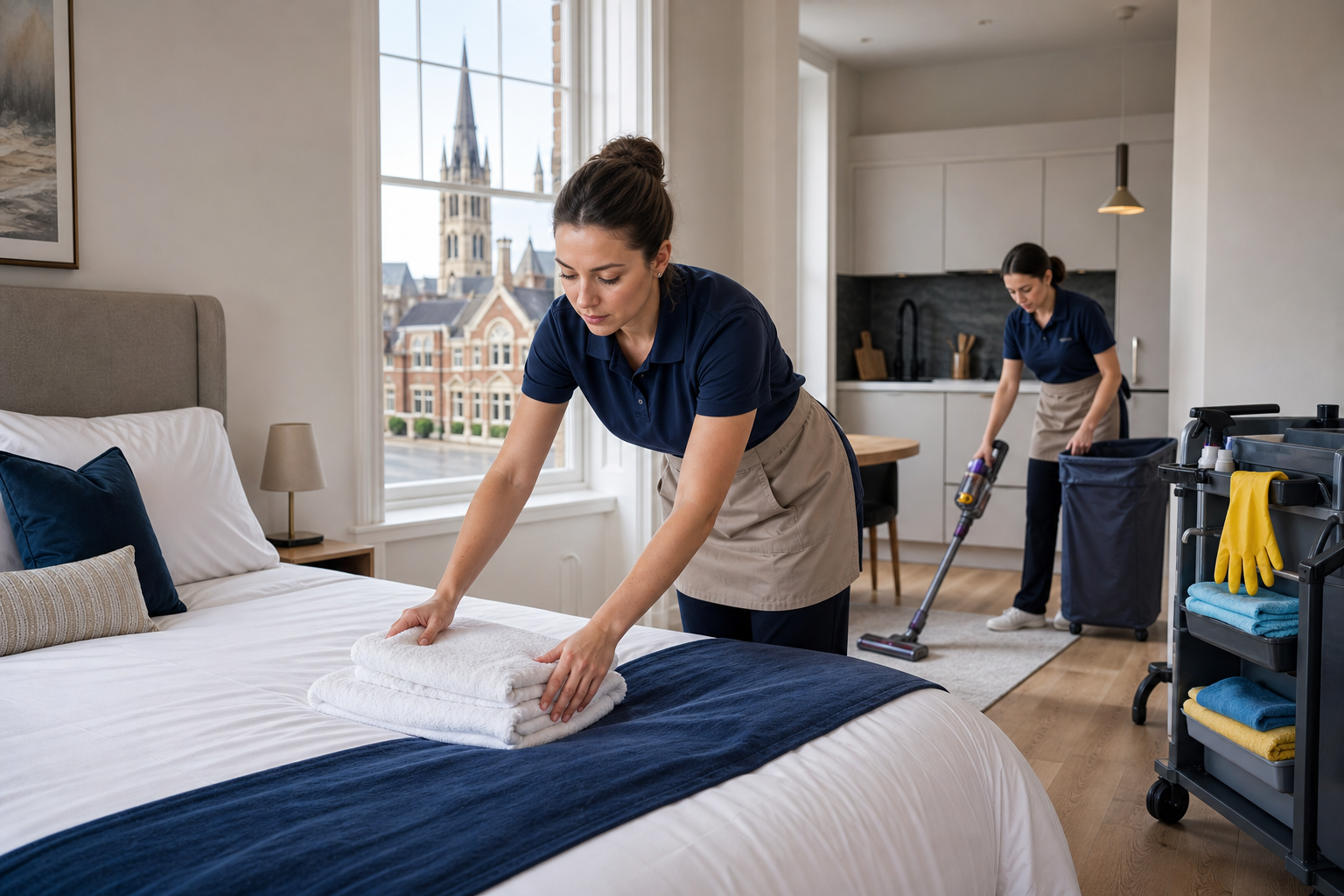
Turnover cleans cover the tasks required between guests: bed remakes, bathroom sanitation, trash removal, vacuuming, and a surface-level kitchen clean that makes the space guest-ready. Deep cleaning happens less often and tackles areas that accumulate grime over time, such as oven interiors, behind appliances, high dusting, and grout cleaning.
Additional services that add value include linen laundering with prompt return, inventory restocking of essentials like coffee and soap, professional photography-ready styling when you want to refresh a listing, and damage documentation with photos. A responsive point of contact, digital invoices, and the ability to handle short-notice bookings separate a professional supplier from a casual cleaner.
Room-by-room cleaning checklist a service should follow A clear checklist reduces misunderstandings and gives you a baseline for quality checks. Below is a practical, room-focused checklist that a Cambridge host can expect from a competent cleaning service.
Bedroom: Strip and remake beds with hotel-style folding or tucking, inspect mattresses and bedding for stains, vacuum or mop floors, dust surfaces and light fixtures, check under the bed and in closets for lost items.
Bathroom: Disinfect toilet, sink, shower, and bathtub; descale shower heads and remove soap residue; clean mirrors and chrome fixtures to a streak-free finish; refill soap, shampoo and toilet paper; replace or wash bath mats.
Kitchen: Clear and sanitize countertops, wipe down cabinet faces and appliance exteriors, clean inside microwave and kettle, load or empty dishwasher as instructed, sweep and mop floors, check fridge for left-behind food and dispose of it according to your instructions.
Living spaces: Dust electronics and bookcases, vacuum upholstery if needed, straighten cushions, clean glass surfaces and mirrors, remove cobwebs, and ensure waste bins are empty and liners replaced.
Entrance and common areas: Sweep or mop hallways, wipe down switches and door handles, replace burnt-out bulbs, and ensure keys, brochures and guest manuals are in their designated place.
Quick turnaround priorities when time is short When you have a two-hour window, cleaners should prioritize beds, bathrooms, a quick kitchen wipe, and floor cleaning. Cosmetic touches like perfectly folded throws or decorative cushions are nice to have but should come after the essentials. Ask your cleaner to confirm a priority list for fast turnovers so you both understand what will be completed in limited time.
Expected pricing in Cambridge and how cleaners usually charge Pricing varies by property size, condition, and required turnaround time. In Cambridge, expect a baseline rate for a standard one-bedroom turnover clean to start in the lower to mid-range for the city, with two-bedroom and larger properties commanding higher fees. Same-day or rapid-response cleans cost more, often a percentage surcharge on top of the standard fee.
Turnover cleans are typically charged per clean, deep cleans are billed per hour or as a flat rate depending on the scale, and linen services can be either included or itemized. Some cleaners bundle services into a monthly package if you have regular bookings, which can lower per-clean costs. When comparing quotes, clarify whether supplies, travel time, parking charges, and laundry are included.
A practical example: a typical one-bedroom turnaround in a central Cambridge area might range from an affordable standard fee for a calm turnover to a higher price when the booking requires same-day cleaning and laundry. A larger terrace house used by groups during graduation will move into a higher bracket for both turnover and deep cleans.
How to find and vet a reliable Cambridge cleaning service Start with local references. Ask other hosts in neighborhood groups and read recent reviews on platforms that list cleaners. If a cleaning service works with larger property managers or hotels, they usually have systems and backup staff that smaller one-person operations may lack.
Key things to check include proof of insurance, whether staff have DBS checks if you prefer them, the presence of written contracts, a clear refund or re-clean policy, and the ability to provide before-and-after photos. Request a trial clean at a reduced cost before committing to regular work. During the trial, observe punctuality, communication clarity, and whether they follow your checklist without prompting.
Ask explicit operational questions. How many cleaners do they have for backups? What is their policy on lost items and damage reporting? Can they supply invoices suitable for tax records? Do they launder linen in-house or use a third-party launderer and how long does that take? The answers reveal whether the service can scale with you and how they will handle issues.
Managing logistics effectively: keys, supplies, and communication A successful relationship with a cleaner depends on smooth logistics. Decide how keys will be handled early on, especially if you use smart locks. Many hosts use coded lockboxes or grant access through smart locks that provide temporary codes for cleaners. If you prefer a physical handover, set a fixed collection and drop-off point and confirm a clear plan for lost keys.
Stocking supplies can be done in two ways. Some hosts prefer to let the cleaner supply consumables through a monthly charge. Others keep a stock in the property and instruct the cleaner to report low items. Either approach works as long as responsibilities are written down.
Use messaging apps, a shared calendar, or property management software to communicate schedules and last-minute changes. Require cleaners to confirm start and finish times and to send photographs after each turnover for quality control. Documentation cuts down on disputes and helps you identify recurring problem areas.
Handling last-minute bookings and emergency situations Cambridge’s event-driven demand can create last-minute turnovers. A cleaning partner that offers emergency or same-day cleans is invaluable, but you should plan for such arrangements. Negotiate a response time and a surcharge for emergency work. Confirm the cleaner’s capacity to cover multiple properties on short notice during events like graduation or major conferences.
Create a short contingency plan that details who to contact for backup cleaning, what to do with linen shortages, and how to communicate a delayed check-in to guests. Keep a small emergency kit of extra sheets and towels in a locked cupboard or with a nearby laundry provider to bridge gaps when timing and logistics fail.
Maintaining quality as you scale across multiple listings When you manage multiple properties, standardization prevents variability. Use the same cleaning checklist across listings but allow property-specific notes where needed. Regular audits help ensure standards remain high. Conduct random inspections and require cleaners to upload timed photos from each turnover.
Automate communication where possible. Property management tools can trigger cleaning requests the moment a booking checks out and can notify cleaners of back-to-back bookings. Pay cleaners promptly and provide feedback. Positive reinforcement builds long-term relationships; a cleaner who feels respected is more likely to care about small details that matter to guests.
Real-world scenarios that show what good service looks like Scenario one: A host has back-to-back bookings on a Saturday. The cleaner completes a rapid two-hour turnover, focusing on beds and bathrooms, then returns two hours later for a full tidy if the guest departs earlier. The host avoids a cancellation and keeps both bookings.
Scenario two: During graduation week, a large group leaves a flat in disarray. The cleaning team calls the host with photos, documents damage, and issues a quote for additional work. The host authorizes the extra clean quickly, preventing a negative review and preserving future bookings.
Scenario three: A host with three properties subscribes to a monthly cleaning package that includes linen service and scheduled deep cleans every eight weeks. With automated scheduling and a single point of contact, the host reduces overall costs and keeps a consistent listing presentation.
Final practical tips for Cambridge hosts Communicate expectations clearly and keep a living checklist for each property. Pay attention to arrival photos and guest messages about cleanliness, they highlight recurring weak points. Build redundancy into your setup: a backup cleaner, emergency linen, or a local laundry partner. Finally, treat your cleaner as a partner. Timely payments, fair contracts, and constructive feedback improve service reliability and make your hosting business more resilient.
A short, clear ending A dependable, fast cleaning service makes hosting in Cambridge manageable and profitable. By defining expectations, vetting providers carefully, and putting simple systems in place for keys, supplies, and last-minute needs, you protect your rating and reduce stress. Start with a trial clean, agree the priorities for your turnovers, and scale your arrangements as bookings grow. Your guests notice the difference, and your calendar will show it.