September 20, 2026
April 20, 2026
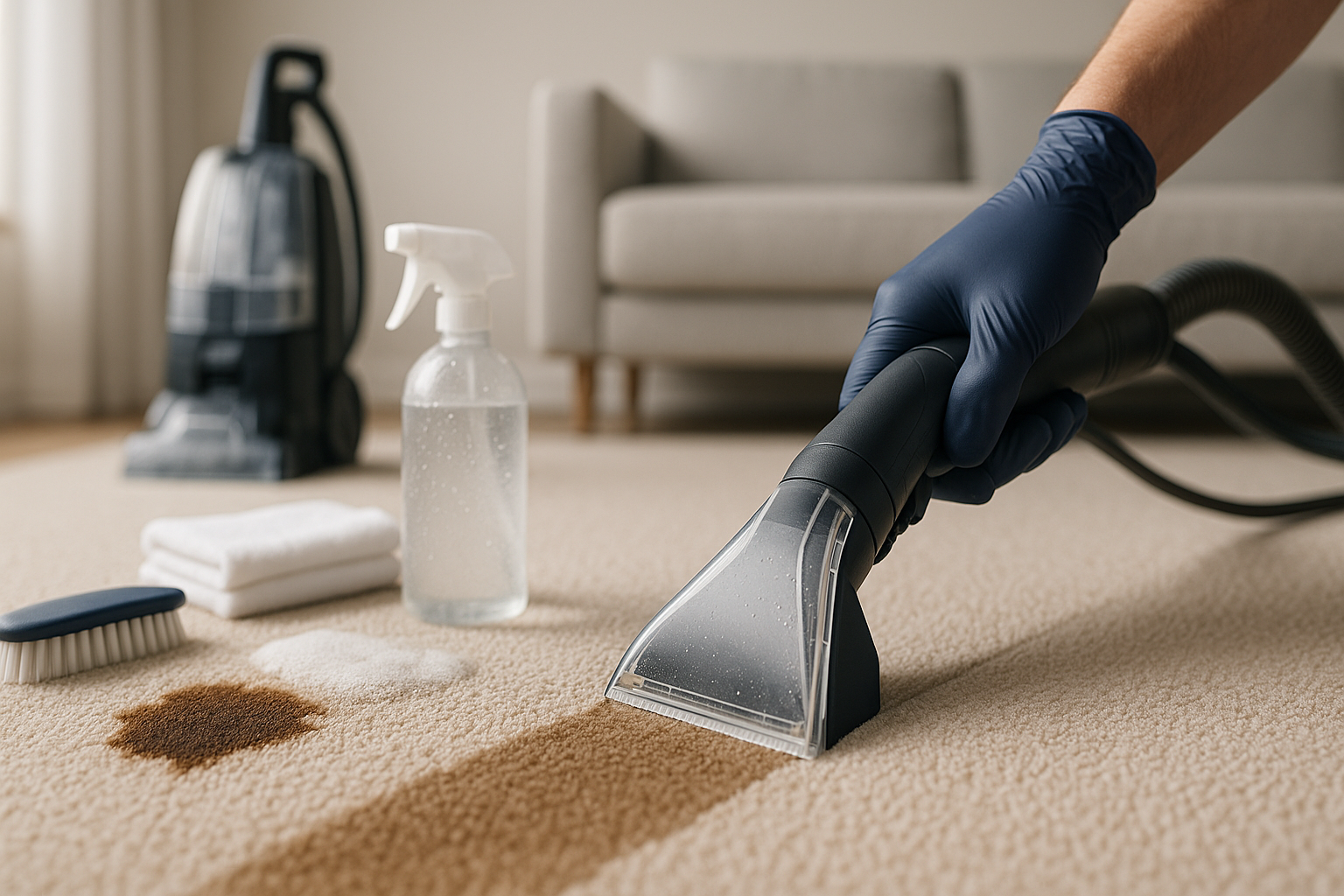
Spilled coffee at 7 a.m. Mud tracks at 5 p.m. A pet surprise sometime in between. Carpets take hits all day, and the wrong move can drive stains deeper or leave crunchy residue that attracts more dirt. The good news is that a few simple habits and the right order of steps can erase most messes and keep floors looking fresh.
This guide shows exactly how to clean carpet, from quick fixes for fresh spills to deep cleaning entire rooms. You will learn what to use, what to avoid, and how to dry carpets fast so stains do not return.
Start with the basics. A smart first move saves time and prevents damage.
If you only remember three things, remember to blot, rinse, and dry quickly.
All spot cleaning follows a similar rhythm. Remove solids, blot liquids, apply the right cleaner, then rinse and dry. The details below tailor that process to common stains.
For almost any fresh spill, work fast.
First, lift solids with a spoon. Then blot with white cloths until barely damp. Mix a mild solution of 1 teaspoon clear dish soap in 2 cups warm water. Lightly mist the stain and tap with the cloth, switching to clean sections as it transfers. Rinse by misting plain water, then blot again. Place a stack of dry cloths over the area with a weight, and leave 30 minutes to pull out remaining moisture.
If the spot reappears as it dries, you likely have wicking from the backing. Repeat the rinse and weighted towel step.
Tannins love to cling. After blotting, mix 1 tablespoon white vinegar with 2 cups warm water plus a tiny drop of dish soap. Mist, then blot in short passes. Rinse well with water and dry thoroughly. For stubborn brown edges, a small amount of 3 percent hydrogen peroxide can help on light-colored carpet. Always test first, and do not use peroxide on wool.
Skip the white wine or salt myth. They set stains more than they lift them.
Blot immediately. Apply a mild dish soap solution and continue blotting. If the color lingers on light carpet, use a small amount of hydrogen peroxide on a cloth and dab gently. Once the color fades, rinse with water and blot dry. Set a fan to speed drying so the stain does not creep back.
For synthetic carpet with a tough red dye mark, you can try a heat-transfer method: place a damp white towel over a lightly soapy area and apply a warm iron for a few seconds at a time. Check often and keep the towel moving to avoid heat damage. Do not try this on wool or delicate natural fibers.
Dish soap cuts grease, but alcohol lifts it faster.
Blot up excess. Apply a small amount of isopropyl alcohol to a cloth and dab the spot. Work in short strokes so you do not spread the stain. Switch to dish soap solution, gently agitate with a soft brush, then rinse and blot dry. Avoid over-wetting, since oil can travel through the backing.
Let wet mud dry completely. It is much easier to remove.
Once dry, break up clumps with a spoon or brush. Vacuum thoroughly. If shadowing remains, use a mild dish soap solution to lightly clean the fibers, then rinse and blot dry.
Urine requires enzyme action to break down the odor source.
Blot out as much as possible. Flood the area lightly with an enzyme cleaner designed for urine, following label directions for dwell time. Cover with a plastic sheet to keep it damp, since enzymes need moisture to work. After the dwell period, blot thoroughly, rinse with water, then blot again. Finish with a fan and a stack of dry towels. Baking soda can help with lingering odors once dry, but do not use it before the enzyme cleaner. For deep-set urine that keeps returning, you may need professional treatment that reaches the padding.
Avoid ammonia-based cleaners on urine. They smell similar to pets and can encourage repeat accidents.
Use cold water. Warm or hot water can set protein stains.
Blot, then apply cold water and continue blotting. If needed, use a small amount of hydrogen peroxide on light carpet, dabbing gently until the stain lifts. Rinse with cold water and dry thoroughly. Do not use peroxide on wool.
Apply isopropyl alcohol to a cloth, then dab the ink. Do not pour alcohol directly onto the carpet. Keep lifting with fresh cloth sections until no more transfers. Rinse with water and blot dry. Hair spray is less effective now that many formulas lack the solvents that used to dissolve ink.
For gum, press ice cubes in a bag directly on the spot until it hardens. Scrape off gently with a spoon. Repeat if needed.
For wax, scrape off what you can. Then place a clean paper towel over the remaining wax and apply a warm iron for a few seconds, lifting often as the towel absorbs the wax. Replace the towel section as it fills. Finish with a mild dish soap solution to remove residue, rinse, and blot dry.
A full refresh is possible with household tools if you work in small sections and manage moisture.
Start by clearing the room as much as you can. Vacuum slowly in two directions. Most of the soil in carpet is dry, so this step does the heavy lifting.
Spot treat visible stains using the methods above. Let the pre-treatment do its job for 5 to 10 minutes.
Mix a gentle cleaning solution. A reliable formula is 1 teaspoon clear dish soap and 1 cup white vinegar in a gallon of warm water. For wool, skip the vinegar and use only a tiny amount of wool-safe detergent in cool water.
Work one square yard at a time. Lightly mist the solution on the carpet and agitate with a soft brush or microfiber cloth in short strokes. Do not soak the fibers.
Rinse the section by spraying plain water, then extract with absorbent towels. Kneel on a stack of clean towels to press out moisture, rotating to dry areas as they become saturated. A wet and dry vacuum can help remove more liquid if you have one.
Set up fans and open windows to move air. Groom the carpet by brushing fibers in one direction for an even look. Avoid walking on it until fully dry.
Sometimes you need more than spot cleaning. High-traffic lanes start to gray, and the carpet looks tired even after vacuuming. Deep cleaning pulls out embedded soil and resets the pile.
Hot water extraction, often called steam cleaning, is the gold standard for most synthetic carpets. It uses heated water and suction to lift soil and rinse away residues. You can rent a machine for the day, but professional equipment has stronger vacuum and better temperature control, which means less moisture left behind and faster drying.
Dry compound cleaning spreads dampened absorbent granules on the carpet, then vacuums them up after dwell time. This method is useful for sisal, jute, and other natural fibers that do not tolerate much water.
Shampooers generate foam to loosen soil. They often leave residue if not followed by a clear water rinse, which is why they have fallen out of favor.
For most homes with synthetic carpet, hot water extraction provides the best combination of deep cleaning and safety when used correctly.
Move furniture off the floor if possible or group it in one area and work in sections. Place foil or plastic under any legs that remain to prevent wood dye transfer.
Vacuum slowly and thoroughly. This step doubles the quality of the result. Then pretreat traffic lanes and stains with a low-residue pre-spray. Common options include an enzyme cleaner for organic soils and a neutral pH traffic lane cleaner for general gray lanes. Agitate with a brush and let it dwell according to the label.
Fill the machine with hot water. If your pre-spray does most of the cleaning, you can extract with plain water to avoid residue. Work in overlapping passes, moving at a steady pace. Make extra dry passes with just the vacuum trigger engaged to pull out more water.
Rinse matters. If you use a detergent in the machine, follow with a second pass using clear water. Residue is the number one reason carpets seem to resoil fast after cleaning.
Drying is part of cleaning. Open windows on a dry day, run fans, and turn on a dehumidifier if you have one. Aim for completely dry within 6 to 8 hours. If it takes longer, you used too much water or not enough dry passes.
Finish by grooming the carpet with a brush to align fibers. Replace furniture only when the carpet is fully dry, keeping protective pads under legs for 24 hours.
Wicking occurs when a stain buried in the backing travels up as the carpet dries. To avoid it, limit the water you apply, extract slowly, and use weighted towels on troublesome areas after cleaning. If a spot returns, mist with water and set a fresh stack of towels with a weight for an hour.
Crunchy fibers almost always mean leftover soap. Rinse with clear water and extract again. A light mist of white vinegar in water can help neutralize alkalinity on synthetic carpets, but test first and avoid on wool.
A good routine prevents most deep cleaning headaches.
Vacuum high-traffic areas two to three times a week. Move slowly and make two passes at different angles. Use a crevice tool along baseboards where filtration soil builds up. These dark lines come from air movement through walls and can be stubborn. Vacuuming them often will reduce the chance that they become permanent.
Add doormats inside and outside entry doors. Encourage a no-shoes policy. This single change cuts down the amount of grit that sands away carpet fibers.
Treat spills the moment you see them. A fresh spill may need five minutes and a cloth. A dried stain can take twenty.
Rotate furniture or use area rugs over main walkways to spread wear. Trim snags at the base with sharp scissors rather than pulling them.
Plan deep cleaning every 12 to 18 months for typical households. With pets, kids, or smokers, it might be every 6 to 12 months. Check your carpet warranty for recommended frequency, since some brands require periodic professional cleaning.
For persistent pet odor, apply an enzyme cleaner once a month on known trouble spots, then rinse and dry thoroughly. A blacklight can help you find areas you might have missed.
Most wall-to-wall carpets today are nylon or polyester. These handle mild detergents, hot water extraction, and careful peroxide spotting on light colors. Wool and natural fibers need gentler care.
For wool, use cool water and a wool-safe detergent. Avoid high alkalinity, bleach, and peroxide. Blot, do not scrub, and dry quickly with fans to prevent shrinkage or browning.
For sisal, seagrass, or jute, skip wet methods. Use dry compound cleaning and spot clean with minimal moisture. Water can cause rings or warp the fibers.
Olefin and polypropylene resist stains but can hold oily soil. Use a quality degreasing pre-spray in traffic lanes, rinse well, and make extra dry passes.
If you are unsure of the fiber, test cleaners in a closet or under a piece of furniture. If the carpet has natural fiber content, choose the safest path or call a pro.
A few well-known tricks cause more harm than good.
White wine on red wine does not help. It dilutes the spill but leaves sugars and tannins behind. Use water, mild detergent, and blotting.
Salt draws moisture but also grinds into fibers and can set dyes. Skip the salt.
Vinegar is not a cure-all. It helps with some tannin stains on synthetic carpet, but it can set some dyes on wool and leave a lingering acid smell. Use it sparingly and rinse well.
More soap does not mean more clean. Soap attracts soil if not fully rinsed. Favor pre-spray and hot water extraction with thorough rinsing.
Baking soda is great for freshening once the carpet is dry. Mixing it into a wet slurry can leave a chalky residue that is hard to vacuum.
Some jobs require stronger equipment, specialized chemistry, or experience.
If you smell a persistent pet odor that keeps returning, the issue may live in the padding. Professionals can treat or replace sections.
If you have heavy filtration lines along baseboards, post-renovation dust driven deep into the pile, or a large water intrusion, a pro saves time and prevents damage.
If your carpet is wool, antique, or under warranty that specifies professional care, book a trusted company. Ask for hot water extraction with thorough rinsing and quick drying.
If a cleaned spot returns by the next day, you are seeing wicking. Re-wet lightly, then cover with white towels and weight for an hour. Improve airflow.
If the carpet feels stiff, rinse with clear water and make extra vacuum-only passes. Dry thoroughly.
If a bright color lightens during cleaning, stop. That indicates dye loss. Flush with water only, blot dry, and consult a professional.
If you notice musty smells after cleaning, you likely overwet the area or the pad stayed damp. Increase airflow immediately and consider a dehumidifier. Persistent odor means the pad may need attention.
Knowing how to clean carpet comes down to timing, gentle chemistry, and disciplined drying. Blot spills right away. Match the cleaner to the stain. Rinse so nothing sticky stays behind. Move plenty of air to finish the job. With a solid routine and the right steps, your carpet can handle real life and still look ready for company.