September 20, 2026
June 23, 2026

Hook
Every minute between one guest leaving and the next guest arriving costs you money and reputation. In a city like Cambridge where reservations can change on short notice and peak dates fill fast, a dependable Airbnb cleaning service that delivers quick turnovers makes the difference between five-star reviews and last-minute crisis cleaning.
Introduction
If you run short-term rentals in the Cambridge area, you already know how unforgiving turnover days can be. A single late check-out, a stain that refuses to come out, or a missed set of towels can cascade into poor ratings and lost bookings. This article explains what to expect from an Airbnb cleaning service Cambridge hosts rely on, how to choose and work with cleaners for fast, consistent turnovers, and practical systems you can put in place so your property is guest-ready without constant firefighting. Readable, actionable, and specific, the guidance below targets the realities of hosting in a busy university and tourist city where demand and turnaround pressure are both high.
Why reliable, quick turnovers matter
Turnovers are more than vacuuming and replacing bedding. They are the moment your brand proves itself to a new guest. Cleanliness and attention to small details show up immediately in reviews and repeat bookings. Quick turnovers expand your ability to accept same-day bookings, respond to cancellations, and make the most of high-demand windows such as graduation weekends, conferences, or local events.
Beyond guest satisfaction, fast, dependable turnovers reduce stress and operational cost. When you trust a cleaner to handle 90 percent of issues, you spend less time on logistics and more time scaling your listings. The ripple effect includes improved occupancy rates, fewer emergency trips, and a lower chance of negative reviews caused by avoidable problems.
What to expect from a professional Airbnb cleaning service Cambridge
A professional cleaner familiar with short-term rentals delivers three things consistently: speed, reliability, and attention to guest-facing detail. Speed means they meet agreed turnaround windows and adapt when check-outs run late. Reliability means they communicate clearly, show up prepared, and maintain quality day after day. Attention to guest-facing detail means they treat small touches as priorities, such as neatly folded towels, fully charged appliances, and smell-free linens.
Specifically, expect the cleaner to provide a written scope of work that lists tasks per turnover, the supplies they use, and how they handle lost property and damages. They should have liability insurance and the ability to supply extra linen and toiletries on request. A good cleaning team also documents problems with photos and a short report after each turnover, so you never hear about issues for the first time from a guest.
Turnover timing and realistic cleaning durations
Cleaners often quote standard times based on unit size, but real-world timings vary with property condition and guest behavior. As a starting point, a seasoned cleaner can turn a well-prepared studio in 30 to 60 minutes, a one-bedroom in 45 to 90 minutes, and a two-bedroom in 60 to 120 minutes. These ranges assume laundry is offsite or already processed, and the host has left the property in a reasonable state.
If the previous guest leaves the place messy, timings increase significantly. Stains, excessive trash, or forgotten food in appliances can add 30 minutes to multiple hours. For reliable quick turnovers, build buffer time into your calendar: allow at least one hour for studios and 90 minutes for larger units, then adjust up based on past experience with that listing.
Cost and pricing models
Airbnb cleaning service Cambridge prices depend on property size, frequency of turnovers, and the scope of tasks. Typical models include per-clean flat rates, per-room pricing, and subscription-style arrangements that reduce per-clean costs for regular bookings.
For a rough idea, studio or small one-bedroom turnovers tend to fall into a lower flat rate, while larger multi-bedroom homes carry higher fees. Expect to pay more for same-day or emergency cleans, for laundering and linen restocking handled by the cleaning team, and for additional services such as deep cleans or carpet treatments. When comparing quotes, ask whether the price includes supplies, laundry, and small consumables like toilet paper and hand soap, or whether those are billed separately.
How to choose the right cleaner
Choosing the right provider means balancing price, reliability, and the specific needs of your property. Start by asking for references from other short-term hosts. Check reviews on local platforms and request evidence of insurance and business registration. During initial interviews, focus on operational questions: how they handle late check-outs, what their cancellation policy is, how they document damages, and whether they can access spare keys or digital locks.
A trial period of three to five cleanings works well. Use those turnovers to score the service on punctuality, speed, cleanliness, and communication. If you manage multiple properties, prioritize teams that can scale and provide a consistent roster so cleaners learn the quirks of each listing.
Preparing your property for faster turnovers
Hosts who want fast turnovers should optimize the property layout and guest behavior. Clear instructions for guests reduce mess and speed cleaning. Ask guests to bag and place trash in a designated area, strip beds if you handle laundry offsite, and remove perishables from the fridge. These small requests trim minutes from each turnover.
Design the space for maintenance. Use durable sheets and removable cushion covers, choose minimal decorative clutter that slows cleaning, and mount hooks and shelves to keep surfaces clear. Label cabinets with contents to prevent cleaners from wasting time hunting for spare supplies. Finally, create a small “host cupboard” with extra linens, bulbs, and basic tools so cleaners can make quick repairs without waiting for you.
Cleaning checklist for quick turnovers
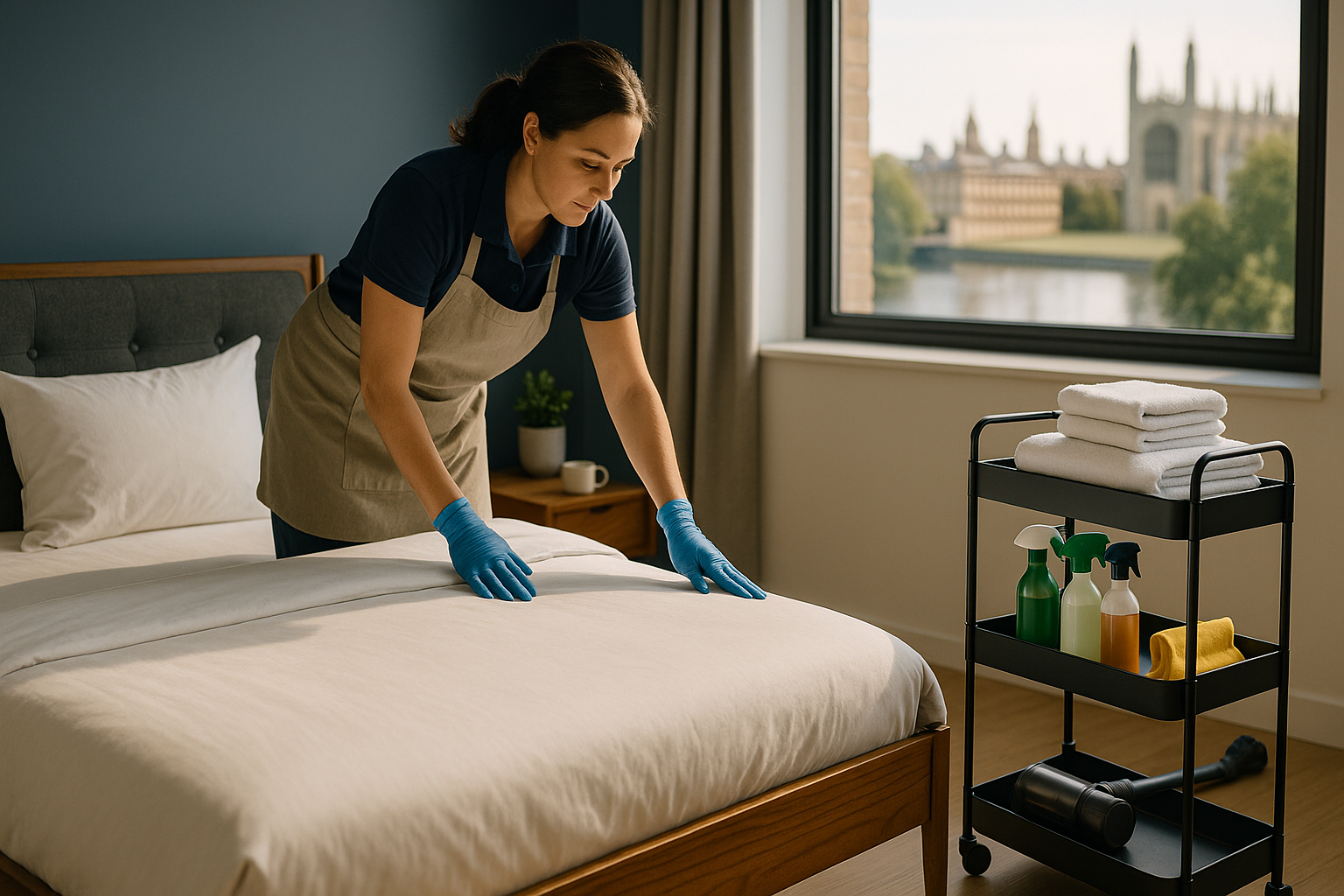
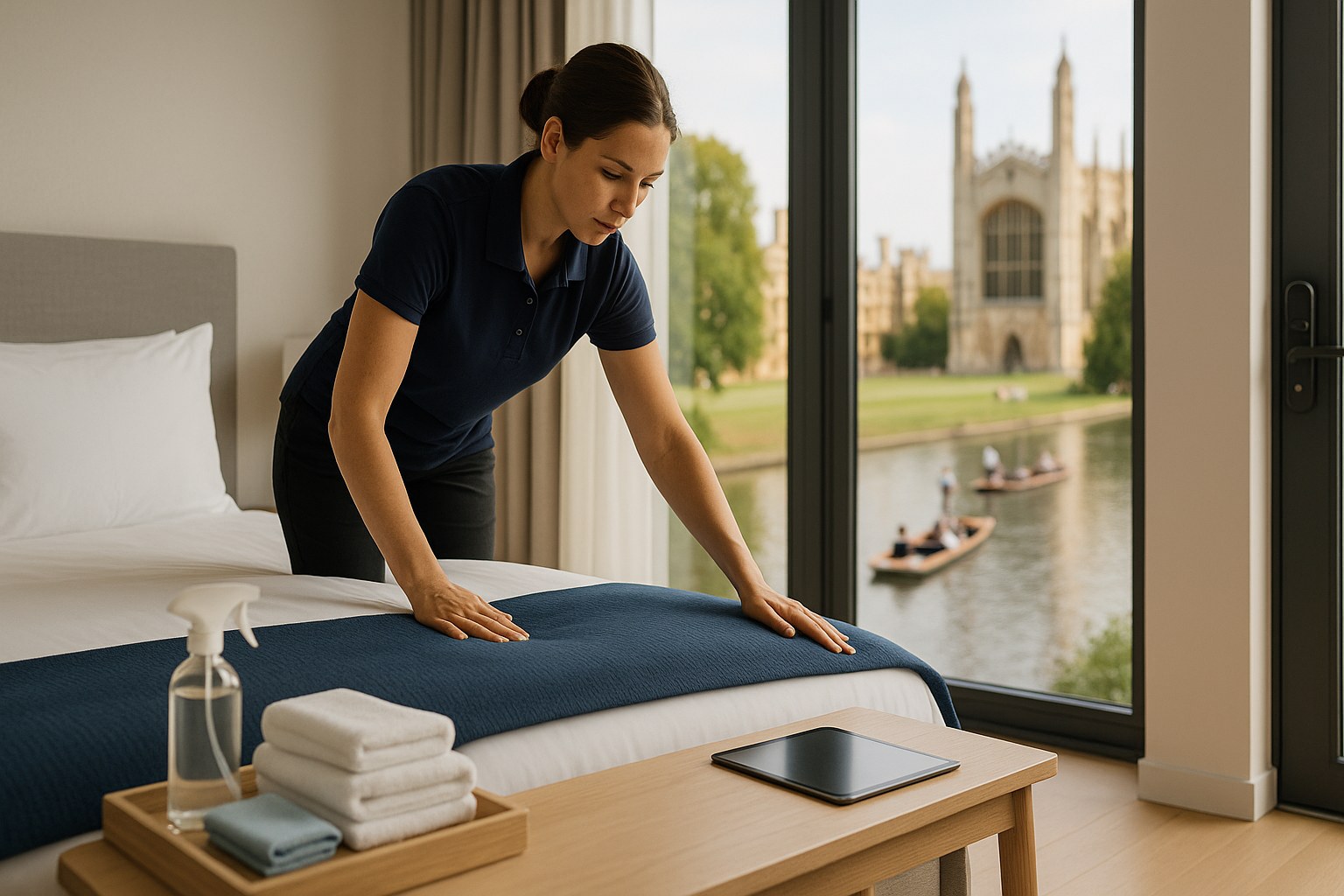
A clear, concise checklist keeps standards uniform even when different cleaners take a job. The checklist should focus on guest-facing areas first, then follow with behind-the-scenes tasks. Start the walkthrough by wiping down all flat surfaces, mirrors and glass, then sanitize high-touch points such as door handles, switches, remote controls, and handrails. The kitchen should be thoroughly cleaned with removal of all trash, wipe down of appliances, and a check for stray food. Bathrooms require thorough sanitizing, fresh towels, and restocked consumables. Finish by vacuuming and mopping floors, straightening cushions, and making beds to hotel standard.
Include a brief section on what qualifies as an escalation, for example visible stains that require approval for a deeper clean or replacement items, and how cleaners should report those issues.
Handling laundry and inventory efficiently
Laundry is the largest time sink in turnovers when managed poorly. If your budget allows, work with a cleaning service that offers in-house laundry or partners with a linen provider. Outsourcing laundry moves the bottleneck off-site and turns a variable task into a predictable cost.
If you choose to stay local, establish a rotation of spares: one set on the bed, one set in the linen closet, and an extra set circulating between cleans. This keeps turnovers moving even when washing machines are full. Standardize towel and linen sizes across listings to make inventory quicker to process. Use color-coded storage or labeled bags for each property when managing multiple listings.
Managing last-minute and emergency turnovers
Last-minute turnovers are inevitable. A reliable cleaner offers an emergency window for an extra fee. Prepare for those moments by having a simple emergency plan: contact the cleaner, confirm access method, and communicate clearly with the incoming guest about any small delay. If you anticipate frequent same-day bookings, reduce the incoming guest’s expectations by messaging a realistic arrival window rather than an exact time.
When an urgent situation involves damage or a major stain, have an escalation chain. The cleaner should immediately message you with photos and a short description, and propose options: deep clean, replacement, or partial refund. Quick, transparent communication preserves guest trust and reduces the likelihood of a bad review.
Technology and communication that streamline turnovers
Modern cleaning operations rely on simple tools. A shared calendar that integrates with your listing platform prevents double bookings. Photo-based turn-by-turn reporting keeps the host informed without calling. Automated messaging for key handover, late check-out notices, and post-clean confirmations reduces friction.
Many hosts use scheduling platforms that send cleaners their next jobs automatically and collect proof of completion. If you have a smart lock, give cleaners temporary codes that expire after their shift. These small tech investments cut down on coordination time and reduce the need for keys that get lost.
Green cleaning and guest preferences
Increasingly, guests expect environmentally friendly cleaning practices. A cleaner who uses low-VOC products, line-dries sheets when weather allows, and recycles appropriately can enhance your listing’s appeal. Ask potential cleaners about the products they use and whether they can accommodate fragrance-free or hypoallergenic options for sensitive guests.
If you market your property as eco-friendly, ensure the cleaner understands that towels may be reused at guest request and that cleaning products meet your stated standards. This alignment prevents mismatched expectations and potential complaints.
Local considerations for Cambridge hosts
Cambridge presents some operational quirks that influence turnover logistics. Central neighborhoods can have limited parking and restricted loading zones, so cleaners who own compact or electric vehicles may navigate the area more efficiently. University term schedules create predictable demand spikes and quiet periods; align pricing and staffing to use those windows to your advantage. If your property sits within historical or conservation areas, allow for additional time to access and move furniture if needed.
Scenario examples
Scenario 1, rapid urban studio: A city-center studio with simple furnishings and coordinated linen rotation uses a cleaner who arrives with a mobile laundry bag. The cleaner completes the turnover in 40 minutes, sends a final photo, and resets the unit for a same-day guest. The host manages bookings aggressively and sees higher occupancy because same-day windows stay open.
Scenario 2, multi-bedroom family home: A larger property near event venues requires two cleaners for fast turnovers. The host negotiates a flat rate for a two-person team, supplies a labeled linen closet, and implements an hourly inspection once per week to catch wear-and-tear early. The result is fewer emergency deep cleans and more predictable turnover timing.
Red flags to watch for
Trust your metrics. If cleanings take progressively longer than quoted, if the cleaner misses items on the checklist repeatedly, or if communication is poor, those are signs to act. Frequent damage reports, unexplained inventory shortages, or inconsistent arrival times warrant a discussion or a change of provider. A reliable cleaner will welcome performance feedback and propose corrective steps.
Conclusion
A professional Airbnb cleaning service Cambridge hosts can rely on converts time pressure into predictability. Success comes from clear expectations, practical systems for laundry and supplies, and a partner who communicates and documents every turnover. Whether your priority is expanding same-day bookings, protecting review scores, or simply freeing yourself from last-minute scrambles, invest in a cleaning operation designed for quick turnovers and enforce simple, repeatable processes that keep standards high. With the right team and a few adjustments to how you prepare your property, turnovers stop being a bottleneck and become a dependable part of your hosting workflow.