September 20, 2026
August 14, 2026
Hook
A single negative cleanliness review can cost you multiple bookings and a drop in search placement. For Airbnb hosts in Cambridge, where guests expect both comfort and a tidy welcome after a day of punting or visiting colleges, reliable cleaning is not optional. A dependable local team keeps your calendar full, reduces friction between guests, and protects your rental income.
Introduction
This article explains how to find and work with an Airbnb cleaning service in Cambridge that consistently delivers guest-ready spaces. It covers what to expect from professional turnover cleans, realistic pricing, how to vet local cleaners, scheduling and communication practices that prevent last-minute headaches, and small touches that lift guest ratings. Read on if you want to build a trustworthy relationship with cleaners who understand Cambridge and treat your property as if it were their own.
Why choose a local Airbnb cleaning service in Cambridge
Local cleaners give you more than a clean flat. They know the cadence of the city, the seasonal peaks around university term dates and graduation weekends, and typical guest behaviors. They can respond quickly when a same-day turnover is needed, collect lost keys, or help stash luggage for early arrivals. A Cambridge-based team will also have existing relationships with local laundry services, waste disposal points, and suppliers for consumables, which reduces turnaround time and supply shortages.
Local teams tend to offer greater accountability. They can visit in person without long travel windows, notice property wear and tear sooner, and adapt cleaning routines to the expectations of visitors who come for university visits, conferences, or leisure stays. For hosts who do not live locally, a dependable Cambridge cleaner becomes your eyes on the ground.
What a reliable cleaner should deliver
A reliable Airbnb cleaner provides more than surface cleaning. First, they should perform a consistent turnover clean that follows a checklist tailored to your property. They should handle linen changes professionally, use commercial laundry or in-house processes that avoid cross-contamination, and present beds and towels crisply. They should also check and report on inventory such as kitchen supplies, toiletries, and electronics, and notify you about damage or maintenance issues with photos.
Communication matters. Your cleaner should confirm bookings, report when a task takes longer than expected, and provide photographic evidence of completed work when requested. They should carry public liability insurance and provide clear, itemised invoices. If you want background checks for peace of mind, ask for DBS or equivalent checks for anyone accessing properties frequently.
Turnover clean checklist, described
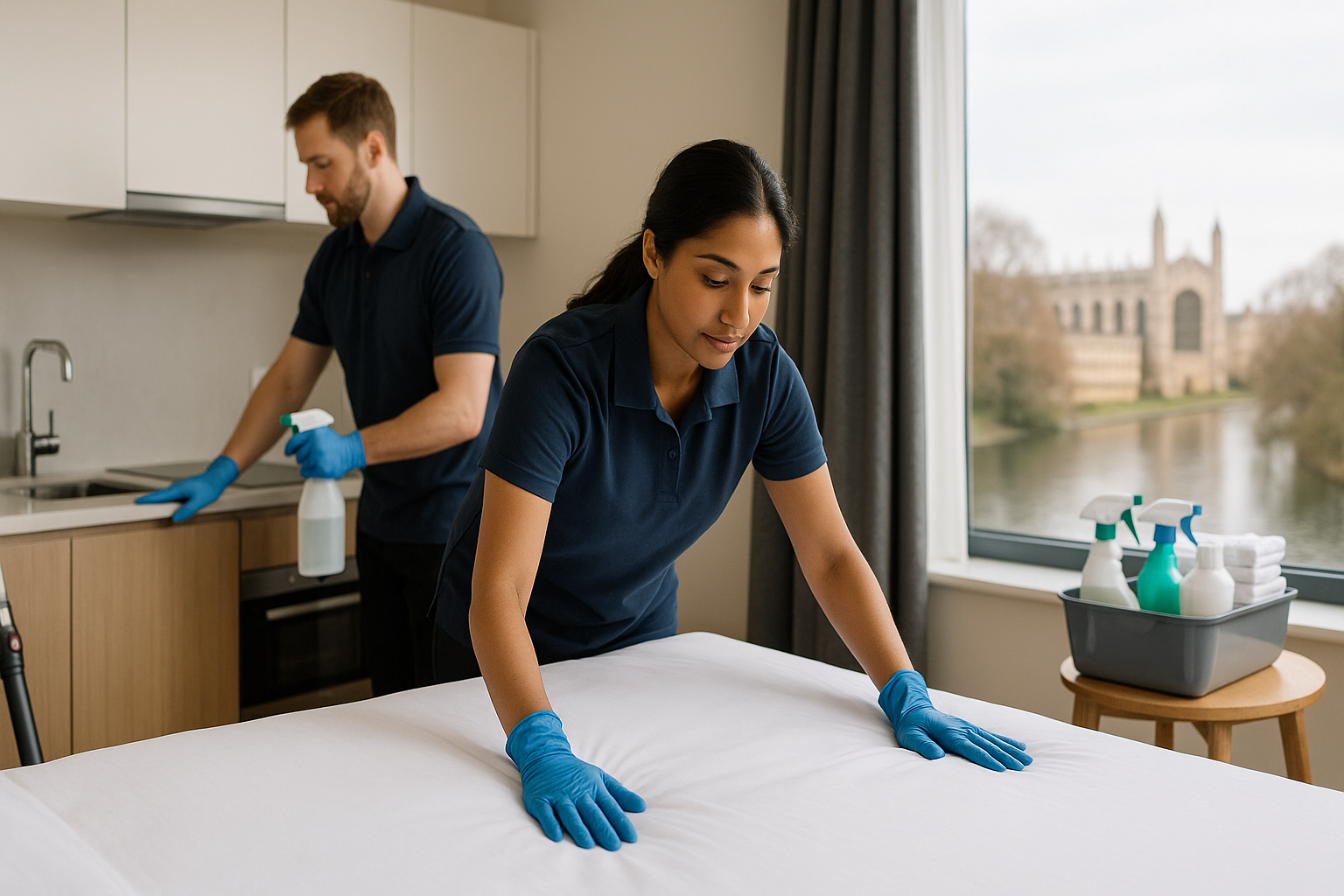
A practical turnover clean follows a room-by-room flow that ensures nothing is missed. In the kitchen, the cleaner should empty the dishwasher or load and run it, wipe down all surfaces including cabinet faces and backsplashes, clean inside the microwave, and sanitize touchpoints such as handles and switches. They should check the refrigerator for forgotten food and dispose of it according to your instructions.
Bathrooms need attention to grout, shower glass, taps and drains. Towels should be replaced, toiletries topped up, and mirrors polished. Hosts often underestimate the impact of a well-cleaned toilet and gleaming fixtures on guest perception.
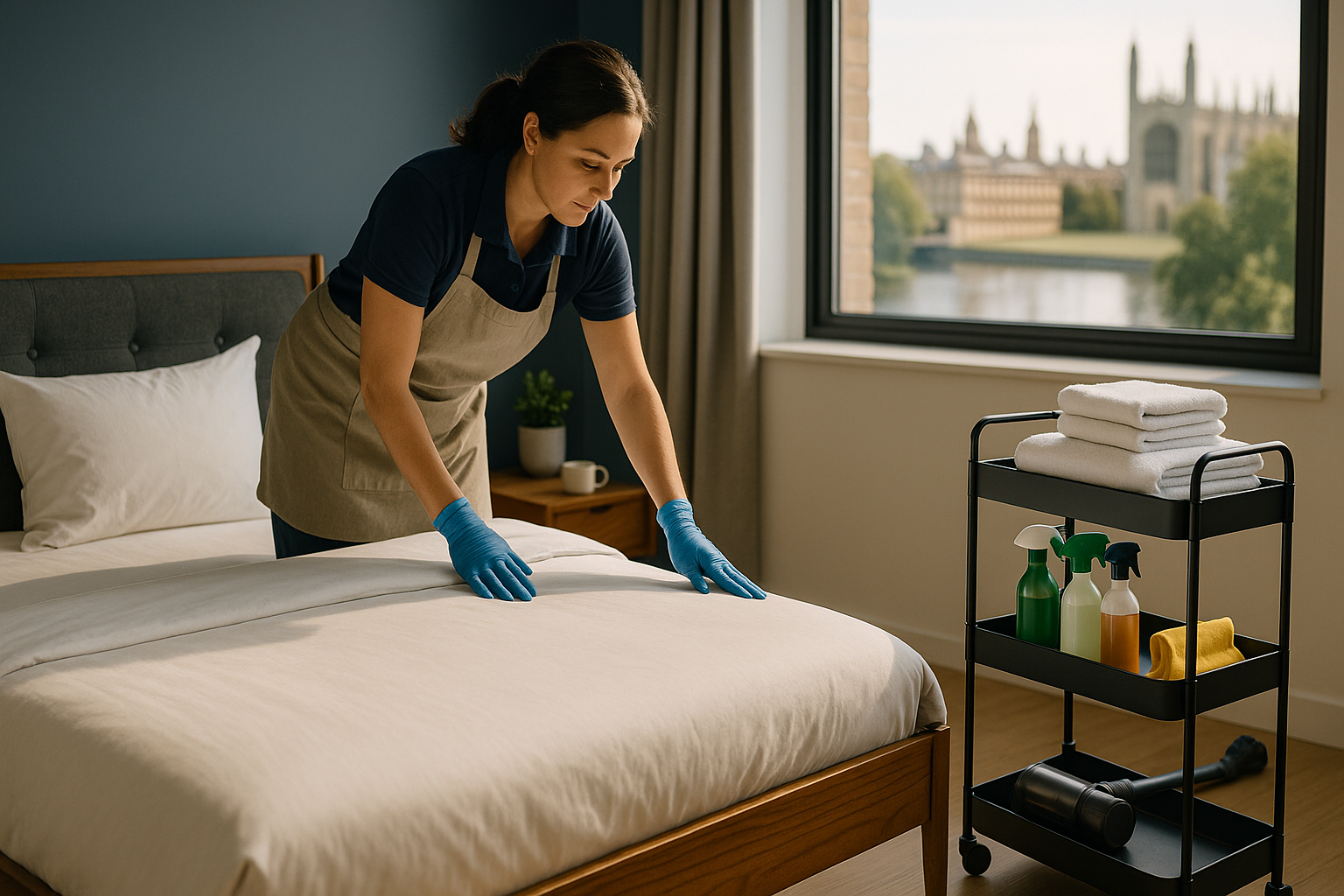
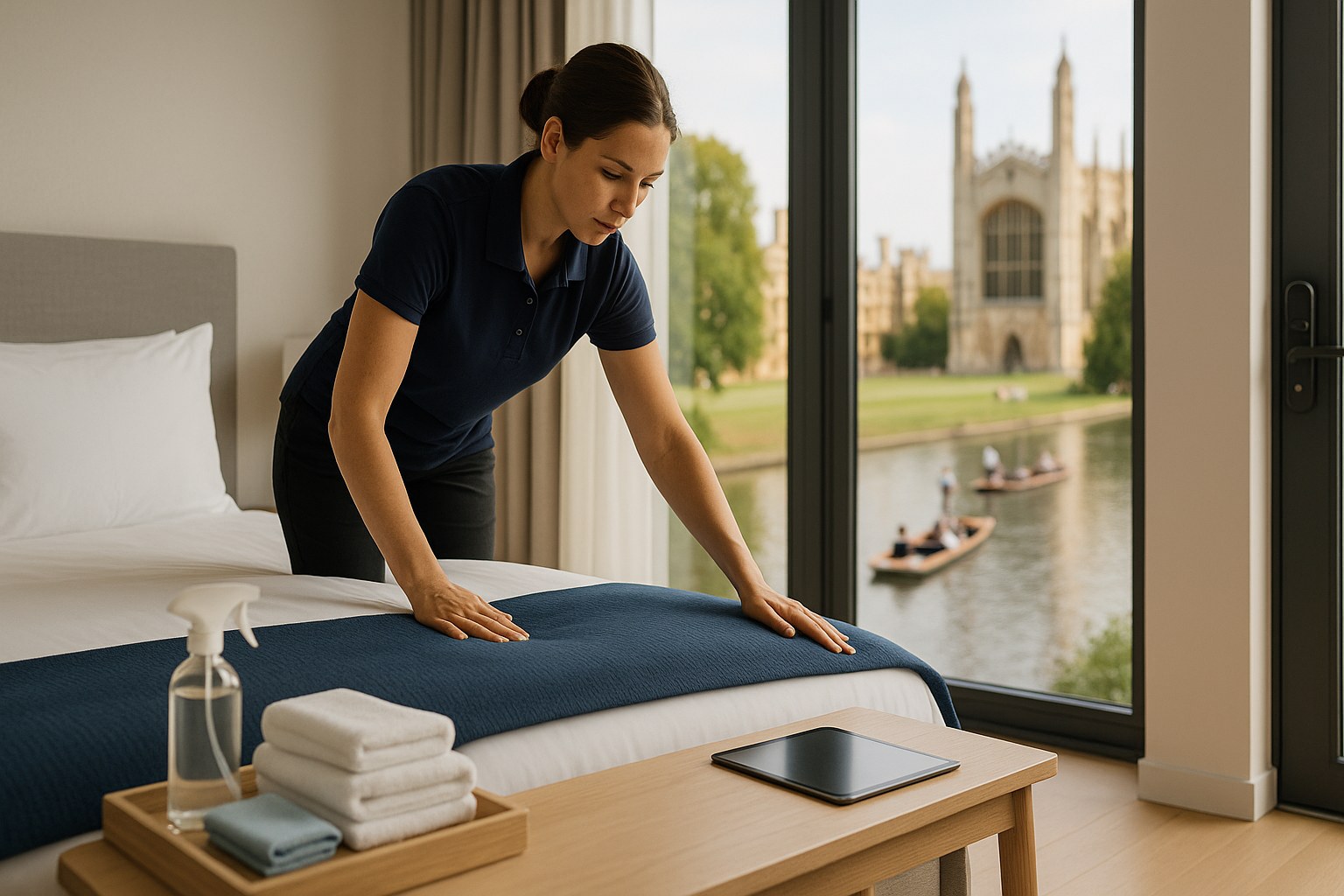
In bedrooms, fresh linen must be changed and beds made with attention to corners and pillow presentation. Drawers should be checked for forgotten items and lamps dusted. Living areas should be decluttered, cushions plumped, electronics dusted, and rugs vacuumed. Vacuuming and mopping throughout should focus on high-traffic zones and under furniture where hair and debris accumulate.
Final checks before posting a clean as complete include checking that all lights work, ensuring windows and curtains look presentable, confirming that heating and hot water are functioning, and making a quick inventory of consumables like coffee, tea and toilet roll. Photographic evidence from the cleaner can document readiness and protect both host and cleaner in case of disputes.
How much an Airbnb cleaning service in Cambridge costs
Cleaning fees vary depending on property size, service level, and extras. A studio or small one-bedroom flat will typically cost less than a larger two-bedroom or three-bedroom home. As a rough guide, expect a turnover clean for a studio or small one-bedroom to start around the lower end of the local market, rising for two-bedroom properties and larger. Add-ons such as linen laundry, deep cleaning, same-day turnarounds, or supplies restocked by the cleaner will increase the fee.
Other cost drivers include frequency of bookings, distance from the cleaner’s base, and season. During Cambridge high-demand periods, such as summer graduation and May Week events, cleaners may charge premium rates for last-minute or out-of-hours work. Make sure quotes specify whether VAT applies and whether laundry is charged per load or per bed.
How to vet and hire reliable local cleaners
Start by asking for references from other Airbnb hosts in Cambridge. Personal recommendations often reveal the best local teams. Read Google and local business directory reviews and join Cambridge host Facebook groups where members discuss cleaners and services candidly. Request proofs of insurance and any background checks you require.
Arrange a trial clean with a clear scope and a modest fee to test quality and reliability. During the trial observe punctuality, attention to detail, communication style, and whether the cleaner follows your checklist. Ask to see before and after photos as part of the trial. A trial also reveals whether the cleaner respects your property—for example, using protective shoe covers, avoiding harsh chemicals on antique furniture, and following laundry instructions for delicates.
Interview questions to pose include asking how the cleaner handles same-day turnovers, late checkouts, lost keys, and damage reporting. Confirm whether they provide receipts and how they handle invoicing for multiple properties. Good cleaners will outline a clear escalation path for emergencies and will be able to quote realistic time estimates for each property type.
Essential contract and agreement points
Put key expectations in writing. The contract should specify the scope of cleaning, frequency, pricing, notice periods for cancellations, and responsibilities for supplies. Clarify who provides laundry detergent, toilet paper and kitchen consumables, and whether the cleaner restocks or you will buy. Include terms on handling keys, code changes for locks, or how the cleaner should access smart locks.
Also include data on liability and insurance, a clause about confidentiality and privacy for guest information, and a process for dealing with damages or lost items. A written agreement protects both parties and reduces misunderstandings as your portfolio grows.
Coordinating schedules and communication
Good scheduling removes stress. Sync your booking calendar with your cleaner using shared calendar tools or a property management platform that alerts cleaners automatically. When the turnover window is tight, plan for a buffer. If a guest checks out at 10:00 and the next guest arrives at 15:00, you should allow one to three hours for a thorough clean depending on property size, plus travel time.
If you rely on cleaners to manage key handovers, consider lockboxes or smart locks with temporary codes. These solutions reduce lost keys and minimize the need for face-to-face exchanges. For last-minute cleans, set a clear policy on same-day fees and cancellation charges so both sides know what to expect.
Small touches that raise guest ratings
Cleanliness is the baseline. The extra touches create memorable stays. A small welcome pack tailored to Cambridge can make a big difference. Include a simple printed guide with local transport links, walking distances to the city center, punting company recommendations, and safety notes about restricted college entry times. Fresh flowers or a small seasonal treat add a homely feel when budgets allow.
Standardise presentation. Fold towels consistently and place toiletries in the same spot every time. Use mattress protectors and high-quality, machine-washable throws that withstand frequent laundering. Consider a consistent scent profile, such as a mild linen spray, applied sparingly so it does not overwhelm guests with allergies. These predictable comforts reduce complaint rates and increase five-star reviews.
Handling problem situations
Even with a reliable team, problems occur. A guest may extend a stay without notice, leave behind an expensive item, or check out late. Your cleaner should know to photograph damage and report it immediately, and to move any lost items to a secure place while notifying you. For significant damage, cleaners should provide timestamped photos to support any claims made via Airbnb.
If a cleaner is late or misses a clean, have a backup plan. Maintain a short list of vetted alternative cleaners or a local agency that can step in for emergencies. Consider keeping a basic supply kit on site so the cleaner can restock essentials without delay.
Regulatory, insurance, and tax considerations
Check Cambridge City Council requirements for short-term lets and ensure your property complies with local licensing regimes and safety standards. Keep records of gas safety checks, electrical inspections, smoke and carbon monoxide alarm maintenance, and fire safety certificates. Make sure your cleaner understands the importance of notifying you about safety hazards quickly.
Require public liability insurance from your cleaner, and keep contents insurance that covers short-term letting scenarios. For tax purposes, treat regular cleaners either as contractors who invoice you, or as employees if control and hours indicate an employment relationship. Ask your accountant for the correct treatment to avoid misclassification risks.
Building a long-term relationship
Treat your cleaner as a partner. Regular check-ins, periodic quality audits, and fair compensation build loyalty. When cleaners feel valued they often go the extra mile, such as spotting maintenance issues early or suggesting improvements that streamline turnovers. A consistent team also helps your branding, because returning guests appreciate the familiar, reliable standard across stays.
If you manage multiple properties, consider volume agreements that commit a cleaner to a certain number of cleans per month in exchange for preferential rates. This approach stabilises your costs and ensures priority during busy Cambridge periods.
Conclusion
Finding the right Airbnb cleaning service in Cambridge transforms hosting from stressful to sustainable. Local cleaners bring speed, knowledge of the city, and practical problem-solving that remote providers cannot match. Vet carefully, agree expectations in writing, and coordinate schedules to protect turnovers. With clear communication and attention to small hospitality details, you can secure cleaner relationships that protect your ratings, save time, and keep bookings steady.