September 20, 2026
August 13, 2026
Hook: A single bad review about cleanliness can erase a week of perfect ratings and cost you several nights of bookings. For Airbnb hosts in Cambridge who rely on steady turnover between students, academics, tourists, and visiting families, reliable cleaning is not an optional extra. It is the foundation of your listing’s reputation, occupancy, and income.
Introduction If you run a short-term rental in Cambridge you know how fast expectations move. Guests expect spotless linens, fresh towels, crisp surfaces, and a welcome that matches the photos. Hiring an airbnb cleaning service cambridge takes cleaning off your plate and makes the difference between a five-star stay and a one-star complaint. This article explains what a professional cleaning partner should offer, how to choose the right team, realistic pricing, a practical turnover checklist you can give your cleaner, and how to manage logistics so turnovers run smoothly even during busy weeks.
Why a professional Airbnb cleaning service matters in Cambridge Cambridge presents specific challenges that make professional cleaning especially valuable. Many neighborhoods host short stays tied to university terms, conferences, and city events. That creates rapid turnovers and little time to prepare between guests. A professional cleaner arrives with a tested routine, proper supplies, and the experience to spot issues before a guest notices them.
Beyond speed, consistent quality preserves your listing’s rating. Photos show potential guests the space, but cleanliness and small details create five-star reviews. Professional cleaners understand hospitality standards: they know to check under beds, sanitize high-touch surfaces, launder bedding to commercial standards, and present the flat in a way that photographs well. When your cleaner documents the work and communicates promptly, you reduce the risk of last-minute guest complaints and negative reviews.
What a high-quality Airbnb cleaning service in Cambridge should offer Not all cleaning services are built for short-term rentals. A provider tailored to Airbnb hosts will include the following in their core offering, and they will be able to explain each item clearly.
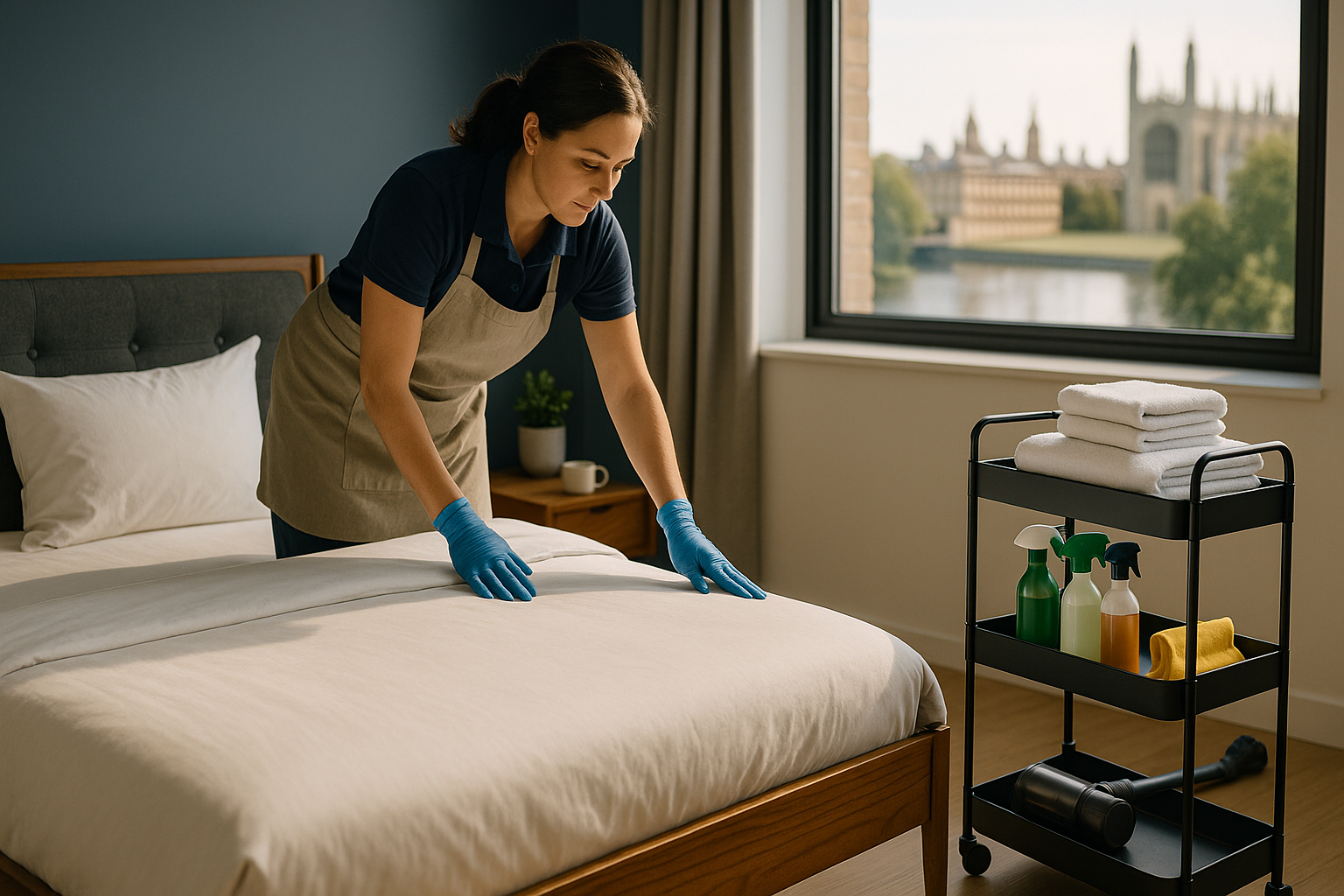
Turnover clean performed to a checklist that matches your listing. That includes changing and remaking beds, laundering or replacing linens, wiping all surfaces, cleaning bathrooms and kitchens, vacuuming and mopping floors, dusting, and removing trash. The cleaner should leave the place ready for photos and for guest arrival.
Deep cleaning and periodic maintenance. Regular steam cleaning of carpets, oven and hob deep cleans, and grout restoration prevent slow deterioration that leads to larger, costlier fixes.
Laundry and linen management at scale. Your cleaner should be able to handle bedding and towels, or provide a reliable third-party laundry service. This prevents delays when multiple turnovers occur in a single day.
Restocking of consumables. A good cleaner will restock basics you nominate, such as toilet roll, hand soap, dishwashing liquid, tea and coffee sachets, and starter cleaning supplies for longer stays.
Key handover and check-in prep. Many hosts expect cleaners to leave keys in lockboxes, log check-in details, or prepare digital codes. Confirm what the cleaner will do for you and for guests.
Reporting and photography. Before-and-after photos and a short condition report give you evidence that the clean occurred and highlight any damage or missing items immediately.
Flexible scheduling, emergency cleans, and last-minute coverage. Cambridge hosts often face overlapping bookings. The cleaner should offer options for same-day turnovers or be able to call in backups when schedules compress.
Insurance, DBS or background checks, and references. For peace of mind confirm public liability insurance and appropriate background screening for anyone who will enter your property unattended.
How to choose the right provider Start by defining what you need. Is your property a studio used by traveling academics, or a three-bedroom house that hosts large families? Frequency matters, as does whether you want the cleaner to manage linen, restocking, and small maintenance tasks.
Ask for a sample checklist and check that it matches your standards. A professional cleaner should provide a written turnover checklist and be willing to adapt it to your expectations. Ask for references from other Airbnb hosts, and follow up with at least one to ask about reliability, attention to detail, and how the cleaner handled a problem.
Test with a paid trial clean. Arrange a turnover clean at a time that lets you inspect the result. Use the trial to evaluate punctuality, communication, and whether the cleaner brings their own supplies. If the cleaner provides laundry services ask to see the quality of linens and how they are handled between washes.
Clarify pricing and what is included. Some services charge a flat turnover fee, others charge by the hour with a minimum, and some add fees for laundry, travel, or late checkouts. Confirm cancellation policies and how adjustments are handled when cleans take longer than expected.
Confirm access and security procedures. Will the cleaner need a physical key, a lockbox code, or smart-lock access? Ask how they secure and manage keys, and whether staff members are identified and tracked when entering properties.
Typical cost and pricing models in Cambridge Pricing depends on property size, how many bedrooms you have, whether linen service is included, and the level of service required. For a compact studio or one-bedroom flat, a standard turnover clean in Cambridge typically falls within a modest fee that reflects local expectations and the cost of labor. Larger properties, properties that require heavy-duty cleaning after parties, or services that include commercial laundry and restocking, will be at the higher end of the spectrum.
Some providers use a flat turnover fee that covers a standard list of tasks. Others charge by the hour with a minimum cleaning time per visit. If you have frequent same-day turnovers ask about subscription pricing or weekly rates, which can reduce the per-clean cost. Always ask for an itemized quote so you can see where extra charges might appear, such as travel time, extra bedding, or deep cleaning fees.
A practical turnover checklist you can give your cleaner A clear, detailed checklist reduces friction and aligns expectations. Give your cleaner a written version of this list and adapt it to your property layout and guest expectations.
Start with rubbish removal, emptying bins in all rooms and replacing bin liners. Move to kitchen tasks, which include cleaning and sanitizing worktops, wiping down the exterior and interior of the microwave if used, cleaning the hob and sink, loading or emptying the dishwasher, and ensuring pans, plates, and cutlery are clean and neatly stored. Check for food left behind and remove it.
Bathroom cleaning should include disinfecting the toilet, sink and taps, cleaning and descaling the shower or bath, replacing used shower curtains or liners if necessary, and laying out fresh towels. Check drains and replace bath mats.
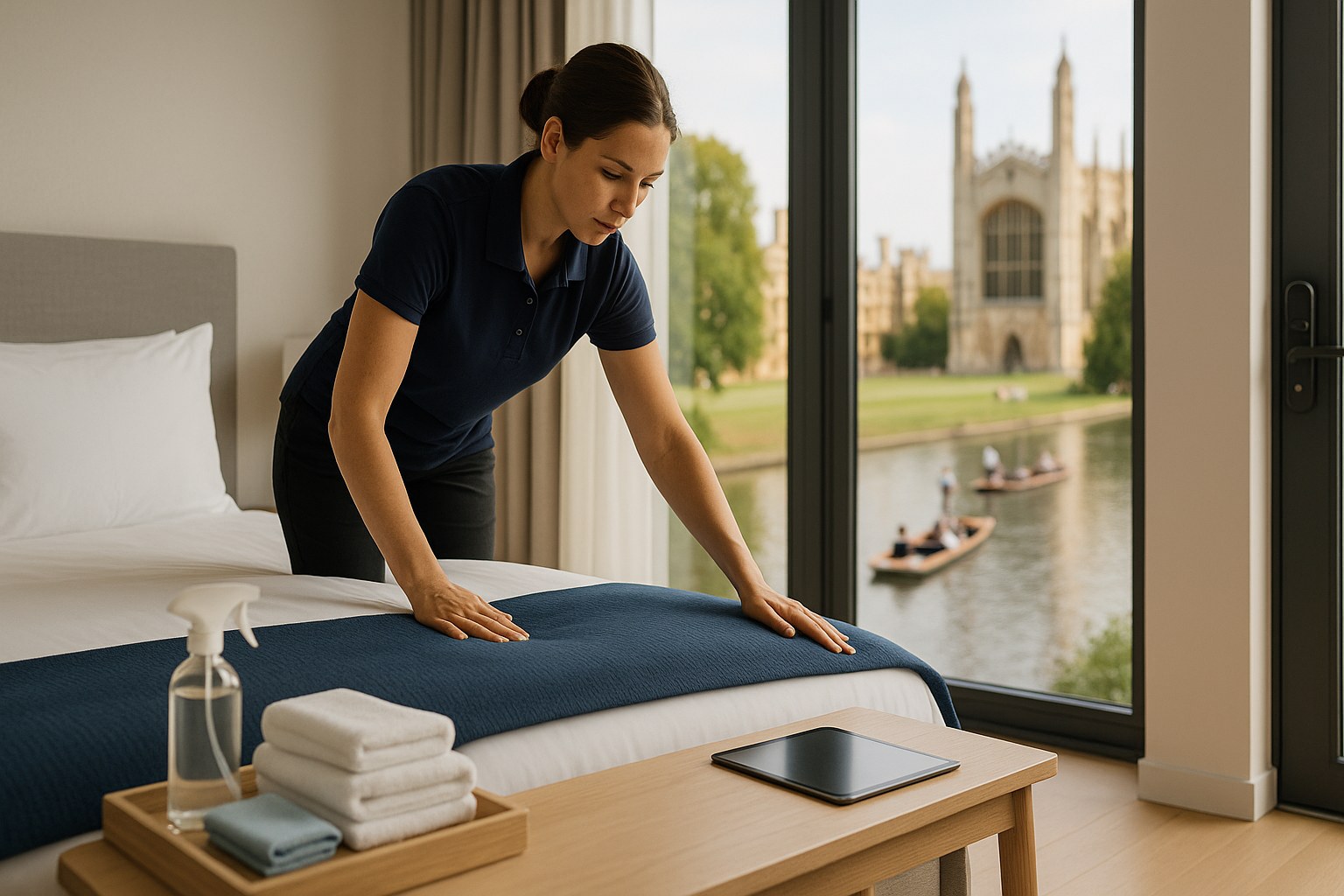
Bedrooms require changing bedding, smoothing fitted sheets, replacing pillows or duvets if needed, dusting bedside tables and lamps, and checking under beds for forgotten items. Make beds to present well, as photos will influence guest perception.
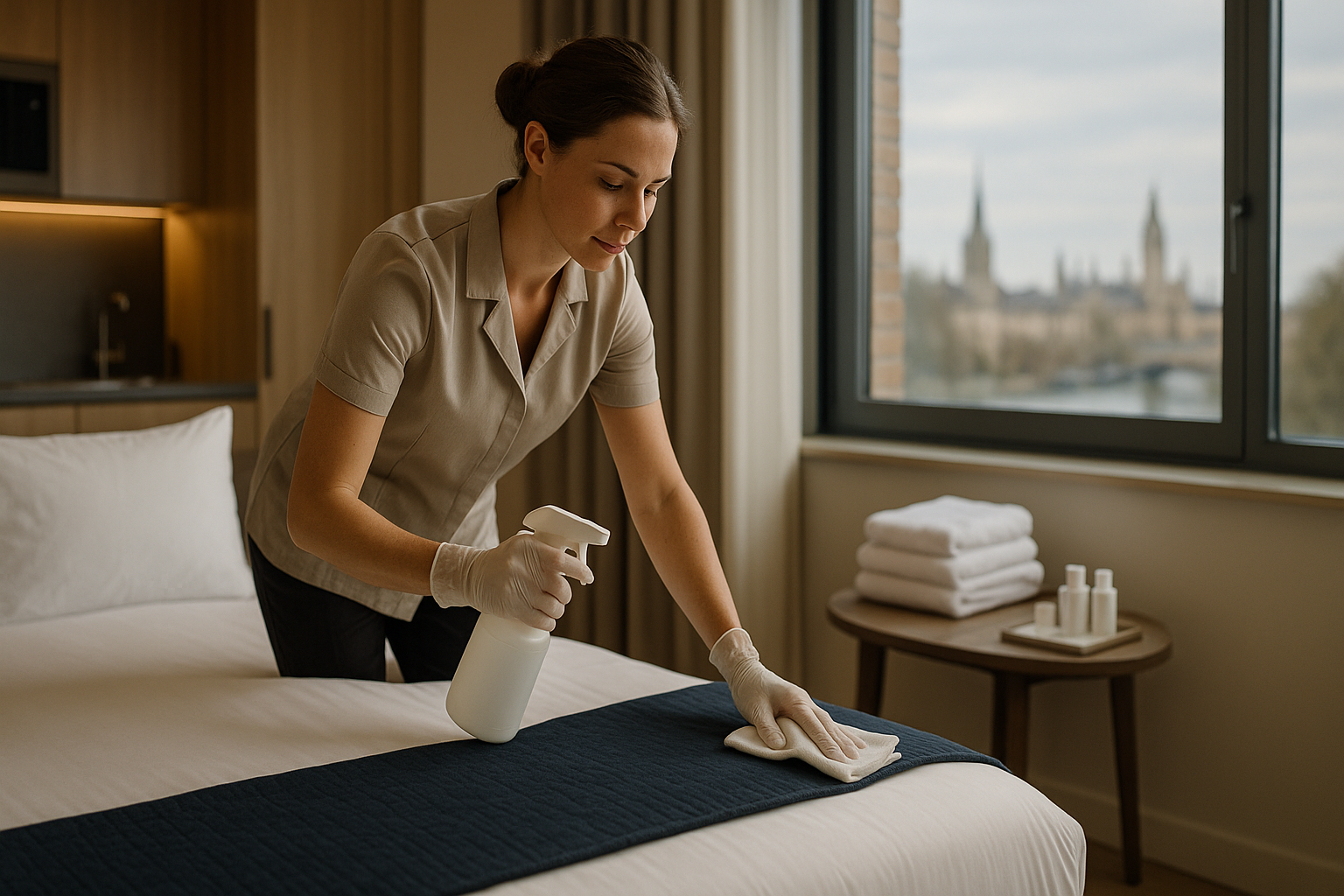
Living areas need dusting of surfaces and electronics, vacuuming rugs and under cushions if possible, and wiping any glass surfaces or mirrors. Ensure remote controls and light switches are wiped with a disinfectant wipe.
Floors are vacuumed and mopped where appropriate, with attention to high-traffic areas. Windows and entryway glass should be checked and wiped if fingerprints remain. Leave fresh tea, coffee, and a starter supply of essentials you want to provide.
Finally, perform a quick walk-through and photograph the finished space. Note any damage, missing items, or unusual wear and report these to you immediately.
Managing logistics and expectations with your cleaner Good communication is the backbone of reliable cleaning. Use a messaging platform or an operations app where you can exchange checklists, photos, and scheduling changes. Confirm cut-off times for same-day cleans and set expectations for maximum job duration. If your property is near the city center or the station, add that detail so your cleaner can estimate travel time.
Create a simple inventory sheet of key items and their locations. Share where spare linens are stored, how to operate appliances, and where to park if street parking is limited. Provide the cleaner with a contact method for emergency situations. Decide in advance who handles guest complaints about cleanliness: the cleaner, you, or a property manager.
Allow for periodic audits. Book a monthly or quarterly deep clean and do an unannounced inspection occasionally to verify consistency. When you receive a complaint, ask the cleaner to respond quickly and offer to remediate with a discounted future clean if the complaint is minor and the cleaner accepts responsibility.
Common scenarios and how a professional cleaner should handle them Short turnaround between bookings. A cleaner should have a plan for tight schedules, such as prioritizing essential tasks and calling in backup if the previous guest leaves the property in poor condition. Ask potential cleaners how they handle back-to-back turnovers and whether they have a network for emergency coverage.
Guest leaves excessive mess or damage. The cleaner should document the state of the property with photos and report to you immediately. If extra time or a deep clean is required, the cleaner should provide a price estimate before beginning additional work.
Last-minute bookings and same-day clean requests. Expect a surge during university graduation weeks and city events. A professional service will charge a premium for same-day work but will also offer a clear window for when the clean can be completed.
Laundry backlog. If your cleaner also manages laundry, agree on a drop-off schedule with your laundry provider during busy weeks. Understand how linens are rotated to avoid shortages.
Questions to ask during hiring and before a trial Ask how the cleaner handles stains and guest damages. Request details on the products used, especially if you prefer eco-friendly or non-scented options for guests with allergies. Confirm staff training procedures and whether the team can follow a staging plan for photography or special guest-ready setups. Finally, verify insurance and whether the cleaner carries public liability cover and workers coverage.
Final thoughts Choosing the right airbnb cleaning service cambridge transforms cleaning from an ongoing headache into a predictable operation that protects your reviews and your revenue. Prioritize a provider that offers a clear checklist, reliable scheduling, documented reporting, and transparent pricing. Test with a trial clean, keep communication channels simple, and plan periodic deep cleans. When cleaning works well you gain time, predictable quality, and guests who leave five-star reviews. That is the real return on hiring a professional.