September 20, 2026
September 11, 2026

Hook
A last-minute booking, a late-night flight and a guest arriving in six hours. For many Airbnb hosts in Cambridge, that scenario is familiar and heart-stopping. Slow turnovers cost bookings, lower ratings and create a churn of stress. Fast, reliable cleaning turns those moments into seamless transitions and protects revenue.
Introduction
If you host in Cambridge, you already know how quickly a schedule can change. High season around graduation weeks, conference weekends and term breaks means short windows between check-out and the next guest. An efficient, professional cleaning operation is not a luxury, it is a core part of hospitality. This article explains how to find and run an effective airbnb cleaning service cambridge hosts can rely on, with operational tactics you can implement right away to shorten turnaround times and keep guests happy.
Why fast turnovers matter for Cambridge hosts
Beyond convenience, fast turnovers influence three measurable business outcomes. First, occupancy. The faster you can prepare a property, the more bookings you can accept on the same day. Second, guest experience. Cleanliness is the most commonly cited reason for five-star reviews. A late arrival because cleaning ran over can ruin a guest’s first impression. Third, cost control. Slow, reactive cleaning leads to overtime, emergency fees and rushed mistakes that create damage or missed maintenance issues.
Cambridge brings specific pressures. University events generate flurries of bookings with tight windows. International travelers often arrive late after long journeys. Local supply constraints, like fewer same-day laundry services on weekends, mean you need systems that work without last-minute improvisation.
What makes a cleaning service suitable for fast turnovers
Punctuality and predictable windows The best services treat time as a serviceable asset. They commit to arrival windows, arrive prepared and track travel times. A team that explains realistic arrival ranges removes guessing and lets you manage check-ins confidently.
Standardized checklists and quality control A consistent checklist ensures nothing is skipped. But paperwork alone does not guarantee quality. Look for services that use photos, short inspection reports and random audits to maintain standards.
Team structure and capacity A sole cleaner who juggles several properties may create availability risk. Small teams or companies with multiple cleaners can cover sudden needs and offer overlap when bookings pile up.
Integrated laundry and supplies management Fast turnovers require ready linen and toiletries. Services that include or coordinate laundry reduce handoffs and delays. Some cleaning teams maintain a small stock of essentials, so a missing shampoo does not mean a panicked trip to the shop.
Communication and tech A cleaning service that uses a simple app or messaging system to confirm job completion, attach photos and report issues cuts hours from follow-up communication. Automated status updates let you open the calendar to new bookings quickly.
Insurance, background checks and local knowledge For confidence, confirm the service holds appropriate public liability insurance. If you host in Cambridge, a provider familiar with local regulations and access logistics will anticipate problems such as restricted parking or gated courtyards.
Setting up operations for reliable fast turnovers
Define a realistic turnover window Decide on the minimum turnaround time you will accept for each property type. A studio often needs less time than a three-bedroom. Build that minimum into your listing calendar so Airbnb will not accept bookings during an impossible window.
Create a clear Standard Operating Procedure Write a step-by-step SOP, covering arrival, entry procedure, the cleaning sequence, linen rotation, photo checklist, and where to store spare supplies. Include a procedure for reporting damage and for restocking consumables. Share the SOP with any cleaner and review it together during a trial clean.
Manage linen inventory deliberately Fast turnovers depend on clean linen on hand. Calculate how many sets you need based on peak back-to-back bookings, then add a buffer for delayed laundry. If you rely on an external laundry partner, confirm their turnaround times during peak weeks.
Block periodic deep cleans Frequent light cleans keep the place presentable, but periodic deep cleans catch problems early. Schedule a deep clean every 3 to 6 months, or more often for high-traffic properties. Deep cleans reduce the time needed for each turnover over the long term by removing grime that otherwise slows staff down.
Simplify the space Invest in materials and furnishings that clean quickly. Choose washable duvet covers, slip-on couch covers, smooth surfaces rather than intricate furniture, and removable rugs. Fewer loose items and decorative knickknacks save time during quick turns.
How to choose and vet an Airbnb cleaning service cambridge hosts trust
Start with a short trial contract Instead of committing to a long contract, arrange a paid trial for one or two turnovers. Observe punctuality, thoroughness and the ability to follow your SOP. A trial will expose communication gaps and practical constraints before you depend on the service.
Ask for references and real photos A reputable provider should supply references from local hosts and photos of recent work. When you call references, ask about reliability during busy weekends and how issues were resolved.
Review insurance and checks Confirm public liability insurance coverage and any professional accreditations. For hosts in the UK, ask whether cleaners have DBS checks if they will have unsupervised access to your property while guests are present.
Test reporting and photo protocols Ask the cleaner how they document issues and submit completion evidence. A photo-based handover that includes an image of each room and the bed made is quick and persuasive. Ensure reports also note consumables left, like spare toilet rolls and replacement light bulbs.
Negotiate clear pricing for extras Agree on prices in advance for add-ons such as deep cleans, stain treatments, or lost-key retrieval. Clear pricing reduces friction when emergencies arise and keeps the relationship professional.
Pricing expectations and cost-saving strategies
Typical pricing patterns In Cambridge, turnover clean prices vary with the property size and the scope of work. Expect higher prices for short-notice jobs and weekend cleanings. Outsourced laundry or supply restocking will add to the fee if included.
Where to invest and where to save Purchase multiple sets of linen to avoid rush laundry costs. Simplify decor to reduce cleaning time. Spend on high-quality vacuum cleaners and quick-drying cleaning products so a surface is ready when the next guest arrives. Consider a small on-site supply of replacement consumables to avoid trips to the store.
Outsource laundry selectively A partner laundry can handle volume reliably, but compare costs to in-house washing if you have a washer-dryer and spare time. For single-host operations, a hybrid approach often works: use in-house machines for out-of-peak loads and professional laundry for full-house turnovers or peak weeks.
Handling last-minute turnovers and emergency cleanings
Create a rapid-response plan Agree a standby arrangement with your cleaning provider for a fixed fee. This gives you guaranteed access to a cleaner when a guest departs late or a booking arrives unexpectedly.
Use staged cleaning kits A small kit stored at the property with basics such as disinfectant wipes, trash bags, a spare pillowcase, and a quick-dry towel can bridge short-term gaps. Train guests to leave the place tidy on departure in exchange for a small incentive, such as a late checkout option when available.
Communicate proactively with arriving guests If a turnover will run late, notify the incoming guest immediately, explain the situation, and offer choices such as a 30-minute wait, a delayed check-in with luggage storage, or a partial refund when appropriate. Clear communication reduces negative reviews.
Keep a local backup network Build relationships with two or three cleaners or small teams. If your primary cannot cover a slot, a known backup will perform better than an unknown last-minute hire.
Measuring performance and improving over time
Track the right metrics Monitor average turnaround time, booking acceptance rate for same-day arrivals, percentage of turnovers that pass the first inspection, and guest cleanliness ratings. Track damage reports and the frequency of missing items. These metrics reveal whether your system is stable or under stress.
Use technology to close feedback loops Property management systems and cleaning apps automate scheduling, send checklists, and collect photos. Use these tools to generate weekly reports and to check whether the cleaner met the SOP. When a pattern of missed tasks appears, address it in training or with a contract revision.
Hold quarterly reviews Meet with your cleaning partner each quarter to review performance, adjust expectations for peak seasons, and reaffirm SOP details. Continuous improvement keeps standards high and reduces surprises.
A 60-minute turnover routine for a one-bedroom flat
A clear timeline helps teams move deliberately. Here is a compressed routine that fits into an hour for a compact one-bedroom flat.
0–5 minutes: Arrival and walkthrough. Locker keys or codes checked, hot water and heating confirmed, initial photo of the property taken showing the current condition.
5–25 minutes: Bathrooms and kitchen. Sanitize toilet and sink, clean shower or tub, wipe mirrors, replace toiletries. In the kitchen, clean surfaces, sweep and mop quick, clean visible marks in appliances. Empty trash and replace liners.
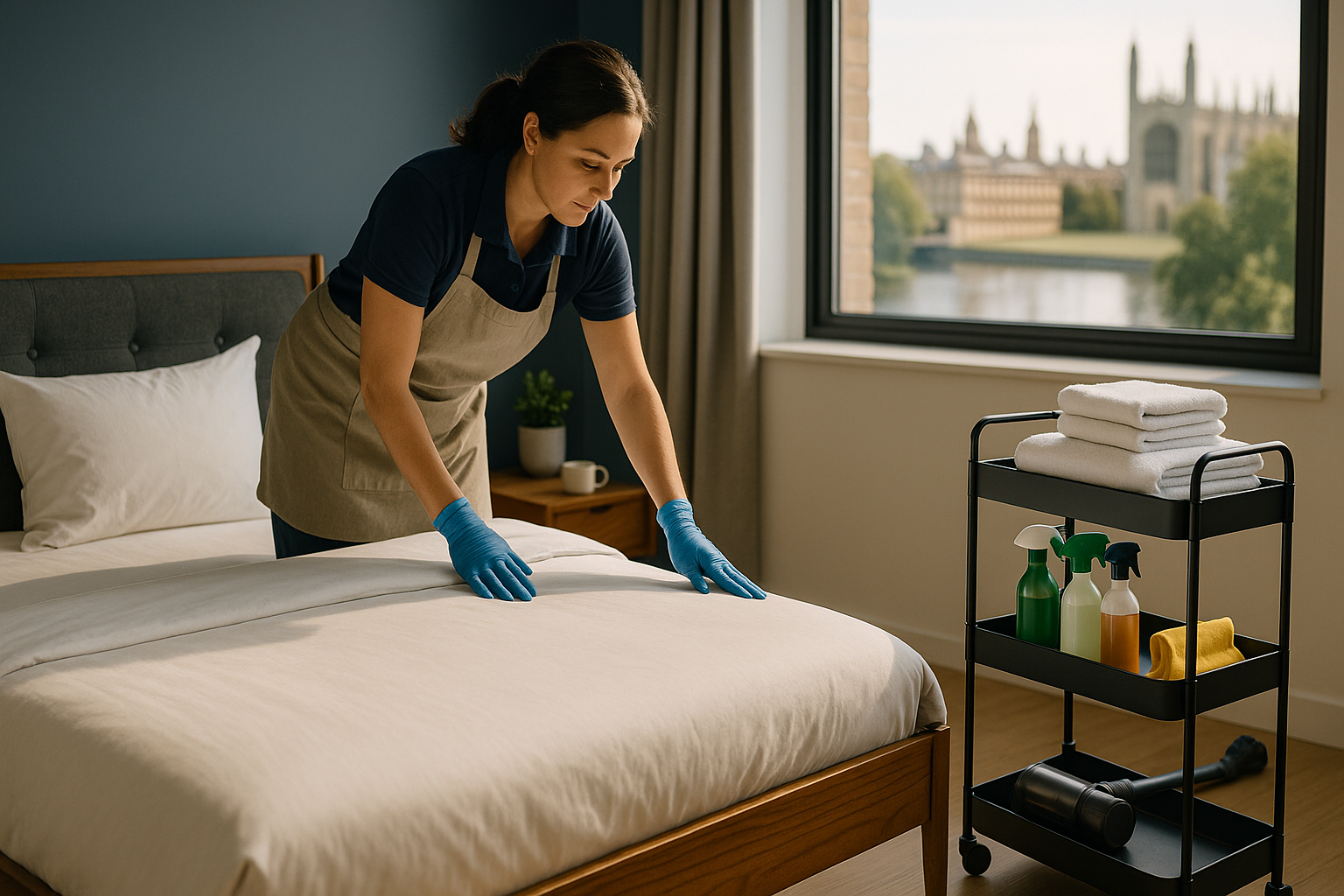
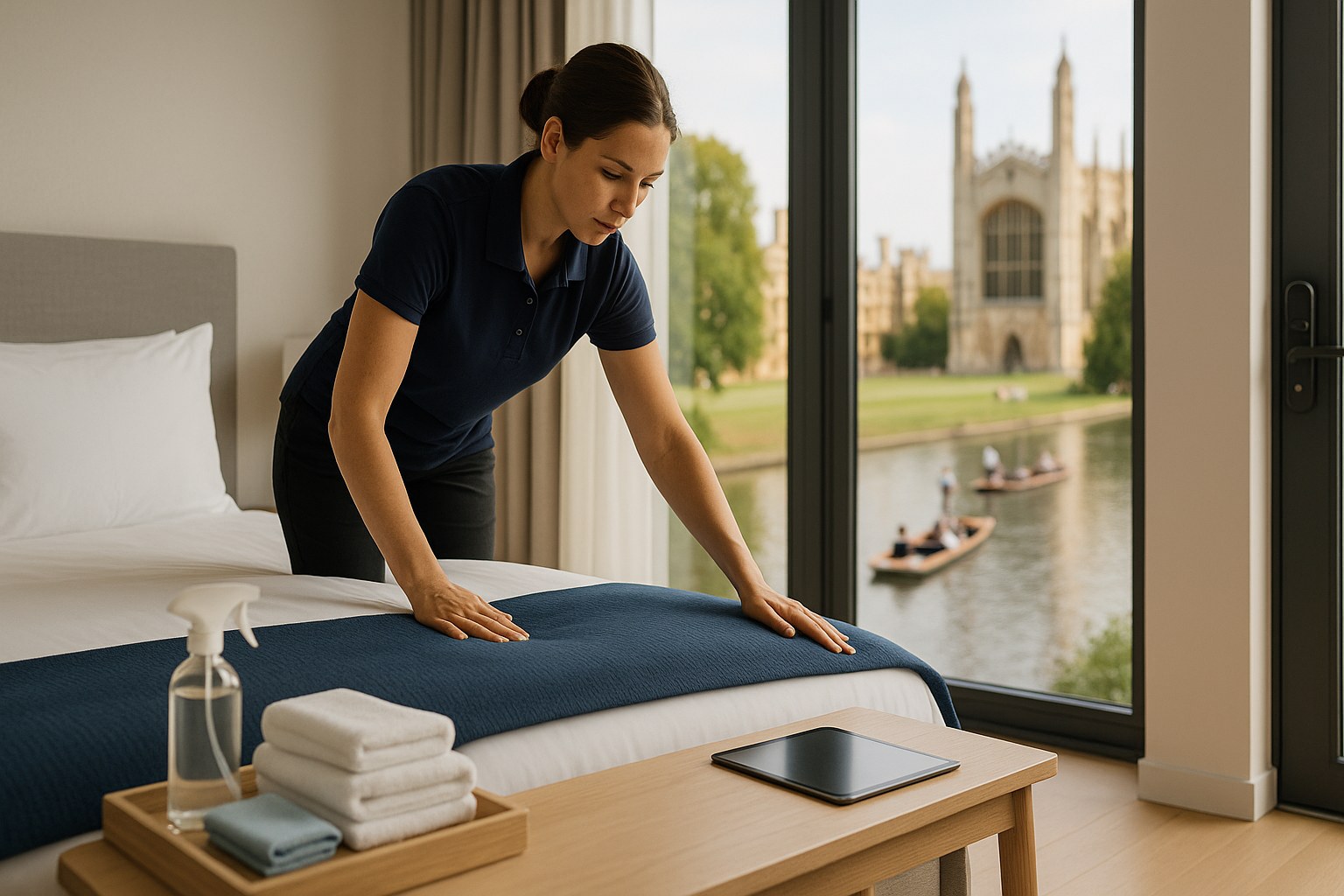
25–40 minutes: Linen and beds. Remove used linen, make the bed with fresh sheets, tuck corners neatly. Replace pillowcases and pillow protectors where used.
40–50 minutes: Living spaces and floors. Dust surfaces, spot-clean walls and doors for scuffs, vacuum or quick-mop floors. Check windows and sills for visible smudges.
50–58 minutes: Final checks and restocking. Replace consumables, ensure Wi-Fi details and house manual are visible, place a welcome touch such as a small card or local leaflet.
58–60 minutes: Photo handover and departure. Take standardized photos of each room showing the bed made, bathroom clean and kitchen tidy, then upload them. Send a status update to the host or PMS.
This routine assumes the property has been maintained between stays and no unexpected issues emerge. If stain removal or repairs are needed, the team should mark the job for a follow-up deep clean.
Common pitfalls and how to avoid them
Ignoring local peaks Failing to plan around university terms and major Cambridge events leaves hosts scrambling. Check local calendars and block reasonable lead times.
Overcomplicating the inventory Too many decorative items slow down cleaning. Aim for a minimalist approach that still feels welcoming.
Relying on a single cleaner A single point of failure creates risk. Build redundancy.
Skipping trial runs Always test a cleaner on a trial turnover before committing. The trial will show whether they follow your SOP and whether their timing meets your needs.
Conclusion
Fast, reliable turnovers are achievable when you pair clear processes with the right cleaning partner. For Cambridge hosts, the difference between a tense scramble and a smooth handover often comes down to preparation, simple design choices, and disciplined communication. Treat cleaning as part of your hospitality product, measure performance, and invest in redundancy. The result will be fewer last-minute crises, better reviews, and more bookings that fit neatly into your calendar.